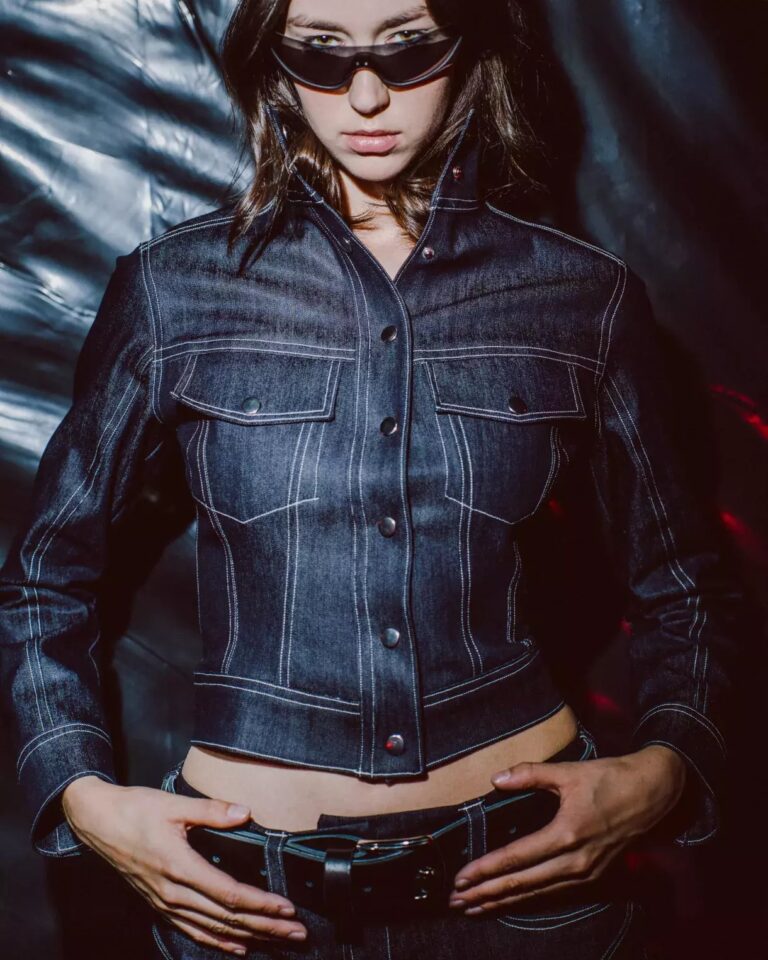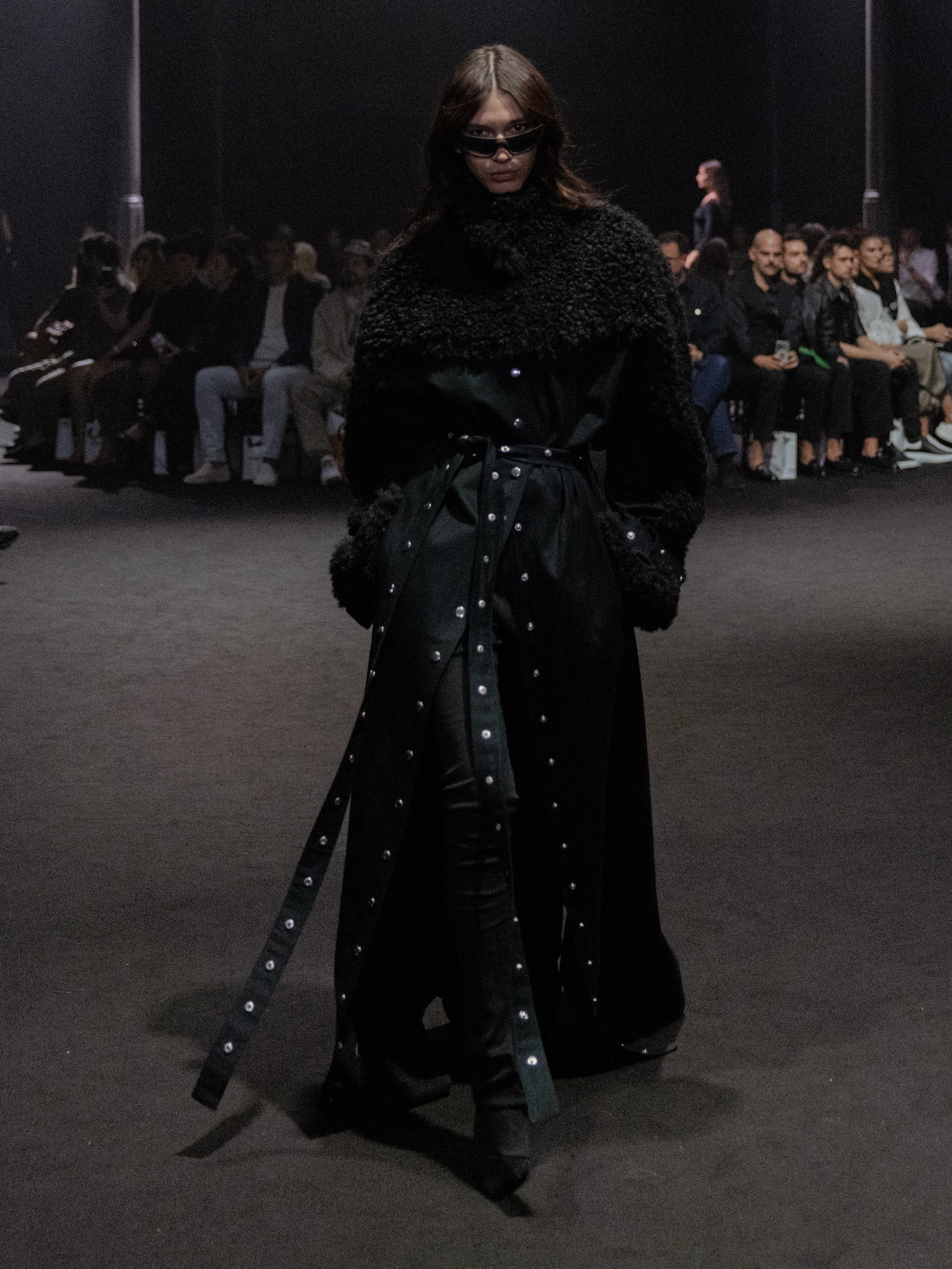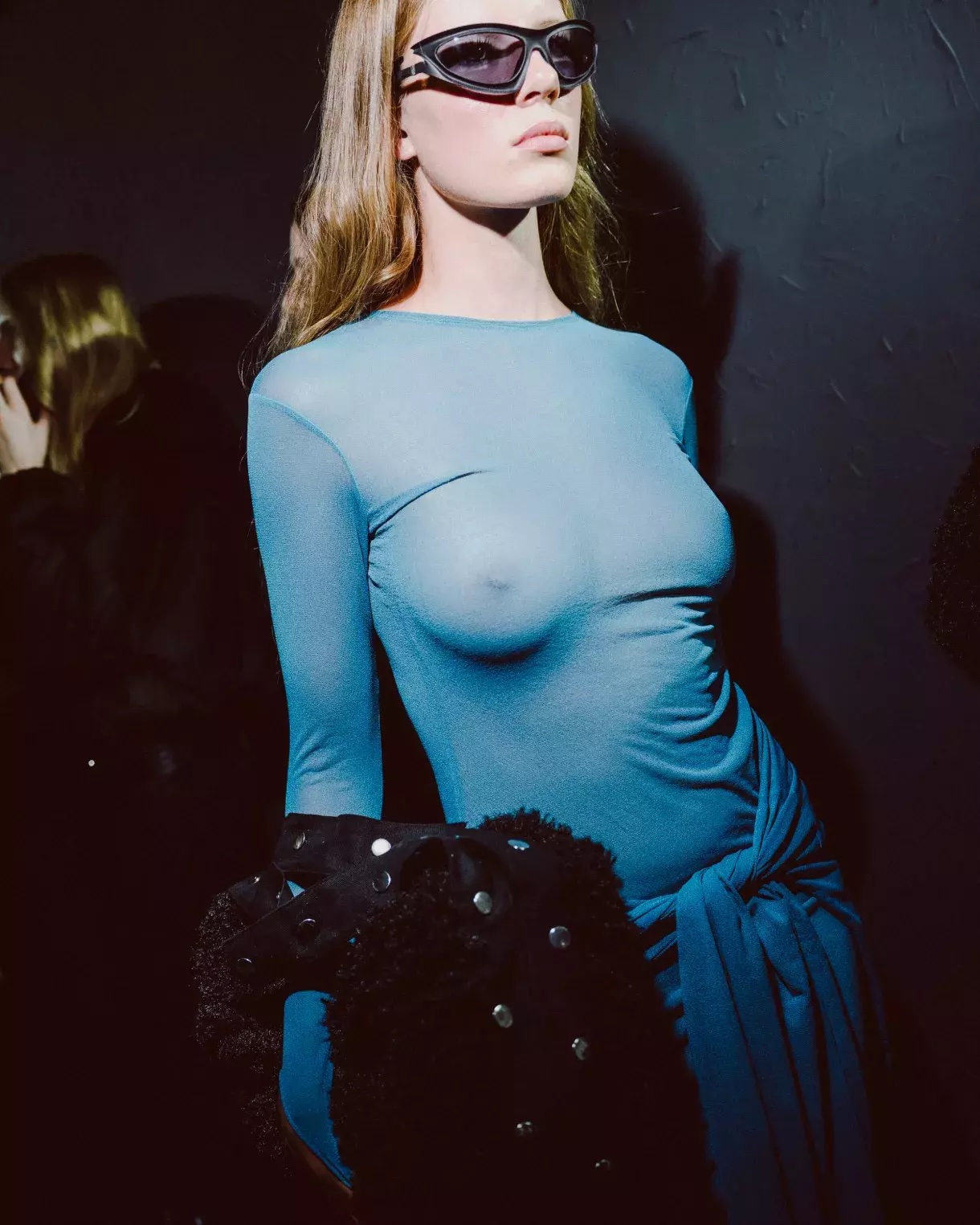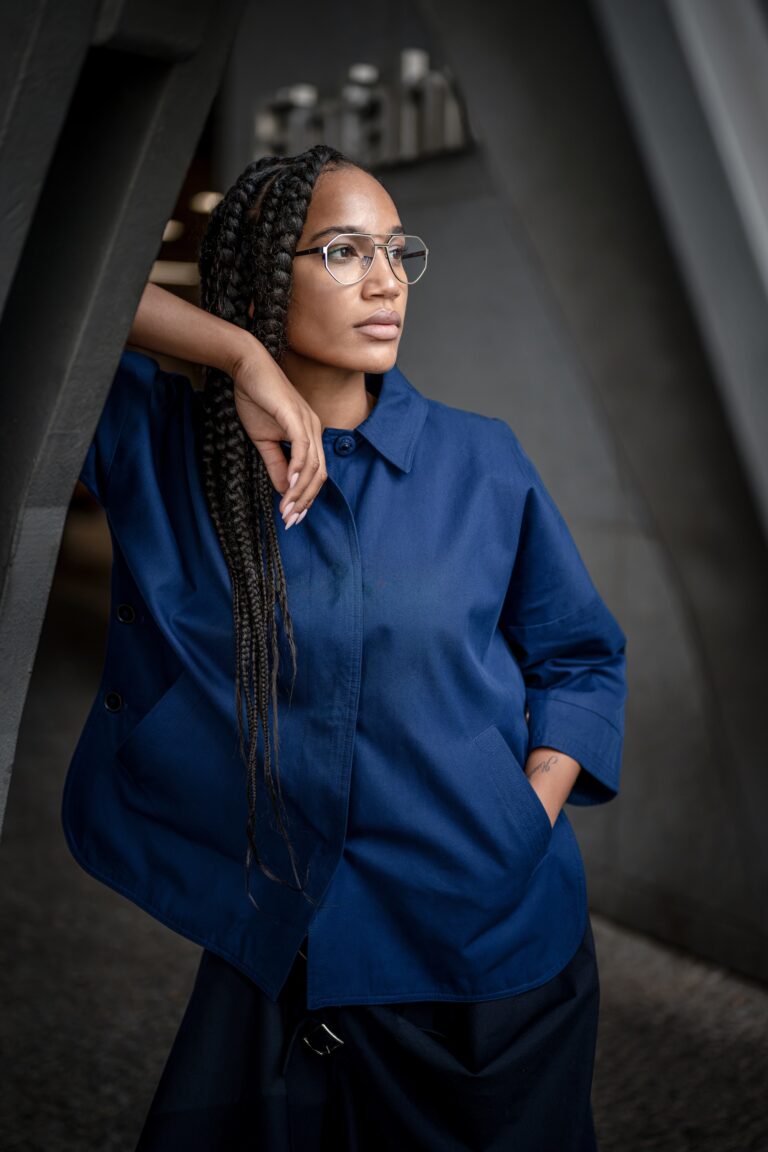
The 3.0 collection features sharp lines, standout volumes and curves which clash with angles
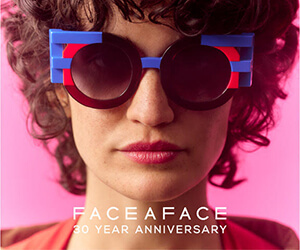
FACE A FACE introduces a selection of new styles for Spring/Summer, designed to turn heads with an assertive, colourful presence. Femininity is interpreted as sharp, powerful and unapologetic, while the bold approach to form presents standout volumes where curves clash with angles and lines feel slick and sharp.
New concepts like MINDS and ETTO embody this boldness of design: the sculpted, geometric frames are characterised by unexpected colours and colour combinations, from futuristic green to ultraviolet and a striking burnt orange. Every detail, every flash of colour, and every concept of form and structure reveals something new and bold in character. Above: model Minds 1 by FACE A FACE explores a play of facets reminiscent of a kaleidoscope. The shape is described as “a hexagon turning within a hexagon”


Taking a new step for the Bocca concept at FACE A FACE, Bocca Chance 1 has an organic shape with a sharp, striking geometric look. A luminous effect is created through the elegant acetate where transparency comes into play along with temples which offer contrast through a light and milky pastel pink. The style is described by the design team as “burning with incandescence”. The traditional Bocca concept of the footwear design for temple tips is, for this model, interpreted as a miniature black boot with tiny high heel.

Model Etto 1 is both colourful and chic. The frame has a round eye shape, and a particular temple detail described as a rectangular section clamped into the frame front as if it were being held in a carpenter’s bench vise – creating a point of tension and the opening of the eye shape. The refreshing colours include the lilac patterned tortoise proposal above and a beautiful “mandarin crystal” with pink temple detail. Find out more about the new collection at www.faceaface-paris.com

Fabian Burgard, fashion photographer, co-founder, Burbas
Fabian Burgard co-founded Burbas with Max Bastian as a full-service creative studio based in Cologne. Working across photography and video, the team produces content ranging from e-commerce shoots to major campaigns for clients in Germany and abroad, with a growing presence in the eyewear sector. With AI beginning to influence how the perfect frame is captured, Eyestylist asked Burgard to share his perspective on photography, eyewear, and the future of image-making in luxury fashion.
When did you start specialising in eyewear and how does this style of photography fit with your expertise? I first worked for an eyewear brand in 2019. It fits well with what I do, as I also shoot in other areas of fashion. Outside of work I also developed a big interest in the fashion industry as well (even if my own outfit looks pretty much the same most days). A real “expertise” for eyewear came over time. Glasses are a tricky product: they’re reflective, often super delicate, and the photographed angle makes a huge difference. Over the years, I think I developed a feel for what makes a frame look right, how to place and light it. So it’s something that really grew through doing it and will probably keep growing.
What is your view on AI and photography campaigns? Are you using AI at Burbas and what advantages have you seen? AI is a great tool, when it actually makes sense. We’ve been developing workflows that let us keep the product design consistent, to use when it serves the concept. That can make it possible to create more complex looks without blowing the budget, which is a win for a lot of brands. At the same time, it’s very client- and brand-dependent. Above: Fabian Burgard, photographer @burbas.de

We actually still produce full analog shoots, and we even have our own in-house darkroom for film development. The main thing for me is that AI shouldn’t override a brand’s authenticity. If a label is rooted in tradition or draws from specific decades and craft, you need to reflect that honestly and sometimes that means AI simply isn’t the right tool (at least right now). In the end, I don’t think you should ignore AI either or use it just because it is new or even hyped at the moment.
What was the latest campaign you worked on? Our latest campaign was actually a special one. It was for Coblens Eyewear (https://www.coblens.com), a label from my hometown, they make beautiful frames. We shot it at the Gerling Quarter in Cologne, a 1950s building from the post-war modern era. The location as part of the building is run by a university that’s also one of our clients, so we were able to produce there. And the architecture matched the frames perfectly, so visually it feels like a match.
Besides the video assets, we produced a fully analog photo series: shot on film, then we made hand prints in our darkroom and scanned those for the final files. It’s a workflow I love, but in this case it also fits the brand so well because it has that crafted, handmade character. With a great team, it turned into one of those productions that’s just really fun from start to finish.
Do you also do still life work and what is your opinion of still life photography for eyewear? Yes we do still life, and I love it. It’s such a strong (and easy) tool for building brand identity, especially in eyewear. For me, still life works best when it’s reduced and focused — not overloaded with as many beautiful objects as possible. Sometimes texture and framing is already enough to set the tone. Putting frames on a material that fits the brand can do a lot. Technical frames on stainless steel, brands with a heritage feel on materials that reference older interiors or architecture, whether that’s marble, a specific carpet, or something similar. If the concept is more modern or playful, you can also go in a slightly more unexpected direction. I recently saw a jewelry campaign where the product was photographed on baking paper, super minimal, and it looked amazing. In the end, I think smart, reduced choices often make the frame look stronger than an overloaded set.

What’s your work goal/ambition for 2026? For 2026, we’ve got many goals. On the main side, we want us to keep producing strong work. Staying current, pushing new ideas, and doing more creative productions. We are happy to work with new brands. Partly because it’s creatively exciting to build visuals for different brand identities, and yes, also because working with new clients is always a motivating part of the job.
And then there are the smaller, personal goals: pushing my own ongoing documentary work, refining my style, and finding a few dream locations I’ve been wanting to shoot at for a long time. Right now, I’m trying to get access to a museum space in Wuppertal that I’m completely obsessed with. So if anyone there is reading this… feel very free to reach out, and maybe we’ll end up seeing that shoot on Eyestylist.com very soon.

What is the future of photography for eyewear brands? Digital. Or Analog and Digital? I’m pretty sure it’s going to be both. AI will keep getting better, which makes it a great match for a lot of brands, and it’ll definitely lower the barrier for newer brands to create strong visuals. But at the same time, I don’t think the handcrafted side of production will ever fully disappear, especially when it comes to creative campaign assets. In marketing, it’s not only about the final image. Often, it’s also about how it was made, who was involved, and the human side of the process. That “made by real people” aspect has always been part of what brands communicate. Whether it’s a collaboration with a bigger artist people identify with, or just creatives in general behind the scenes. That human process often matters, because it helps sell the feeling around the product. Realistically, the balance will probably keep shifting further toward digital work because the possibilities are growing so fast, but I don’t see the traditional, hands-on side of production completely vanishing. There will always be brands that look for authenticity in craft and character not only in what they produce, but in how they communicate it.
To find out more about Burbas.de, click on the link: https://burbas.de

Mido 2026: success in Milan
The lively energy of the Milan event confirmed ongoing opportunity in – and success of – in-person international eyewear shows
The show organisers reported approximately 42,000 attendees, from more than 160 countries, and 1,200 exhibitors, of which approximately 930 were international, in 7 halls, across 8 exhibit areas. As in 2025, Europe – with strong representation from Germany, France, and Spain – proved its significance. Particularly noteworthy were attendance numbers from Africa (Tunisia, Algeria, South Africa), the Middle East (Syria, Oman, Saudi Arabia), and Asia (South Korea, Singapore, Indonesia, India, China), confirming these emerging markets as an important, growing area for commercial development, they said. Participation from North America remained stable, a positive signal given the current economic climate and ongoing tariff-related tensions. In contrast, attendance from Italy showed a slight decline, reflecting the impact of the current economic context on investment decisions by industry professionals in the domestic market. Above: Mido 2026, Milan (Image: Mido Milan)

Design and trend forecast by Mido Mido offers commentators and journalists an opportunity to study the evolution of eyewear design across categories, including independent eyewear brands, luxury labels and artisan design collections. The organisers reported that this year “the collections highlighted increasingly lightweight and high-performance frames, state-of-the-art and sustainable materials, and the integration of artificial intelligence–based solutions for design, customization and vision comfort. Eyewear continues to establish itself firmly as both a technological platform and an aesthetic object.”
From a stylistic perspective, eyewear is emerging as a form of identity and individuality, balancing minimalism and experimentation, heritage and modern design. Trends range from luminous transparencies and interplays of light, to intense, organic textures derived from urban and international inspirations. Bio-acetates, recycled materials and lightweight metals take centre stage, the Mido report states – alongside reinterpreted timeless icons – aviator, cat-eye, panto and navigator shapes – in sophisticated colour palettes that encompass everything from natural and crystal-clear shades to bolder accents. Mido upholds its reputation as the place where innovations take shape and trends begin to define the face of eyewear for the seasons ahead, organisers also added.

Eyestylist observations During the event Eyestylist talked with exhibitors and attendees (optical retailers) and took part in launch events and talks arranged to promote debate and reflection on the industry in 2026, and how it is changing. The Vision Stage hosted sessions dedicated to this sharing of views and discussion topics. Key speakers at this edition included Monica Maggioni, Alec Ross and Dario Fabbri. Significant space was also devoted to industry trends, new trends in consumer behaviour, sustainability, inclusion and eye health.

Our top ten highlights include design trends that we identified during the show:
- Mazzucchelli 1849 x Peclers Paris – the two companies launched an Eyewear trend book ’27 presenting a refined vision of colours, materials, shapes and insights tailored to the eyewear market, www.mazzuchelli1849.it
- The Lens of Time, an exhibition about the history of Italian eyewear, which was adapted for Mido 2026 and beautifully presented in a unique space
- Frame The Future – the responsible eyewear alliance presented key findings in “The State of Sustainability in Eyewear” – the Catalyst Study, at the Mido event
- the rise of smart glasses was a topic of interest at the event: MODO launched Eyefly, a product designed to look like everyday glasses and featuring open-ear audio and hands-free connectivity
- 3D printed eyewear innovators raise the bar in quality and design potential – at brands like Hoet, YOU MAWO, Götti Switzerland and ROLF, the evolution of quality, precision and originality is evident in 3D printed frames produced either in titanium or materials like high-quality polyamide and castor-bean based materials. These brands are responsible for leading this change
- Innovators in the field of design and fine aesthetics: numerous eyewear designers from around the world exhibit at Mido. Work includes collections made by hand, collections produced according to new technological breakthroughs and, for example, frames created with new groundbreaking scientific procedures and technical accomplishments such as the White Circle, Metastable + cold-rolled frame (Limited Edition) by Massada (www.massada.com). Other highlights included Anne & Valentin’s launch of the Krafties, a captivating acetate collection which appears as if it has been “handcrafted from glass, shaped by time”
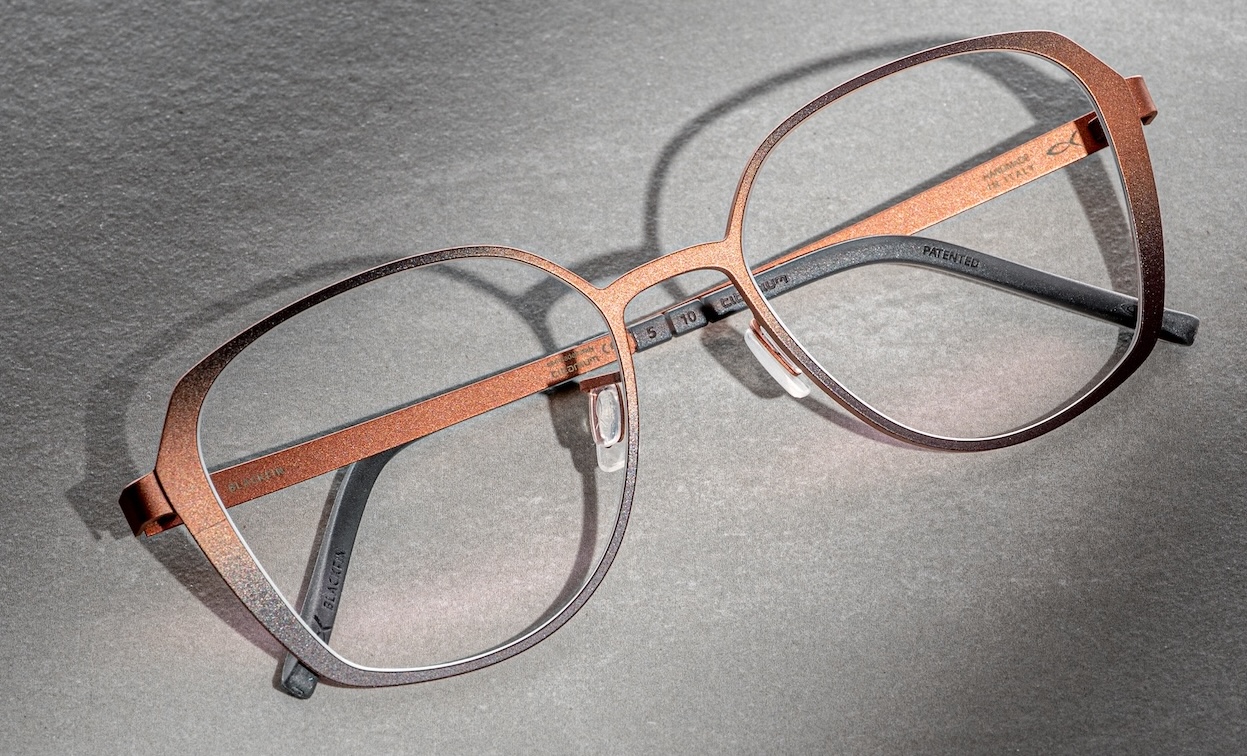
- Colour evolution – the eyewear showcased across the event showed that colour palettes in eyewear are shifting rapidly – two key stories were evident – consistent experimentation in bright tones and neons – alongside a very widespread growing focus on timeless, flattering natural tones, and a palette of light, translucent neutrals, brown variations and tones such as burnt umber, sienna, mocca, cappuccino-like shades… plus a notable variety of soft and natural greens, including sage, olive, and increasingly, khaki
- Material innovations – frame designers are working with a wide variety of exceptional materials – they include titanium, acetate, natural buffalo horn, aluminium, fibre glass, natural wood and ply wood, carbon fibre, and surgical grade stainless steel
- High-quality optical accessories at the top end of the market are showing much innovation and introducing new design products; ompanies like Diffuser Tokyo, Valrose and La Loop showed that eyewear accessories in 2026 are sophisticated and thoughtfully designed – using high-class materials – conceived with care with the eyewear aficionado in mind….
- Luxury brands were well represented at the event, and included some of the finest European companies such as Hoffmann Eyewear (https://www.eyestylist.com/2026/01/mido-2026-hoffmann-natural-eyewear-understatement-as-a-statement/) and Thierry Lasry, as well as popular names like AHLEM, LAPIMA, Garrett Leight, Blackfin, Press Eyewear (https://www.eyestylist.com/2026/02/press-eyewear-luxury-collection-launches-at-mido-2026/), MATSUDA, DITA, LINDA FARROW, L.G.R, AKONI GROUP, RES/REI, LAFONT PARIS, John Dalia, l.a. eyeworks and Cutler and Gross.
The next edition of MIDO will take place from 6 to 8th February, 2027, at the same location, Fiera Milano Rho. Find out more at www.mido.com. This feature was compiled, researched and written by Clodagh Norton who attended the event in person. AI was not used to write this content. All rights reserved.

Loft, New York: 2026
All set for New York Edition and Eyewear Design Week, March 2026
LOFT Eyewear Shows New York event is to take place from 5th to 7th March at two venues on 28th St in the Chelsea/Hudson Yards district of New York City. In its 26th year, LOFT will present over 150 eyewear collections in an even larger edition where all the brands are in close proximity.
LOFT NYC will take place in the same Chelsea Industrial space on 28th St as last year. They have added a new space at High Line Nine just 100 yards up the street making it just a short walk between venues. The CE portion of the event has expanded to include complimentary courses sponsored by Loft and provided by the Opticians Alliance Of New York (OANY) and Kayla Ashlee of Spexy. Featuring several industry speakers, this education portion will take place at the Chelsea Industrial space on each day of the event. Visitors can schedule all their eyewear appointments and CE classes online right on the LOFT website. Above: High Line Nine is close to Chelsea Industrial

As part of the second Eyewear Design Week in New York, the LOFT Event is the major feature and “anchor point” for the other eyewear events and showrooms spread out across the city, which include the Kering Eyewear and Thēlios showrooms, the Eyecon event, events at the Marcolin showroom, an Italian eyewear exhibition and cocktails on West 18th St, and another CE program sponsored by Zeiss, 20/20 Magazine and the Accessories Council.
LOFT stands out as the ultimate appointment for all those who wish to see the most exciting eyewear designs in the New York setting as well as a unique opportunity to talk to the people behind those designs one on one. The LOFT Party will take place on Friday 6th March at the Chelsea Industrial location. Tickets will be available closer to the date. Find out more at www.lofteyewearshow.com and www.eyeweardesignweek.com

Interview with David Duralde, OGI Eyewear
15th anniversary at Eyestylist.com / Special Content: As we look back at the last 15 years in independent eyewear to mark our anniversary, we will be highlighting some of the people who have inspired us through the years – and who continue to do so – across the disciplines of eyewear design, optical retailing and related fields in the optical + eyewear worlds.
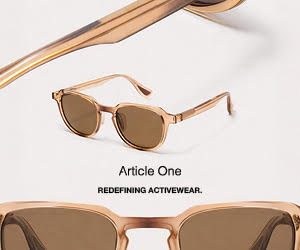
Our first ever interview on Eyestylist with David Duralde is dated July 2016 (https://www.eyestylist.com/2016/07/david-duralde/). A subsequent interview appeared in April 2019 when David was working as Chief Creative Officer at Kenmark Optical. Today, David is Chief Creative Officer of the US label, OGI Eyewear. OGI is part of The Optical Foundry, a collective of 9 independent eyewear brands, including l.a.eyeworks, Article One and Scojo NYC.
David, we have been in close contact over the last 15 years and enjoyed following your creative role in eyewear. What have been the highlights for you in these years? For me, the greatest highlight has always been creating eyewear that genuinely connects with people—pieces that influence how someone feels about themselves when they put them on. Eyewear is intimate. It sits at the intersection of identity, confidence, and self-expression, and I’ve always been drawn to that emotional power.
Earlier in my career, I had the opportunity to work at a scale that was both demanding and exhilarating—absorbing the DNA of many fashion houses, collaborating with creative directors across cities and cultures, and translating their visual language into eyewear. That process taught me discipline, restraint, and respect for brand integrity. You learn quickly what lasts and what doesn’t.
What’s especially meaningful now is seeing how certain design gestures—details that once required spirited internal debates—have quietly endured and evolved within those brands over time. There’s something humbling about knowing your work can outlive a season, or even a generation, while remaining largely anonymous. Those years felt like a masterclass—brief, intense moments of critique and clarity from people with extraordinary instincts for taste—and I still carry those lessons with me every day.
You were appointed Chief Creative Officer at OGI in January 2020 – part of The Optical Foundry. In these last years, what have you most enjoyed working on – and what has been most inspiring? What I’ve enjoyed most is the challenge of evolution—taking a well-loved, established brand with deep emotional equity and thoughtfully guiding it forward without losing its soul. That requires intention, patience, and a willingness to rethink familiar ideas.
I joined OGI at a moment of enormous change. The pandemic accelerated shifts that were already underway: consolidation, new ownership models, changing retail dynamics, and a redefinition of what it means to be independent in optical. At the same time, many long-standing industry leaders were stepping aside, creating both uncertainty and opportunity.
Against that backdrop, The Optical Foundry became a place to ask bigger questions. How do we support independent practices in meaningful ways? How do we celebrate individuality, invest in innovation, and approach business with optimism rather than fear? The most inspiring part has been aligning with people—internally and externally—who believe that independence is not about resisting change, but about shaping the future on your own terms.
You began your optical design training at l.a. eyeworks. How do you reflect on that initial phase of your work, and how does it influence what you do today? That early chapter shaped everything. At l.a. eyeworks, the driving question was simple: Why does eyewear have to be done the same way it always has been? We questioned materials, processes, finishes—everything. New technologies weren’t used for novelty, but as tools for expression. I’ve since seen the industry move through different eras: innovation-driven design, logo-centric fashion cycles, and now a renewed interest in authenticity and story. None of these phases are inherently better than another—they simply reflect what the market values at a given time. What influences me today is the return to curiosity. Consumers are once again asking why—why this shape, why this material, why this brand. That means we, as designers and optical professionals, have to talk about eyewear differently. We need to design with intention, communicate with clarity, and offer narratives that feel personal rather than prescribed.
Over the last 15 years, eyewear design has evolved significantly. What do you see as the fundamental changes, and how will they shape the future? One of the most fundamental shifts is how eyewear is perceived. It’s no longer just functional or purely fashionable—it’s expressive. People understand that eyewear can alter how they see themselves and how they’re seen by others.As a result, my design approach has changed. Today, I’m less interested in creating objects and more focused on capturing emotion—reflecting personality, individuality, and nuance. Consumers no longer want to be walking billboards. They want pieces that amplify who they are, not obscure it. Looking ahead, I believe the future belongs to brands that design with empathy—brands that understand the wearer as an individual rather than a demographic.

Colour has always been an important part of your work. For OGI Eyewear and the Spring collection, what’s new in how colour is expressed and combined? What’s fascinating right now is the tension between caution and creativity. Many suppliers are seeing strong demand for safe, familiar colours—classic tortoises, neutrals, predictable palettes. That reflects the broader economic mood. For me, that challenge becomes an opportunity.

This season is about the subtle wow—introducing surprise through refinement rather than volume. Colour is used strategically: navy instead of black, nuanced greens, controlled neon accents, and unexpected touches of orange. These are balanced with grounding tones like soft greys and warm beiges. It’s about confidence without noise—designs that reveal themselves slowly.
Do you have a favourite colour palette for this year? I’ve always been drawn to green, especially when it’s handled in a way that feels approachable and modern—even for those who don’t think of themselves as “green people.” I also continue to explore rich metallics and antique finishes, which bring a sense of craft and depth while still feeling contemporary.

What other creative projects or brands are you working on this year that you can share with us? Across brands like Article One and Red Rose, the focus remains the same: bringing forward-looking ideas into highly wearable contexts. Whether through material innovation, proportion, or colour, the goal is always to balance relevance with longevity—designs that feel current, but not fleeting.
Is there anything else you’d like to add that’s relevant to Spring 2026? Spring 2026 reflects a quiet confidence—for OGI and for me personally. It’s about clarity of vision, thoughtful design decisions, and a belief that independence still matters deeply in optical. The collection is not about chasing trends, but about offering something considered, human, and emotionally resonant—eyewear that feels intentional, not incidental.
Find out more at www.ogieyewear.com