Sustainable design

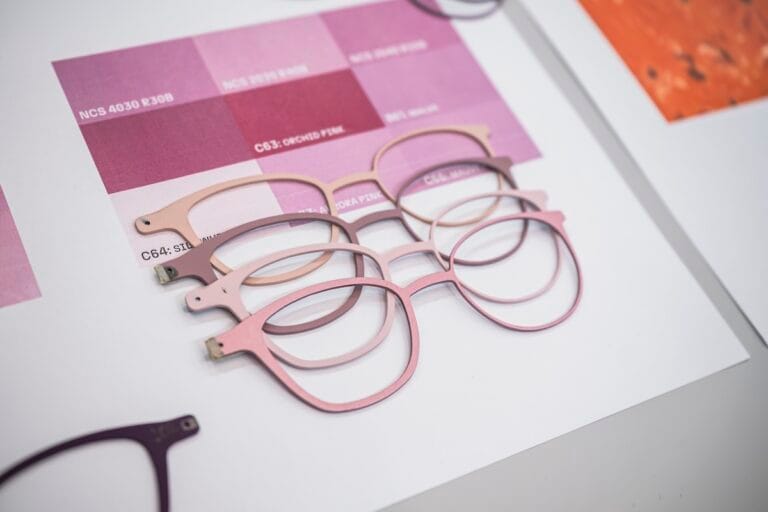
A set of pink and purple eyeglass frames arranged on a color swatch sheet.

Blackfin Eyewear: success built on “passion, experience, and above all, people”

The CEO of Italian eyewear company Blackfin, Nicola del Din says his eyewear brand’s success today results from hard work and a long-standing commitment from every member of the team. Known for its titanium eyewear produced exclusively on site at its own manufactory in Northern Italy, the company has established itself not only as an independent eyewear reference in Italy and across the world as well as  a sustainable innovator with its headquarters achieving “CasaClima Work and Life” certification in recognition of its high standards of environmental sustainability, energy efficiency and workplace quality. Here del Din tells Eyestylist about his current aspirations for the brand…

Blackfin has built its reputation around titanium and Italian manufacturing. How do you continue to innovate and what have been the biggest design challenges along the way? Innovation for us is driven by three fundamental elements: passion, experience, and, above all, our people. Right now, we are experiencing what I can only describe as a truly magical moment at Blackfin. It is the beautiful result of years of relentless commitment, dedication, and hard work from our entire team. However, we absolutely do not feel like we have ‘arrived’ or reached the finish line. On the contrary, we see this as a brand-new starting point. There is an incredible energy in the company right now, a deep enthusiasm for the future, and our minds are full of new ideas just waiting to be realized.

When it comes to the design and operational challenges along the way, the main one is directly tied to our ambition. When your goal is to constantly raise the bar to establish yourself as an increasingly premium brand, seamlessly uniting advanced technical engineering and micro-mechanics becomes incredibly complex. You are constantly pushing the titanium, and the design, to their absolute limits.

Furthermore, because we proudly keep our entire production process strictly in-house, one of the most demanding tasks is cultural and operational alignment. It is not always easy to coordinate the manufacturing side and ensure that everyone fully understands and embraces this continuous, demanding journey toward absolute excellence. It requires a shared mindset to guarantee that every single person in the factory shares the same obsession with premium quality and extreme attention to detail. It is a challenging process, but bringing the whole team along on this upward trajectory is precisely what makes our product so unique. Above: Blackfin specialises in titanium eyewear
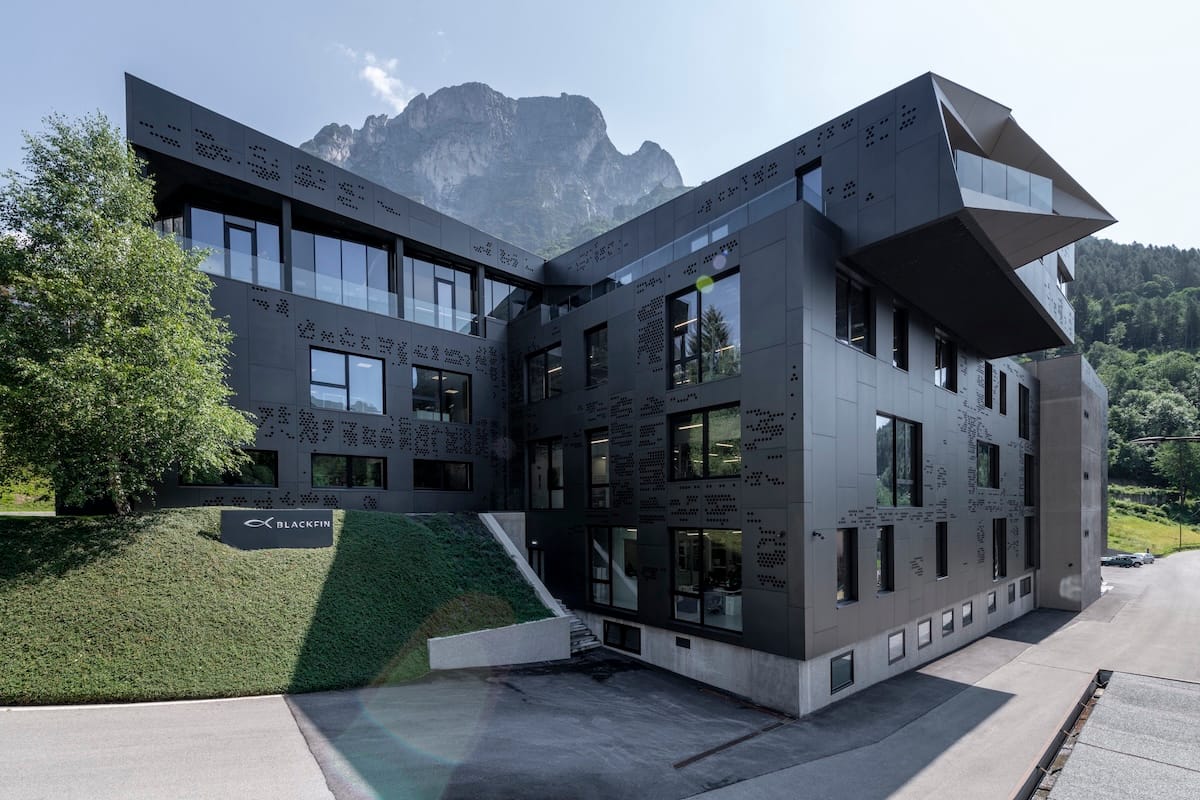
Modern dark gray office building with perforated panels, large glass windows, and a Blackfin sign on a grassy slope with alpine mountains in the background.
The Black Shelter: Blackfin’s state-of-the-art sustainable HQ and production facility in Northern Italy

You describe your product design, development – and production – as requiring a rigorous team effort, starting from R&D. How have you developed this process through the years? – how many people are now involved?  As I mentioned previously, our people, our company culture, and the strong interrelation between different departments are absolutely crucial to making this process work. I clearly remember years ago when the entire product and R&D team consisted of just myself and three other people. We were handling every single aspect of creation together.

Over the years, as the brand and our ambitions grew, this process had to evolve significantly. Today, we have expanded into a dedicated product development team of 8 to 9 people. But we realized that to truly push the boundaries of what is possible with titanium, we needed deeper specialization. That is why we instituted a specific R&D team of 6 people whose sole focus is engineering new technical ideas and mechanical solutions. Furthermore, because colour is such a defining element of the Blackfin DNA, we created a specialized color development team. Working with titanium requires extreme expertise, and this team’s specific mission is to research and achieve increasingly innovative chromatic effects, while ensuring an incredibly strong, long-lasting hold and durability on the metal. So today, we have all these specialized minds working under one roof. The rigour comes from how these teams communicate and challenge each other daily—blending design, mechanics, and colour into a single, cohesive vision.

What are key considerations when developing new ideas? When developing new ideas, our primary consideration is our continuous journey to elevate Blackfin as an increasingly premium brand. Therefore, every new concept we explore must be perfectly coherent with our brand identity and our core values. We are absolutely obsessed with the finer details, because in the premium segment, the smallest nuances make the biggest difference in the final product. To achieve this level of extreme precision, having our entire production in-house is absolutely strategic. When you are constantly raising the bar and refining every single aspect of a frame, from the initial technical sketch to the final colour application, you need uncompromising control over the entire process. If we didn’t have all these complex manufacturing steps under the exact same roof, it would be literally impossible to be the company we are today. Furthermore, it would be impossible to aim for the highly ambitious goals we have in mind for our future. The immediate connection between our development teams and our production line is what makes our vision a reality.
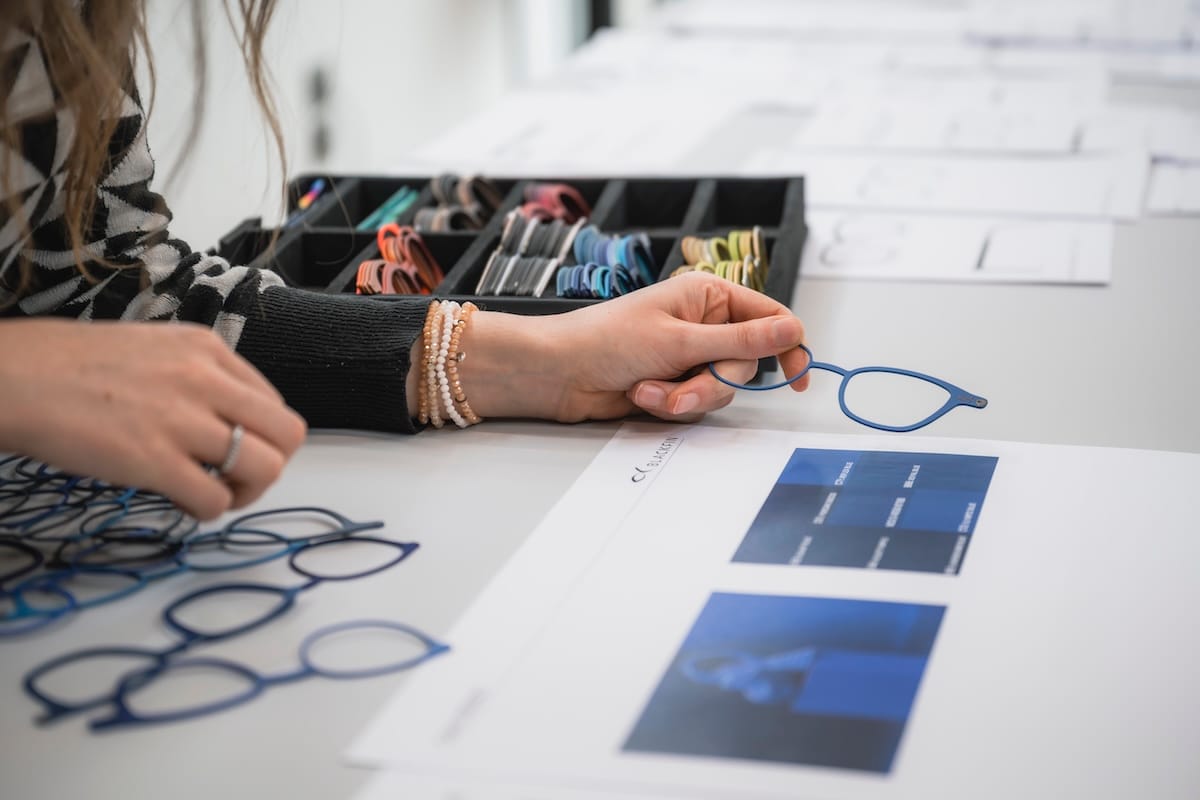
Person selecting a blue eyeglass frame over a white table with a color tray in the background
Colour is an important area for innovation at Blackfin

How long does the whole process take? Harmonizing aesthetics, engineering, and market demands takes time and a methodology that sees no shortcuts. From the initial concept to the final product, a full 11 months go by. Behind the purity of our design lies a long, complex development process entirely devoted to refining every single proportion. Every model is prototyped, evaluated, and modified countless times. We debate over tenths of a millimeter, adjust seemingly imperceptible curves, and recalibrate titanium thicknesses until we achieve absolute precision in every detail. The ultimate goal is one: reaching the perfect equilibrium between technical rigor and aesthetic elegance. When a Blackfin frame is finally presented to the market, it encapsulates the highest technological expression of titanium—but above all, it carries those 11 months of shared effort, the relentless pursuit of perfection, and the genuine dedication of the people who brought it to life.

Innovation often comes from questioning established processes. Can you describe a recent moment when your teams challenged a long-held assumption and the result changed the final product? “The perfect example of this is the recent creation of our new Vitra family. For years, our longest-held assumption—and our strict internal rule—was that Blackfin was 100% focused purely on titanium. It was the absolute center of our entire R&D vision. With Vitra, we completely challenged that paradigm. We introduced a frame featuring an incredibly resistant, innovative polymer front, perfectly combined with our signature titanium components. Stepping away from pure metal was entirely outside our traditional comfort zone, but we executed it in a way that is absolutely coherent with the Blackfin soul. Our R&D team applied the exact same rigorous, mechanical approach we use for titanium to this new polymer, ensuring there was zero compromise on design or robustness.

The launch was a success far beyond our highest expectations. But the most important takeaway for me isn’t just the product’s performance. It proved that Blackfin has reached a new level of maturity. It means that the trust of our clients is no longer tied solely to the specific material or the single product, but to the brand itself and our overall philosophy of premium excellence.
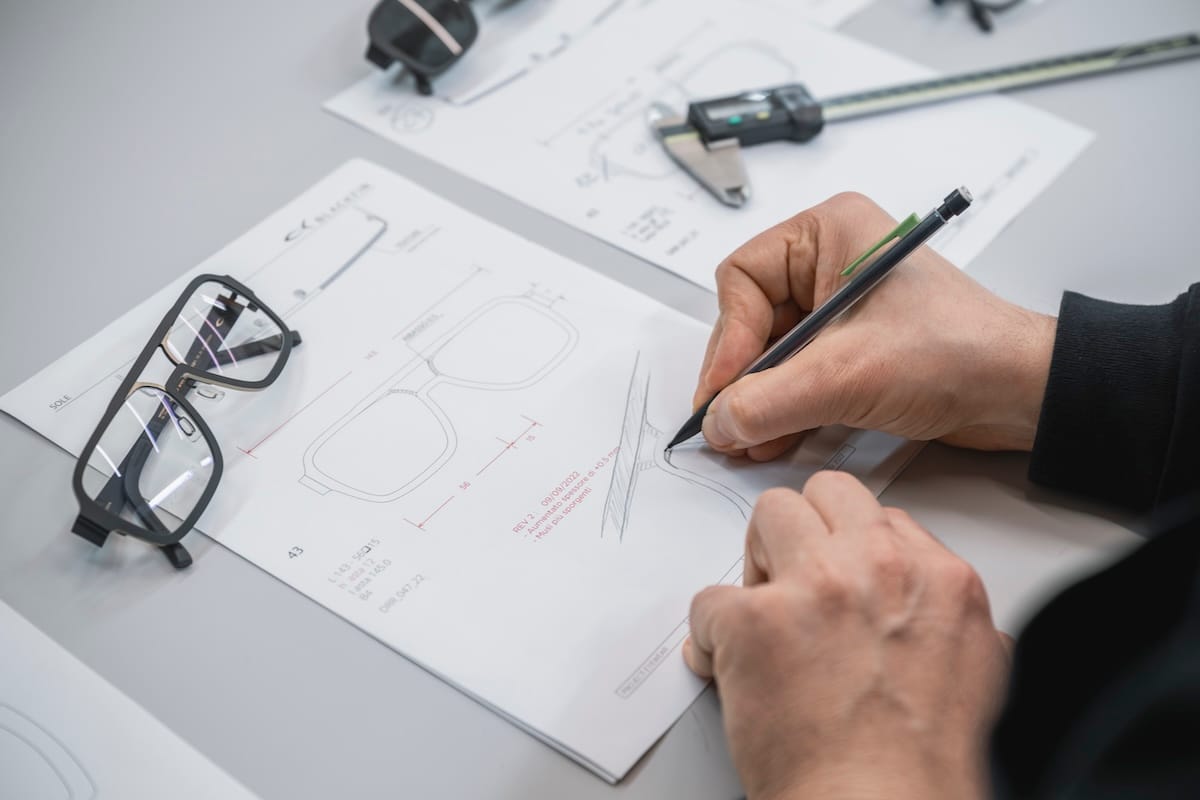
Blackfin: “From the initial concept to the final product, a full 11 months go by….”

How is a colour palette developed at Blackfin and what are your special capabilities in terms of colour techniques for titanium? As I hinted earlier, our approach to colour has undergone a massive evolution. Years ago, our color research was primarily instinctive and emotional. We developed new colors very quickly, focusing almost entirely on the immediate chromatic impact. The main goal was simply to excite the wearer.


Today, that artistic and emotional element hasn’t lost an ounce of its importance. In fact, since Blackfin is recognized as the benchmark brand for color on titanium, the search for highly evolved, sophisticated, and less ‘instinctive’ hues is more crucial than ever. However, the process behind it has become incredibly methodical, structured, and scientific. We now have a dedicated color team. To give you an idea of our rigor, our Scientific Director of Color Development is actually a Materials Engineer. When working with titanium, you need to understand color down to the molecular level to guarantee a finish that is not only beautiful but exceptionally strong and durable. We run endless technical tests and trials before a new tint or combination is ever approved for production.

To give you a sense of the sheer effort involved, today we manage 183 active base colours and 644 colour combinations in our portfolio. In the last year alone, we conducted 308 specific trials for new colors and ultimately created 163 brand-new color combinations. Managing this staggering level of scientific complexity and artistic freedom requires absolute control over every single variable. And once again, achieving this is only possible because we do absolutely everything in-house, under one roof.

What is your ultimate goal in terms of customer satisfaction regarding design and quality performance? When it comes to design, our ultimate goal is to continuously elevate our premium perception. We want our wearers to feel that uncompromising level of sophistication and excellence, not just in our most complex frames, but equally in our new minimal and timeless models. True premium design often speaks loudest through the purity of its most subtle details. Furthermore, as our business expands on an increasingly global scale, a major objective for us is to deeply understand and anticipate the unique expectations, cultural tastes, and color preferences of the diverse international markets we serve.
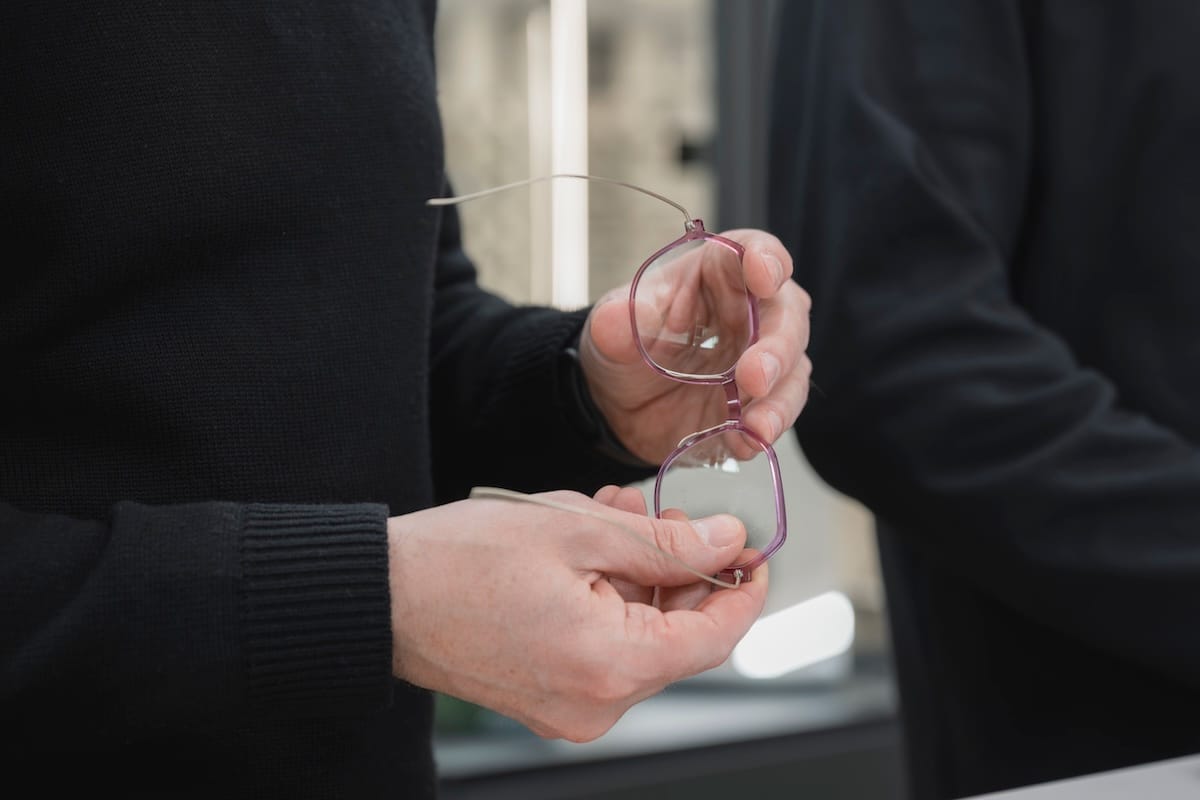
Person in a dark sweater holding and inspecting pink-rimmed eyeglasses with both hands.
Blackfin

Regarding technical quality and color performance, we are driven by an obsession with excellence, but we are also honest. We know that absolute perfection is technically impossible to reach—you can only continuously strive to get as close to it as humanly possible.

Because we are aware of this, our total in-house control becomes our greatest asset once again, extending beyond manufacturing and into customer care. Doing everything under one roof allows us to provide an enviable after-sales service directly from our headquarters here in Italy to all the markets we operate in worldwide. If a client needs support, we don’t have to rely on third-party suppliers; we manage it directly with the very same team that engineered and crafted their frame. For us, providing that profound, uncompromising reliability is the true definition of customer satisfaction.

When is your next big launch or collection presentation? Right now, our product portfolio across our existing families is extremely solid, mature, and comprehensive. So, our daily work isn’t about chasing loud ‘wow’ effects or temporary gimmicks. Instead, our goal is to surprise people through extreme sophistication in the details—subtle, highly refined craftsmanship that reveals itself upon closer inspection.

That being said, we have two major, high-impact launches tucked away in the drawer for next year. Both are limited editions designed to raise the bar to the absolute top and showcase the ultimate expression of what Blackfin is capable of achieving. The first will be officially presented at MIDO, and it is a prestigious project born from a collaboration of absolute international excellence. The second will premiere at SILMO—a brand-new limited edition following in the footsteps of our current Prometheus series, created to push our engineering and artistic boundaries even higher. We can’t wait to reveal them to the market.

Find out more at https://www.blackfin.eu

This is an Eyestylist Exclusive – all rights reserved. This content was not created using AI.
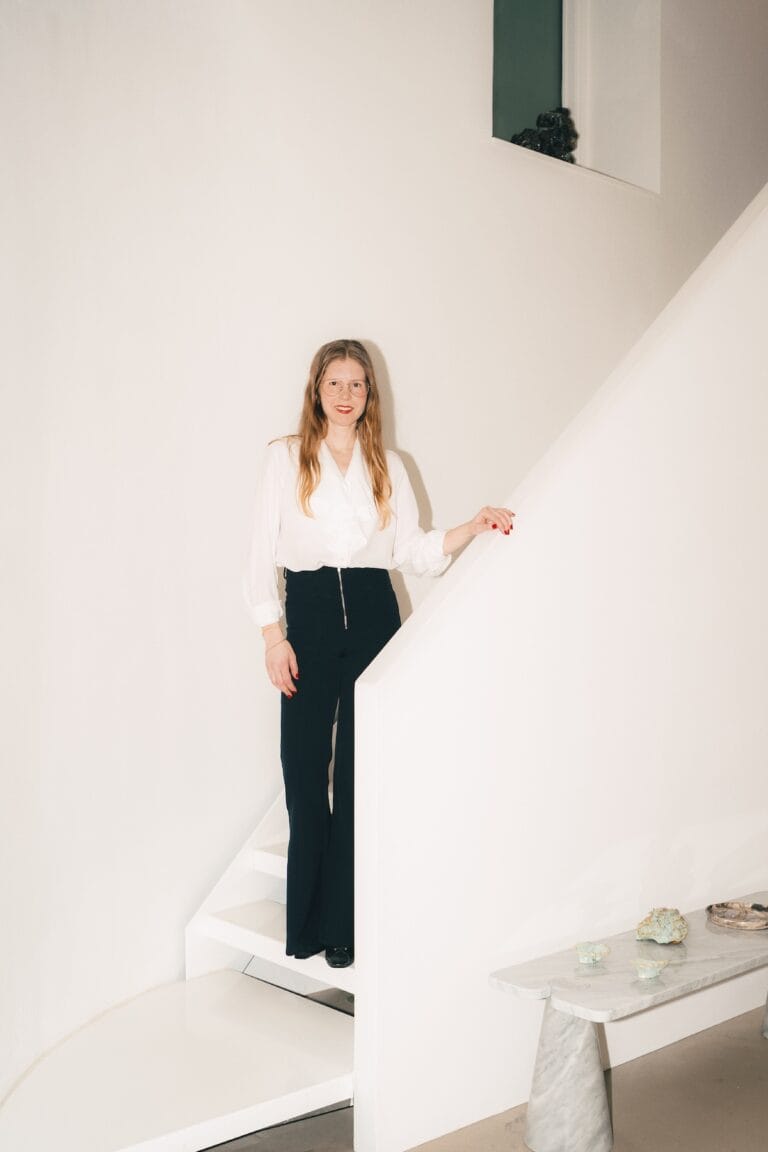
Woman with long blond hair and glasses standing on a white staircase, wearing a white blouse and black pants.

Johanna Skans: “Sustainability is a mindset”

Johanna Skans is the Founder and CEO of the eyewear label SKANS – one of the optical world’s most sustainable frame brands – and the Co-Founder of Frame the Future, the industry’s 1-year-old platform dedicated to accelerating sustainable action across the whole business. We interviewed her about both directions, and her path, so far….

When did you launch SKANS and why eyewear? What was your particular desire or focus at the time? Skans was launched in 2022, but the idea had been growing for many years. I trained as an optometrist and have spent my career working across almost every part of the optical industry—as an optometrist, store manager, product manager and buyer for one of Europe’s largest optical retailers. That gave me a unique perspective on both the clinical and commercial sides of eyewear.

Throughout my career, I struggled to find products that aligned with my values. Despite wanting to make better purchasing decisions, the industry offered very few environmentally responsible alternatives. Most frames were made from virgin or mixed materials, difficult to repair or recycle, and designed within a system that rewarded high consumption, short term profit rather than long term value creation respecting natural resources.

After completing an MBA, studying Business Sustainability Management, and later working for B Lab Nordics, it became clear to me that business could—and should—be a force for good. I realised that if I wanted to see change in the eyewear industry, I had to help create it myself. That is why I founded Skans. My ambition was to give optical retailers and consumers a better choice: beautifully designed eyewear with a significantly lower environmental footprint, while proving that good design, commercial success and responsible business can go hand in hand. Above: Johanna Skans, Founder & CEO, SKANS + Co-Founder of Frame the Future – with Andrew Clark and Xenia Glutz von Blotzheim 

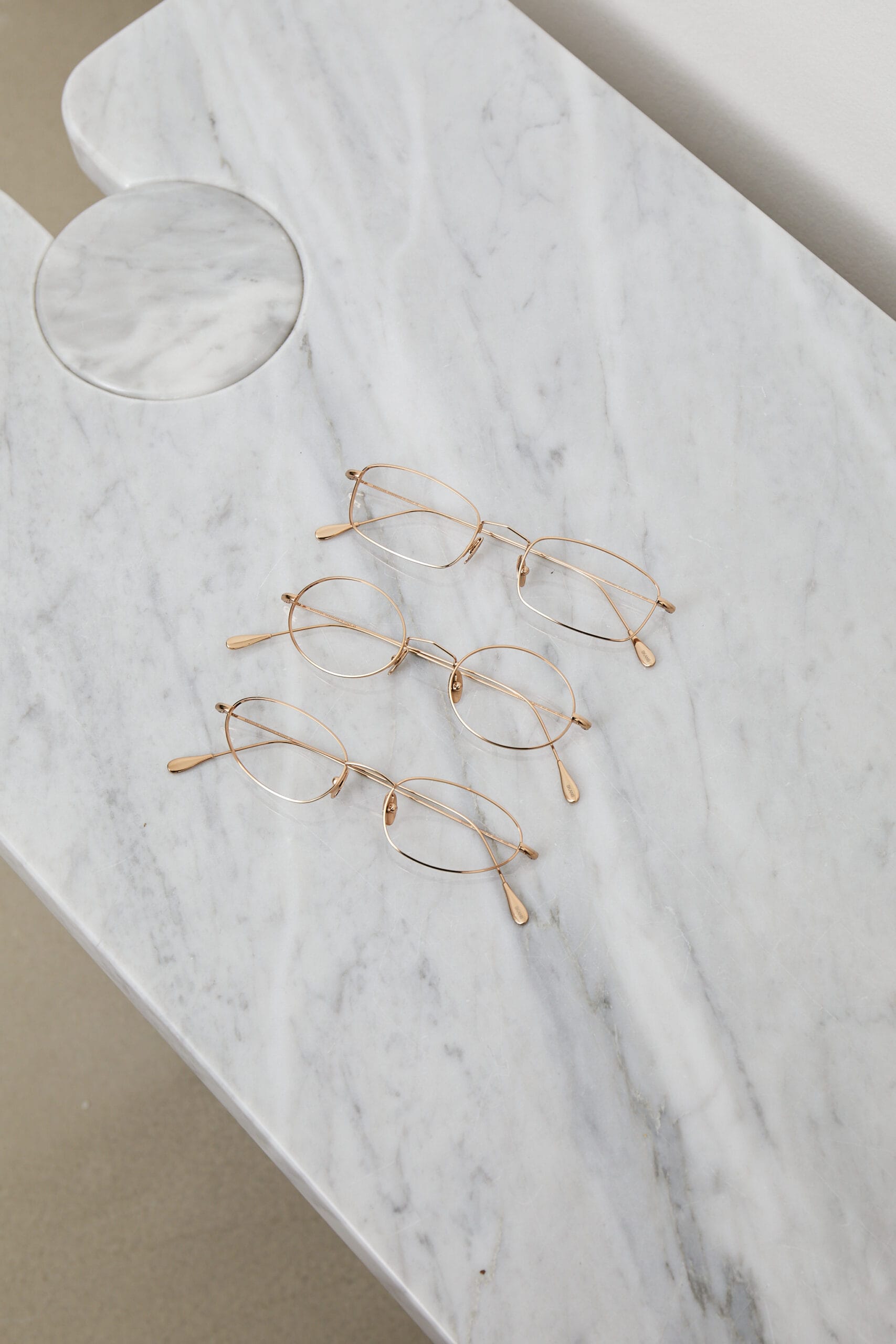
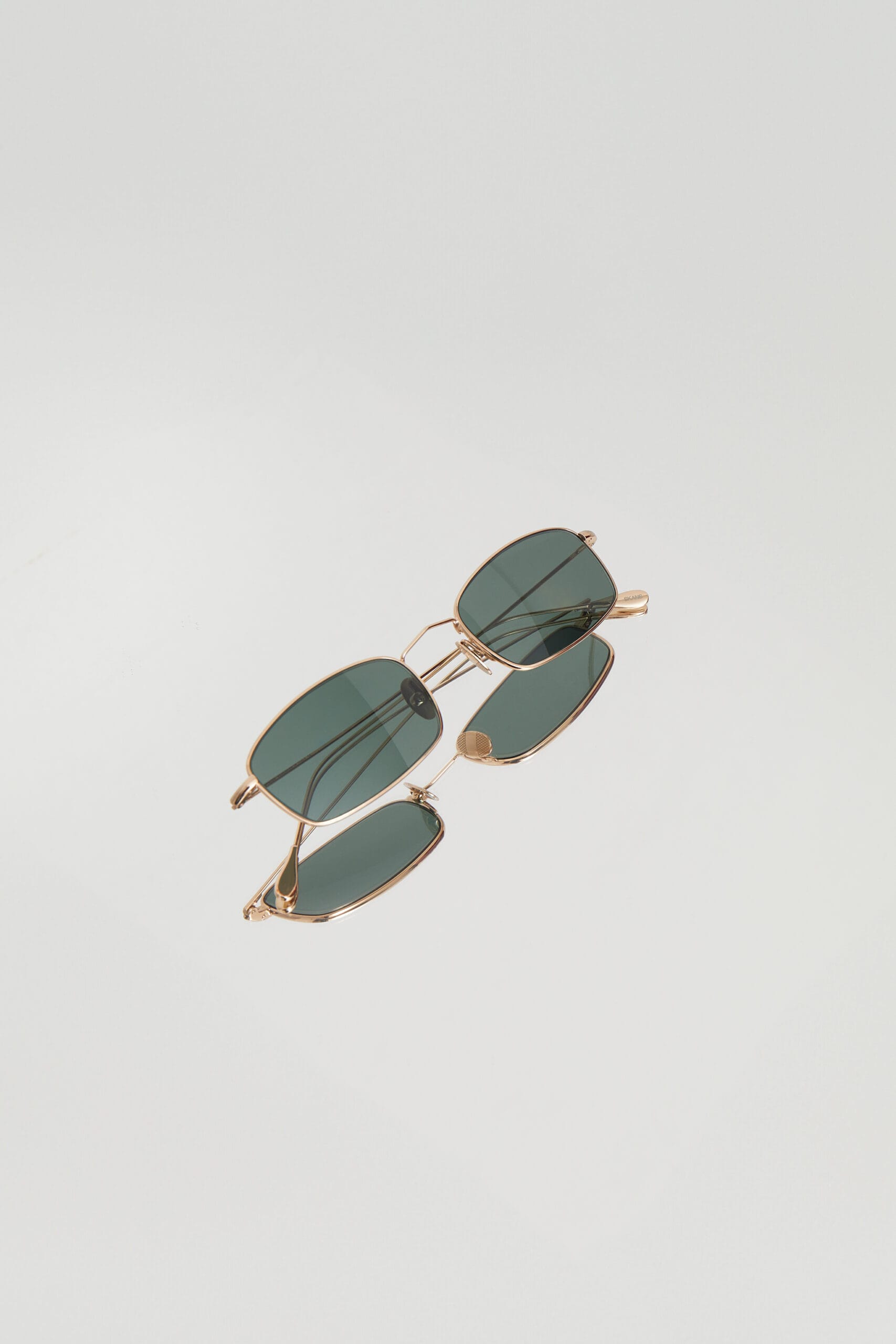
Gold wire-frame eyeglasses with round lenses resting on a white marble table.
SKANS: “beautifully designed eyewear with a significantly lower environmental footprint”

How would you describe your design style at SKANS today?  I would describe SKANS’ aesthetic as quiet everyday luxury. Eyewear designed to be worn and loved for many years. My philosophy is rooted in slow fashion: creating fewer, better products that balance beauty, function and longevity. Growing up in Sweden with Finnish roots, now living in Denmark, my design language is influenced by Nordic metropolitan life style — a balance between creativity, functionality and a deep appreciation for nature. Played out in clean lines, honest materials and functionality at the heart of every frame. The aesthetic is minimal yet distinctive; elegant with an urban edge. Confident rather than loud.

Every SKANS frame is created to be comfortable (super lightweight), durable (handcrafted in premium materials), circular (repairable and recyclable) and beautiful (confident without chasing trends). I love to play with contrasts and tend to design with soft, feminine lines and subtle details. To me, eyewear is like a piece of jewellery that should amplify the wearer’s character – elegant enough to disappear, distinctive enough to be remembered.

“It’s simple. To give back more to the planet than we take…” Mission Statement – SKANS

What are you currently working on in the collection? I’m designing a small number of new shapes that draw inspiration from the Nordic music scene – its quiet confidence, understated sensuality and subtle rebellion. The collection explores softer expressions of femininity through refined proportions and fresh silhouettes, while staying true to the SKANS design philosophy. You’ll recognise the clean lines, monochromatic palette and single-material construction that define SKANS. Every frame is stripped back to its essentials, allowing shape, proportion and honest materials to speak for themselves. The result is a collection that feels familiar yet unexpected – minimal, expressive and quietly distinctive.

You’ve done a lot of work on sustainable packaging as well as design to minimise your footprint and you’ve won a CSR award at SILMO in 2024. How do you maintain such a big commitment to sustainable design and development across everything you do? My guiding principle is to “make decisions that would make Mother Earth proud”. Whenever faced with a choice—whether it’s designing a frame, selecting materials, choosing manufacturing partners or deciding which initiatives or partnerships to prioritise, I try to look at it from the planet’s perspective.

For me, sustainability is a mindset, it’s a lifestyle and it’s embedded in every decision I make, both professionally and personally. That perspective naturally shapes the products we create and the business we build. I hope that’s reflected in what we’ve achieved at SKANS, including receiving the SILMO CSR Award in 2024 and being nominated again in 2025. But I´m a forever student and am learning every day.

You also have B Corp Certification? What is the process like and would you recommend it to all eyewear companies? We understand you have a lot of experience in this field? Pursuing B Corp certification as a start-up was an ambitious decision, but I believed it was the right foundation to build the company on from day one. Skans was created to use eyewear as a tool to address planetary challenges, so becoming a Certified B Corporation felt like a natural step. It wasn’t about earning a label—it was about having our business independently verified against rigorous sustainability standards and ensuring that our actions genuinely reflected the values and impact we set out to create.

SKANS frames are minimal, lightweight and built for everyday wear

Before founding SKANS, I worked at B Lab Nordics as Head of Engagement, supporting companies on their sustainability journeys, and I am also a certified B Leader, helping organisations prepare for B Corp certification. That experience gave me a deep understanding of what responsible business should look like—not just in theory, but in practice, across any industry. The certification process is rigorous. It starts with the Business Impact Assessment (BIA), a free online assessment consisting of around 250 questions covering every aspect of a company’s operations; environmental, social and Governance. Every answer must be supported by evidence, reports, policies, data or documented practices. It is unique as it challenges companies on a 360 degrees perspective. There are questions examining the governance structure and company purpose, treatment of employees, supply chain, community impact, customers and environmental footprint. It asks questions such as: How many percent of your suppliers are femaleled or LGBTQ led? Do your governing documents commit the company to creating positive impact for people and the planet? Does women hold 50% or more of the board seats? How do you measure your product’s environmental impact? How do you use your business as a force for good?

Each answer contributes to an overall score. To become a Certified B Corporation, a company must achieve at least 80 points out of 200 and successfully complete B Lab’s verification process. Skans achieved a score of 133.6, which, currently is the highest verified score of any eyewear brand globally. I am incredibly proud of that achievement, but even more importantly, it provides us with a framework for continuous improvement. Certification is not a one-time achievement. Companies must recertify every three years, demonstrating ongoing progress and adapting to increasingly demanding standards. We are currently preparing for our recertification. Would I recommend B Corp certification to other eyewear companies? Absolutely! Go to the free assessment today – B Corp is a comprehensive business transformation framework. It helps companies identify blind spots, measure progress, highlight your strengths, and build a business that creates long-term value for people, the planet and shareholders alike. For us, B Corp certification is a journey that challenges us to think outside the box and to leave each day a little bit better than yesterday.

You are also Co-Founder of the FRAME THE FUTURE which was launched just last year at Silmo. Why is this important to you and what do you feel FTF has achieved so far? Frame the Future is deeply important to me because no single company can create system change and large-scale impact. The environmental challenges we face—whether it’s circularity, recycling infrastructure, data collection, regulation or product design—are shared challenges that require shared solutions. Real progress only happens when the entire value chain works together. What I love about the eyewear industry is that it was built on improving people’s lives through better vision. Caring for people is already part of our DNA. I am convinced that we can extend that responsibility beyond the individual customer and start caring equally for the future of our loved ones – because isn’t that ultimately what sustainability is? The planet will survive, but the people living there?

The eyewear industry has all the ingredients to become a global leader in responsible innovation — we simply need to collaborate more than we compete. That is why Andrew Clark, Xenia Glutz von Blotzheim and myself founded Frame the Future: to provide a neutral platform where manufacturers, suppliers, brands, retailers and industry experts can come together to solve the challenges no company can solve alone. Our role is to build knowledge, develop practical tools and accelerate collective action. I’m incredibly proud of what we’ve achieved in a relatively short time. We’ve brought together stakeholders from across the value chain, hosted international roundtables, panels, webinars, published the industry’s first report identifying its shared sustainability challenges, and initiated collaborative projects such as the Product Environmental Footprint Category Rules (PEFCR) initiative for eyewear.

Getting the alliance off the ground has certainly had its challenges. We launched at a time of economic uncertainty, when many businesses were understandably focused on short-term priorities. But I remain convinced that sustainability is not separate from business success—it is fundamental to long-term resilience and competitiveness. The companies that will lead the future are those willing to collaborate, challenge established ways of working, and innovate within the planet’s boundaries.

Outside business, what is your biggest focus and most important means of relaxation? Wellbeing—spending time in nature, staying active, cooking plant-based food, and being with my husband and our two daughters. I’ve often made life decisions around that. I moved to Australia to be closer to the ocean and spend more time surfing while completing my MBA. Years later, we lived in the Dolomites so skiing could become part of everyday family life—and, as a bonus, we were closer to the heart of eyewear manufacturing.

Running is my favourite way to recharge. Early mornings, before the city wakes up, are when my mind is at its most creative, and many of my best ideas are born. I enjoy running marathons and try to complete at least one each year—not to chase a faster time, but because I enjoy the process and the reminder that growth comes from consistently challenging yourself. Whether it’s running, surfing, skiing, building an eyewear company or co-founding an industry alliance, it all comes back to the same thing: pursuing my ikigai—bringing together what I love, what I’m good at, what creates value for others, and what I hope contributes to a better future.

This interview feature is an Eyestylist Exclusive. All rights reserved. For more on SKANS visit https://skans.com – Skans has been introduced into the US by Julia Gogosha and Temple of Frames earlier in 2026 at Eyecon, NYC.

Woman with braided hair and sunglasses rests against a surfboard under a blue sky, ready to surf.

OTIS Eyewear: style with substance

The Australian eyewear brand, OTIS Eyewear has added more styles – now available also in Europe, designed to transcend the boundaries between style, durability, sustainability and technical excellence. OTIS is B Corp Certified

Founded in Yallingup, Western Australia, the independent brand, OTIS creates designs suitable for sports and the great outdoors, as well as for everyday city living. The focus for OTIS has always been on delivering style with substance, and a noteworthy commitment to sustainable design. “We really try to stay away from fast-fashion trends that only last a few months,” says Nathan Omodei, Director & CEO of OTIS. “Our focus has always been on creating timeless designs that outlast seasonal shifts and stay relevant for years to come. Our goal is to deliver frames that add genuine value to our customers’ lives and adventures, combining durability, comfort, and classic style.” Above: Birdie by OTIS Eyewear

Chorus by OTIS Eyewear – a stylish outdoor solution by the sustainable independent  eyewear brand

Their latest seasonal collection continues to deliver crowd favourites like the Swiss grilamid design for men, model After Dark from their debut season, as well as adding further appeal with a mix of both fashion and active frames.
The collection includes premium acetate and fashion-forward designs such as new style, Birdie (top), and the clean, crisp, and quietly confident model Chorus (above), a reworking of  the iconic wayfarer shape crafted from certified biodegradable Eco-Acetate.

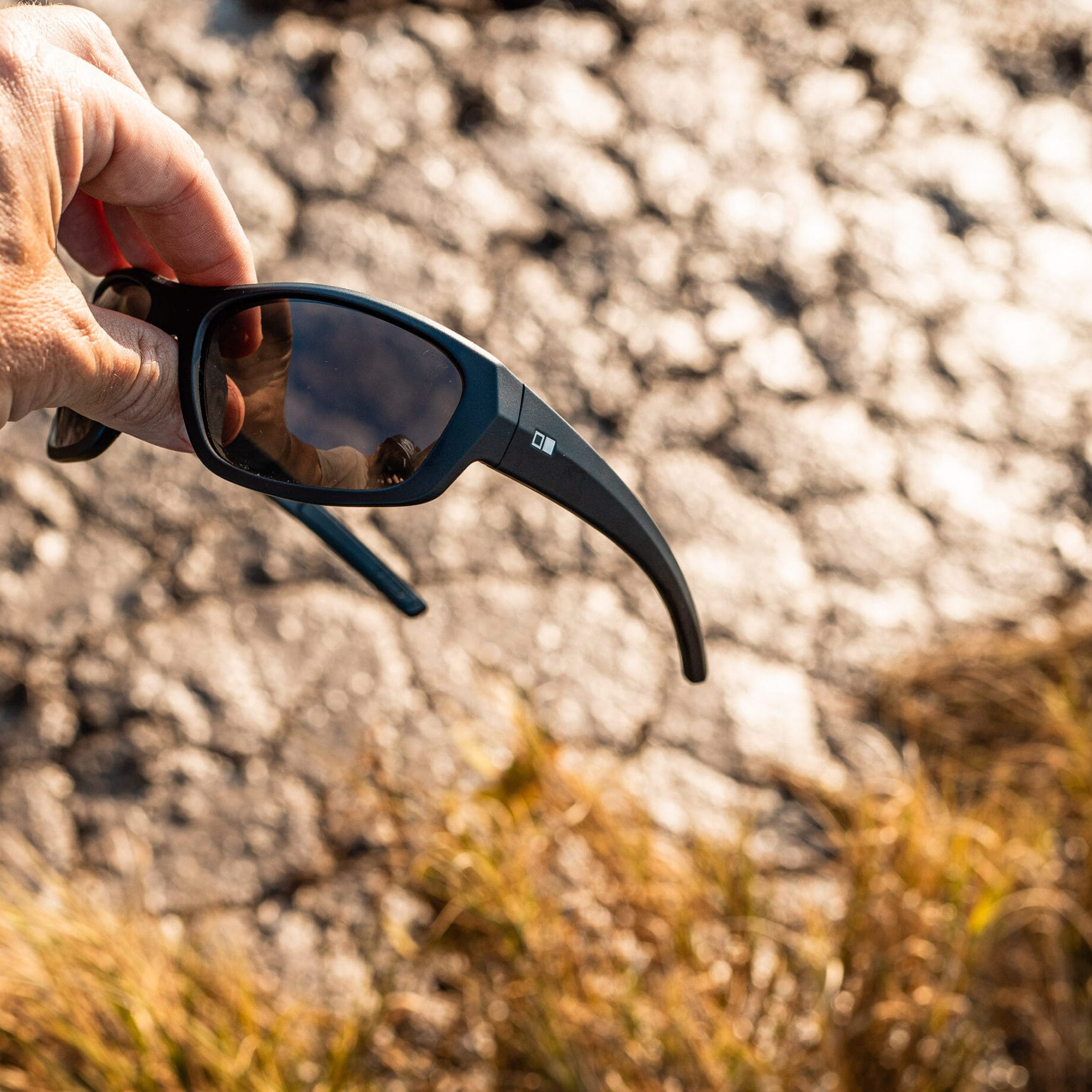
Close-up of a hand gripping black sunglasses with reflective lenses, outdoors on rocky ground.
Vanta by OTIS Eyewear – with LIT Lens technology – designed to wear for outdoor activities such as fishing, trekking and surfing

For those who seek a sports design OTIS highlights their Vanta Sport style this season. Built for the elements, this active frame features OTIS’s signature LIT Lens technology, built on scratch-resistant mineral glass. The LIT Lens boosts natural colours, increases contrast, and cuts glare. A pinnacle visual experience

LIT Lens technology at OTIS Eyewear / Light Improvement Technology is the next evolution in OTIS Mineral Glass lenses. The new L.I.T. lens offers clarity through colour enhancement. The exclusive Light Improvement Technology lifts primary colours in one’s surroundings while blocking out inter-primary shades to make vision more vivid and more precise. Find out more at www.otiseyewear.com

Otis Eyewear: the independent Australian brand is now certified B Corp

Last month, OTIS Eyewear recertified as a B Corp, alongside its parent company The Leisure Collective

The independent Australian-based sunglasses brand has improved its overall Impact Score to a highly commendable 94.6, an impressive confirmation that making small changes every single day adds up to a lasting, positive difference.
“This is the result of a huge effort from the entire team,” says Nathan Omodei, Director and CEO of The Leisure Collective. “Having the B Corp stamp is an incredible achievement, but we’ve realised its true value is the process, looking closely at the day-to-day and remembering why we do what we do. It’s both a pat on the back at what the team has achieved and a reminder that there’s so much more to be done. We will absolutely continue the good work.”

Sustainability is at the core of OTIS’s culture. Born on the rugged coast of Western Australia, the brand believes that protecting the environments which inspire them starts at the source. This recertification highlights several of their ongoing initiatives.
Mineral Glass: OTIS has been using endlessly recyclable mineral glass lenses since day one, saving almost a ton of plastic each year compared to standard lenses, they say. Made from non-toxic, natural materials like sand and soda ash, these lenses deliver exceptional clarity, permanent tinting, and high UV protection, lasting far longer than plastic alternatives. Above: Otis Eyewear campaign 

OTIS Eyewear: Jack Medland (Founder of Moonshine Surfboards) wears OTIS model Kingswood, an eco acetate design – featuring mineral glass lenses

Biodegradable and Bio-Based Frames: OTIS continue to evolve their Eco-Acetate range. These frames are made from renewable resources like cotton seeds and are certified biodegradable. The brand’s Eco-Grilamid frames are crafted from a bio-based resin derived from castor oil, reducing the use of fossil-fuels in production.

Hand reaching down to pick up bright red sunglasses from a sunlit sandy beach with small yellow flowers in the foreground.
Otis Eyewear – eco acetate Untitled frame

Plastic-Free Packaging: OTIS packaging is now 100% free from non-biodegradable plastic, earning a “Beyond Best Practice” rating from the Australian Packaging Covenant Organisation. They have also replaced single-use plastic sleeves with a recycled PET cleaning wrap for their glasses.
As a certified B Corp, OTIS continues to audit and refine its processes. They remain dedicated to creating premium, timeless eyewear that suits everyday adventure.

Find out more about OTIS Eyewear, an award-winning Australian eyewear brand, at https://eu.otiseyewear.com

Eyestylist’s 4 favourite booth designs at opti 2026

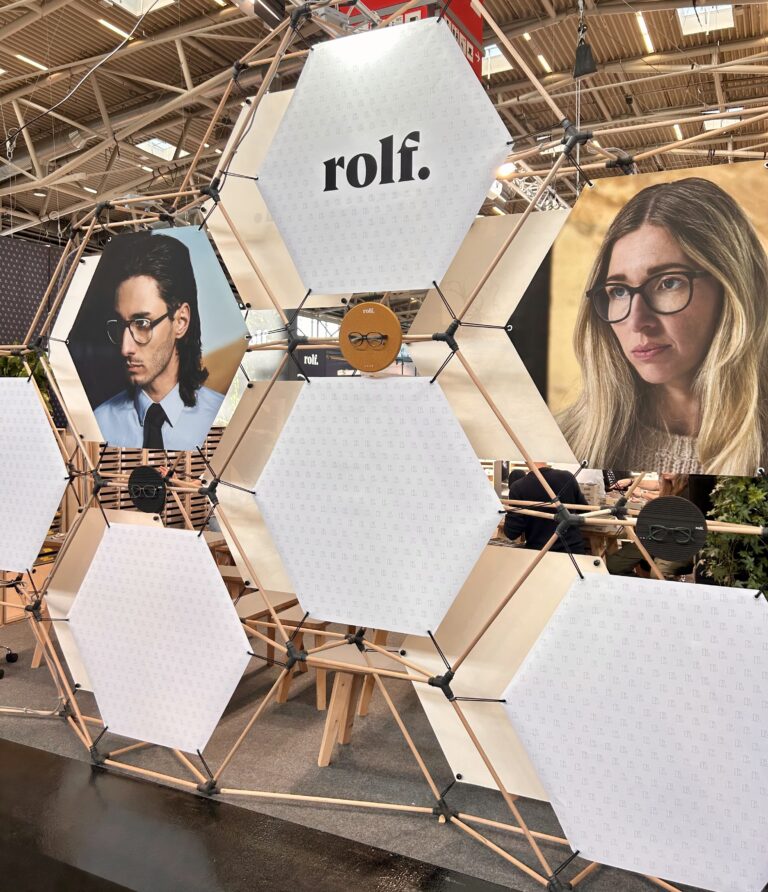
Stand design with a greater focus on sustainability and the use of cost-effective materials has visibly evolved in the last years in the optical world and companies and visitors we spoke to were enthusiastic about the more sustainable and innovative concepts on display. Reusable modular designs that can be customised reduce waste and highlight the innovative spirit and individuality of a company – and their brand values.

The Rolf stand, which was first launched at opti in January 2025, is welcoming and approachable with an open-plan modular design which uses minimal materials and interchangeable graphics and plants, making it easy to update and pack away or transport. The Rolf team designed the concept in-house. Find out more at https://www.eyestylist.com/2025/01/award-winning-natural-eyewear-brand-rolf-heads-to-munich/above, the ROLF stand at opti 2026, customised with a new campaign for the launch of substance aura – www.rolf-spectacles.com

Götti Switzerland: this year the brand presented the new collection Haute Contour inside their converted shipping  container

For some years, Götti Switzerland has combined the use of a container – designed  as an exhibition space and painted black – alongside an open plan area for meeting and greeting customers. The frames displayed in the container are arranged so that the feel of the space is that of a gallery. Additional displays in the ope plan space next to the container  showcase the eyewear beautifully using back-lit wall stands matching those inside the  container. www.gotti.ch

You Mawo: a fascinating architectural structure for the brand’s 10th anniversary

Celebrating 10 years, the 3D printed eyewear company You Mawo launched a new stand concept this weekend, bringing  the wow factor to opti. The organic shape of the “layered” architectural concept and its striking natural colour – was one of the highlights of the show. On the inside of the stand, a 10th anniversary “exhibition” showcased the German brand’s  early 3D printed prototypes and frames from various collections through the years. The folded form of the booth provided an inspiring backdrop for the launch of the new collection, Formation. www.youmawo.com

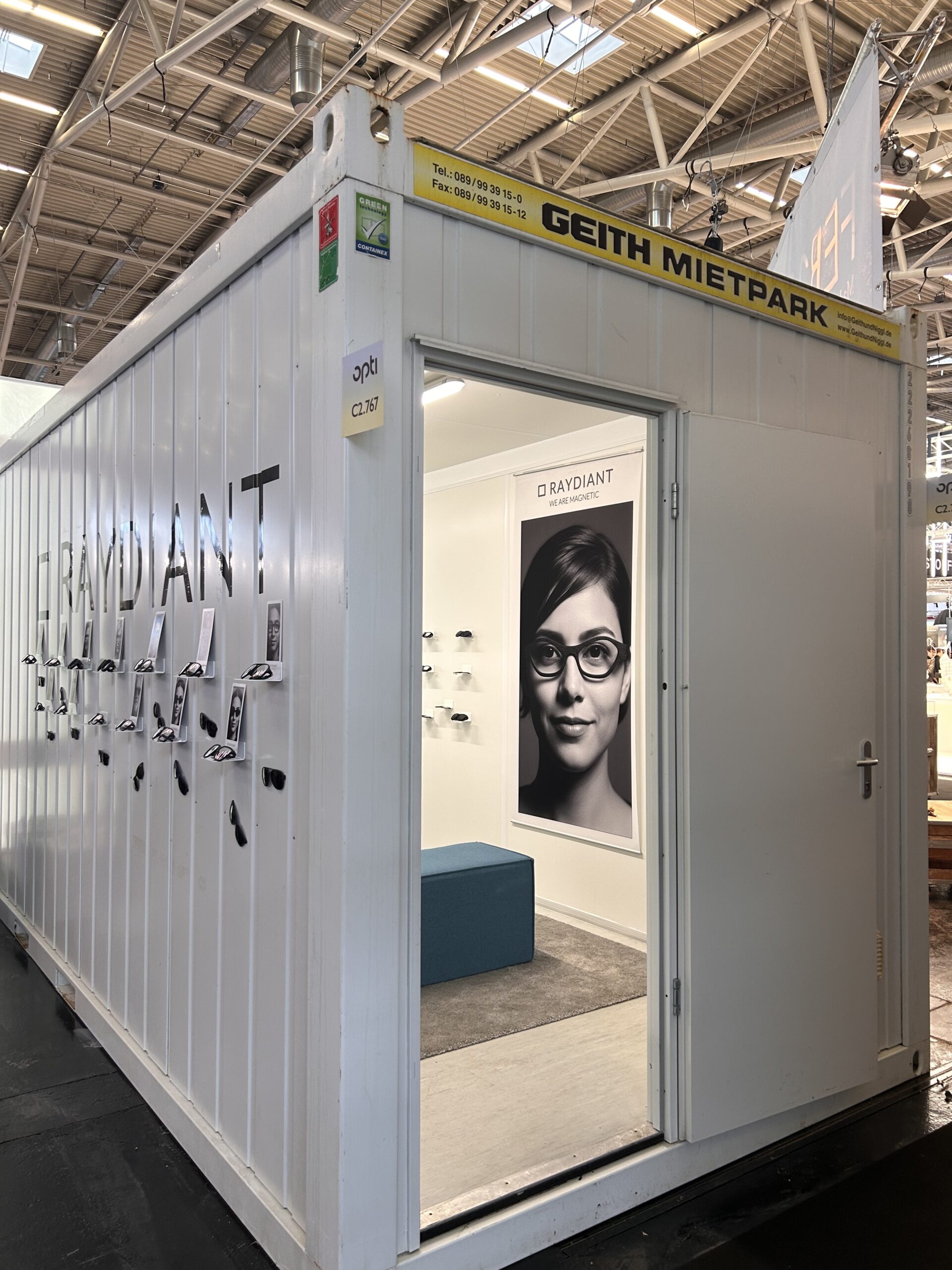
The Raydiant stand at opti – a recycled shipping container

3D printed eyewear brand, Raydiant also showcased their collection in a customised shipping container, with a display of frames on the exterior and an interior offering modular seating for meetings. Repurposed shipping containers have become quite popular as a sustainable choice for architectural use – both in commercial projects and domestic  builds where architects are stacking them to create a wide range of buildings. Raydiant Eyewear is an innovator in the field of 3D printed eyewear showcasing a magnetic clip system. Their latest collection features a noteworthy high-quality surface pattern effect. https://raydiant.de

This feature was written by Clodagh Norton. Not using AI. Copyright applies.