Creative spirits

Veronika Wildgruber

Multitalented designer Veronika Wildgruber began her career in eyewear alongside the celebrated Alain Mikli in Paris. After that, the young creative went on to win a Silmo D’Or with no less than her first ever frame design. Twelve years later, with commissions by brands including Hermès under her belt, Eyestylist catches up with the now established and highly regarded director and founder of her namesake eyewear label. 

 Tell us about your early life, and the journey you have taken in order to get to where you are today? I studied industrial design in Bolzano, Northern Italy. I think when I applied, my first intention was to be a graphic designer. I had liked my classes in industrial design and communication design and actually right up to the first half of the year, I realized that I really wanted to do product design and create objects. So, I graduated in industrial design and my plan was to become a furniture designer or a household object / interior designer. Then, I started to work in Paris doing an internship with a designer who was working with fashion as well as in product design.

Tiberius by Veronika Wildgruber

I intended to stay in Paris for four months, and in the end I stayed for years. After the internship I got into working a freelance job which rolled into another freelance job and so forth. Eventually, I began working for an Italian designer who shared his space with an eyewear maker Jacques Durand who was working alongside Mikli at the time. He was a big name in the city – everybody was talking about Mikli. To be honest, I didn’t really know Lee’s glasses because I was not involved with and didn’t have any contact within the industry. I never truly thought about working with him. It was all very new for me. In the moment it was more like an arrangement, sort of like “let’s share the space and maybe my assistant can give you some assistant work as well”. Then, from my perspective, it was solely about a paid job – you know, of course a rarity in the design area. So I said, yes. I think he also believed it was interesting to have somebody who was a designer, but didn’t know anything about his area – something that would make it interesting, and someone he would actually quite like to do some projects with.

He asked me to help on some collections and to design with my own eye. I have to say it wasn’t something I was always yearning to do, but I thought I’d like a bit of a challenge. It wasn’t at all a window into my future career at first, but it was more like, why not try it?
I crafted my first design with cardboard because I didn’t really know how to approach it. So, then we created the prototype frame with a model maker in acetate and presented it at Silmo in 2010 – and it won a Silmo D’Or! It felt like my first real moment after joining the eyewear world. It was a big surprise.

Briggs by Veronika Wildgruber

At the time I didn’t have a brand or a name in the industry, so the frame was just a number, without even a title. I think that kind of led me to believe I had a talent for design in this area, and pushed me to start this journey. I thought, if I am going to do it, I’ll do it with my own name – not as a collaboration or in a position working for someone else – but to try it for myself. From then on it was a strange and slow start: four pairs of glasses and two years later another four pairs of glasses and so on. It was never really a launch, you know, or a collection. That’s why I consider my growth into this world really organic; I wasn’t jumping in the deep end, I wanted to keep up my work in furniture design too – I would’ve felt as though I was cheating on my original dream if I had neglected it.
(more…)

Rolf Spectacles: an innovation agenda

Eyestylist Exclusive: The Austrian label has a series of developments to announce, with  innovation at the heart of every frame

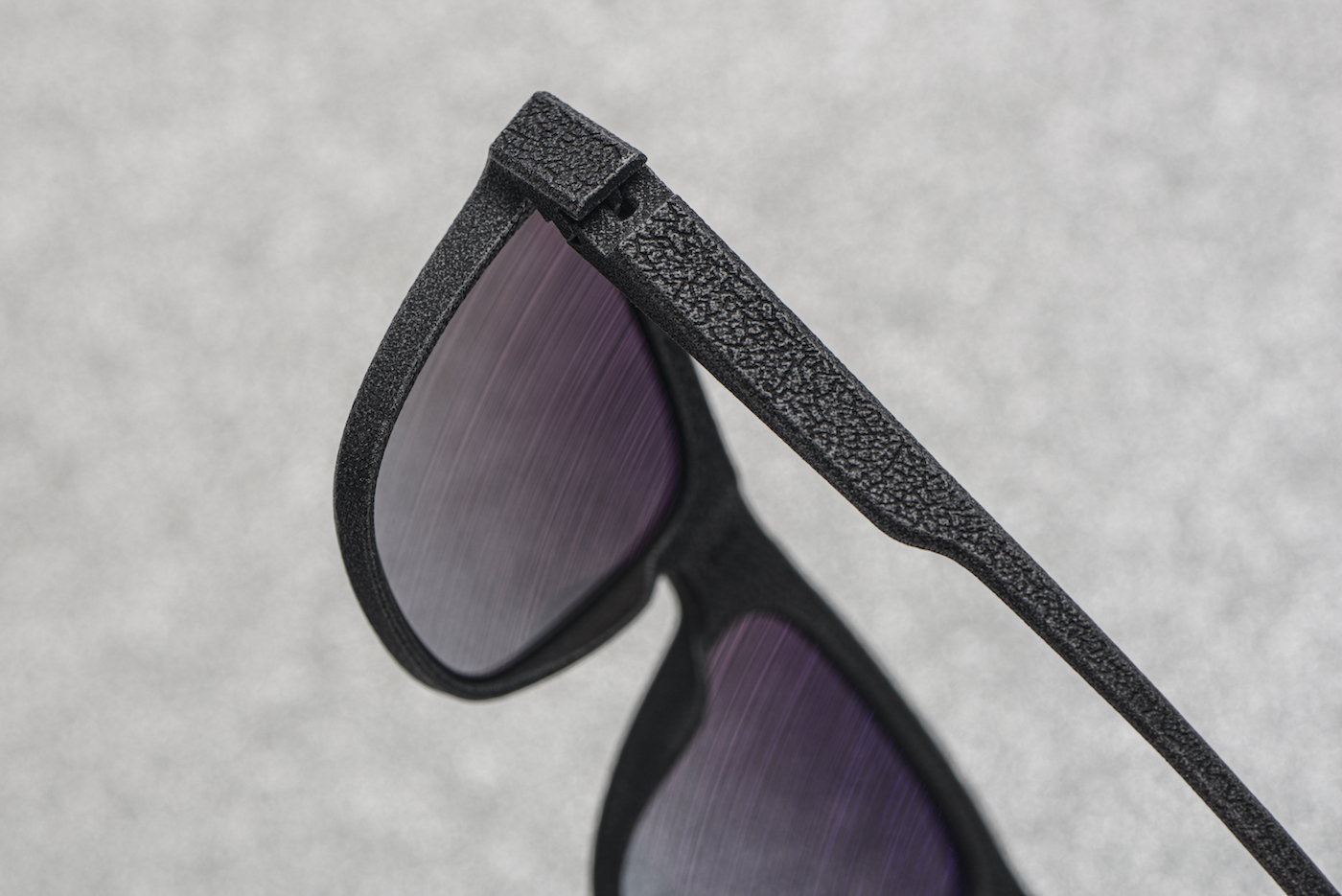
Rolf Spectacles, one of the pioneering small companies in the eyewear business, which remains true to its focus on quality and innovation in producing natural products with respect for the natural environment, has launched the first texture for its 3D printed plant-based frames. “This is the first release in the 3D printed substance mount collection made from castor beans,” Bernhard Wolf told Eyestylist. “There are more to come.” This first texture announced in March (https://www.eyestylist.com/2022/03/rolf-spectacles-adds-texture-to-plant-based-frames/) has a detailed pattern that reproduces the textures of natural structures like rock, dry earth. “If you look closely the pattern fades out towards the temple tip, this has taken a lot of tests and trials to get right, all done in our workshops in Austria. We are now working on new texture effects, always inspired from nature around us – the next one will appear in the regular substance line.”

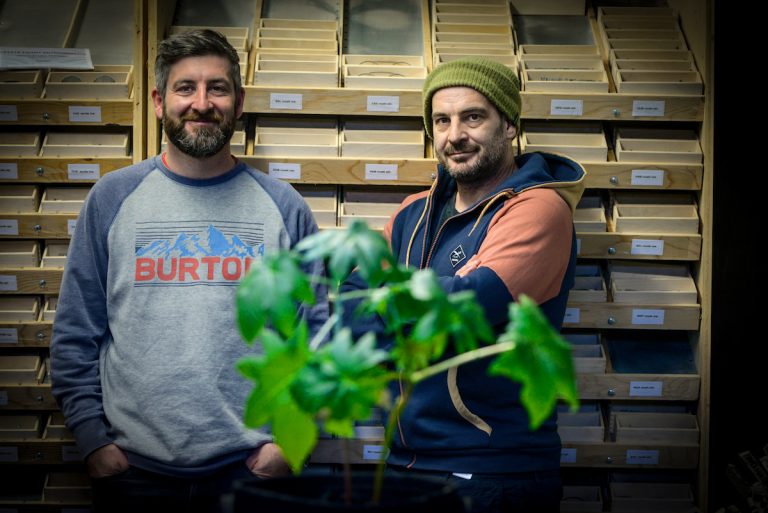
In true Rolf style, away from the eco hype, the team has continued quietly through the last months in developing the possibilities of the 3D printed plant-based eyewear, while also turning attention to the development of 3D printed titanium designs. “We are always building our skills to create everything here in one place….we are completely self-reliant, everything is done in-house and finishes by hand with a process that strives for quality, continuity in innovation and always with transparency and  a genuine respect for nature and the environment. Above:  Brothers Bernhard and Roland Wolf, Rolf Spectacles

Rolf Spectacles – the new texture in the substance mount collection

Meanwhile, other new projects have been evolving successfully. With several new dads among the team at Rolf, a kid’s collection was inevitable. “The great thing about the plant-based 3d material is its comfort and durability, it’s ideal for youngsters,” Bernhard told Eyestylist. “We are going to launch five new shapes for kids in four colours. We have also studied the possibilities of a really extremely comfortable Asian fit, this material offers the right versatility, strength and style.”

Rolf Substance: new styles for kids
Rolf Spectacles: Evolved – close up of model Ardea

In the  wood collection too, time and effort has been spent in researching bestsellers, whether shapes or particular colours of natural wood to further develop the line to accommodate what the customer really wants. “We have been able to put a lot of work into creating combinations of favourite wood colours, and the results are really something – you can play with two types of wood on the front and the lining for very different effects in the mix of colours and grains.” Rolf Spectacles will exhibit at the trade fairs MIDO and Opti. To find out more about their natural collections, visit www.rolf-spectacles.com By Clodagh Norton – All rights reserved.

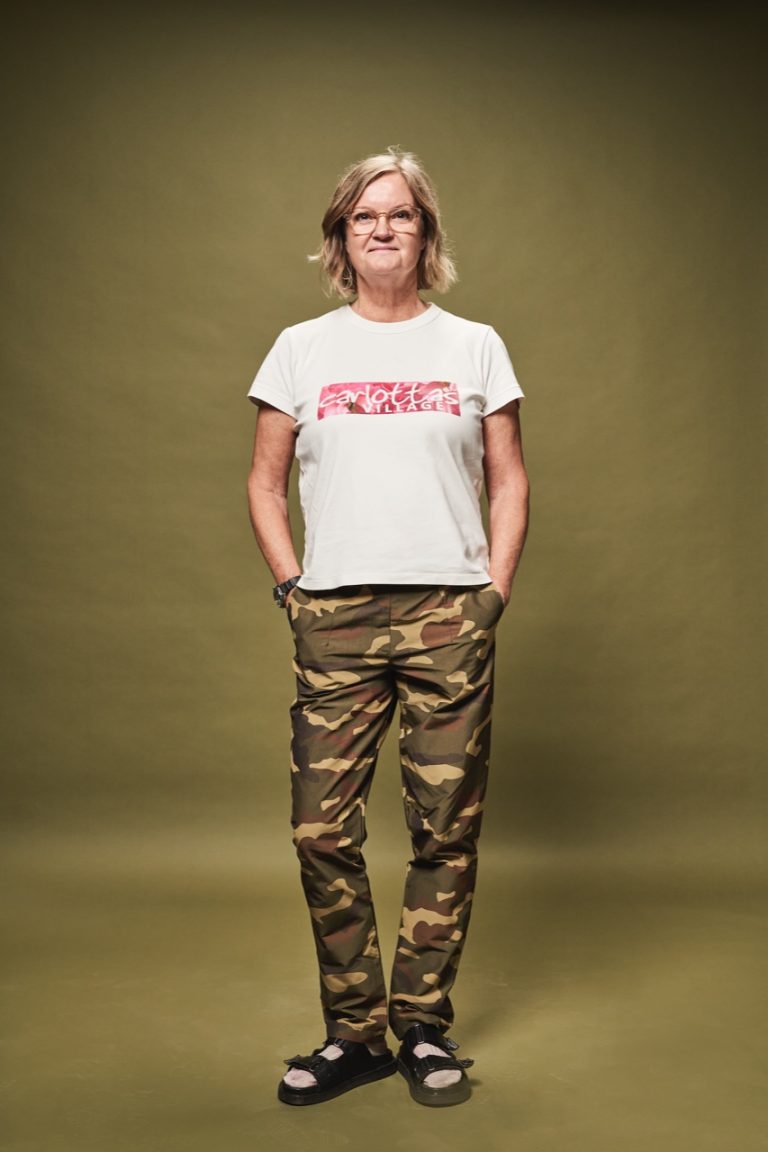
Danish designer Charlotte Dokkedal Leth, Carlotta’s Village

Scandinavian eyewear brand Carlotta’s Village offers a fresh aesthetic perspective on eyewear design, placing the wearer at the forefront of the frame concept. It’s no surprise that the brand appeals to those of strong opinions and colourful personalities who do not shy away from making a stand; whether that be in life, in their career, or in their own personal style. Eyestylist spoke to Charlotte Dokkedal Leth, Co-founder, Designer and Managing Director.

We have read that your love of visual expression started out at a young age. When was it that this passion first ignited and how has it continued to develop over time? Well, I think it probably started before I can remember. I say this because I’ve been visually expressing myself for as long as I can remember; whether it be drawing, painting, ceramics – whatever! Nowadays, I believe it is referred to as “a maker”. I’ve always been making things because although I liked the academic world as well, I fell in love with the feeling of actually creating something. It’s the fact that you can see it right in front of you, what has come from your work, from your imagination, you know? You have something you can literally touch, that started out as an image in your head.

Where do you find the inspiration for your work? It’s difficult to answer actually because it comes from a buildup of expressions from various sources. It can be, if I can find a word – it can be something like a type of light, for example; if I go for a stroll in the woods, it can be the way that light hits the trees or, how it falls down through the leaves and makes a pattern on the path that you’re walking on. Or it can be colour; there’s always such a lot of shades of green in nature, it’s in the trees, it’s in the leaves and it grows in mushrooms and fungus – the textures of those natural entities too, are incredibly special and inspiring. If I’m feeling totally lost, I go to an art museum because there’s always something there to spark my imagination – if I go and see what other creative people do, then it inspires me to go home and do something just as amazing. The same thing is true for architecture, I think a city like Paris that has all those beautiful cast iron balconies and details like that, it’s always going to make you feel something. Above: Charlotte Dokkedal Leth, Co-founder

Alfie by Carlotta’s Village – in crystal tomato

As someone who is passionate about design, was creating a career specifically in the eyewear industry always your dream? No, it wasn’t ever ,actually. I ended up there by accident; if I hadn’t married Bo, I would have never got into the business – I think it would have been something else, something creative of course. When I was very young, being a designer or an artist was not really taken very seriously, it was not considered a “real job”. My parents said you will live a good life  if you go to this school and complete this course, and I thought ‘okay, I’ll do this and see what happens’. So, for many years I was in the IT business; my education is in Software Programming and I have worked within that industry for twenty years, in different areas. The fun thing about the IT sector is that one of the reasons there is so much freedom for creativity is that it’s a young business, so there are not many rules. When I started working in it, around twenty five years ago, there were not many options for education, or pathways; you had to build the business for yourself and find out how things worked, and what you can do with them. After doing this I married Bo, and he was in the eyewear industry; we went to all the fairs and shows and started discussing why we couldn’t find any of the frames we were looking for, and that’s how Carlotta’s Village started.

Could you tell us about your current collection of eyewear?  Of course! Right now we are focusing on acetate because that is where we started. The colours are translucent – I love the effect translucency has because it can reflect light and other colours; they can reflect what you’re wearing, they let your own skin pigment come through the frame, so they always somehow fit in. I love how our frames allow their wearer to play the main role, they don’t take centre stage. We want our frames to further accentuate and enhance the features and the style of those who wear them.

A subtle panto shape, model Zen by Carlotta’s Village

How would you describe the regular customer, or the client base of Carlotta’s Village? I think it’s hard to say something generally with any client base, but especially for us as our clients range from age fourteen to ninety four. However, I think the one thing our customers have in common is their attitude, they have an opinion, they are not afraid to take a stand. Of course they care about their appearance but they don’t necessarily want it to be what they are wearing – more so a reflection of who they are, a statement, but in a more personal sense. When we hear from some of our dealers they say “We have customers that once they’ve purchased a Carlotta’s Village frame, they’re passionate about it and want another – nothing else will suffice.”

We would love to hear about the founding of Carlotta’s Village; the steps it took to get where you are today… Well, we started off discussing the visible gap in the market for the frames we desired, but also the fact that being a couple was a factor to consider; it’s always risky entering into business with someone you live with and love. Bo had been an independent agent for many years and I did his bookkeeping and stuff like that, so in a sense that actually was a benefit to us because we already knew that we could work together. Then there are other things that are similar to work that also show you are compatible in a working environment like housekeeping, cooking, gardening etc. We started out very small with three frame styles in three colours. So we took our small tray of frames to the clients Bo already had and went from there. We had a bit of an advantage starting out, over other small eyewear brands. I still had my job as a software consultant on the side, but it was hard to do both things to a high standard, so I gave it up – I like to give my entire self to my work. I think it was a controlled kind of risk because we didn’t start out with a huge investment that could have made us bankrupt, or left us with nothing; we started with a small investment that was controllable. We didn’t just do it, I mean, we were talking about it for years.

Carlotta’s Village: friends, family and locals from the area appear in the campaign images at Carlotta’s Village

Would you ever consider branching out with the brand of Carlotta’s Village into another area of design? That’s funny that you should ask that, because that was actually our initial idea! Calling our brand Carlotta’s Village was done so it could be seen as a virtual, global village of products for our customers. We wanted to ensure we would not be limited by our brand in the future. There are some creative people who are only in one line of work; they are painters or clothing designers or whatever else. I’ve always been doing many different things, I’m never only doing one thing – I like to have multiple outlets for my creativity. I crave variety, and I’m not good at having only one focus. I always say I could never have been a ‘tennis pro’ or something like that, because having the restraint and dedication to playing tennis seven or eight hours every day, seven days a week and never doing much else – that would kill me. So yes, I think our original idea of Carlotta’s Village is still something I would like to explore, and something we will likely do in the future – I can’t say when just yet, but it’s definitely on the horizon.

Carlotta’s Village prides itself on being a conscious eyewear brand. What would your thoughts on that be regarding sustainability and how do you implement it within your products / or brand? Well, I think ‘sustainability’ is a word that has been so misinterpreted and taken as a hostage for all kinds of marketing speculations. It’s funny because we attempted to launch sustainable packaging for Carlotta’s Village about five years ago, before it was ‘cool’ – it really wasn’t received well then;  while it probably would have been welcome and encouraged today. I’m of the opinion that there isn’t actually a fixed definition of what being sustainable is other than that you shouldn’t leave the planet in a worse condition than it was when you arrived. I’m someone who is allergic to so many things, so in that sense I’ve always been very attentive to what materials are used in whatever products I am purchasing or consuming. So, it was important to me from the beginning that we didn’t use any materials that we couldn’t vouch for – luckily, acetate is biodegradable and today you can create really high quality acetate with no bad chemicals or anything in it so it’s very skin-friendly. In the business of eyewear, there is also the other advantage that it’s a small product, with a long life-cycle that doesn’t weigh much, meaning transport is not as huge ca oncern as it is for many other companies and manufacturers. I also think you get what you pay for; if you want the cheapest product and the fastest delivery you’re not going to get the highest quality, most beautiful and durable frames – it just doesn’t make sense to think otherwise. That’s why we have such a strong, good relationship with our manufacturers, we never doubt their costs or timelines and they never fail to meet our expectations – that respect, that line of chain production, is sustainable in itself. Find out more  about the brand at https://carlottasvillage.com

A Zoom interview by Victoria G. L. Brunton exclusively for Eyestylist.com

Beate Leinz: “My brand is me”

Beate Leinz may not be a household name (yet), but she is responsible for designing some iconic frames in the world of eyewear – some of which provide inspiration for other brands and makers to this day. Designing for PRADA, Tom Ford and Yohji Yamamoto, Leinz has a ‘claim to fame’ or two – now she has set out on her own, to create a collection of iconic frames with her own aesthetic, for a change: LEINZ Eyewear.

What was the beginning of your journey? Did you always know you wanted to work in accessories?  Oh, I think at that time in my life the word ‘accessories’ didn’t even exist in my world; I was young, it was 1985. In terms of the ignition of my journey, I knew I had to learn a lot about design and production. After high school I started an apprenticeship as a watchmaker – I was really thrown in the deep end, learning how to fix watches with a monocle on my eye on an extremely technical level. Although the technical drawing really stood to me later in life – when I first started in eyewear this experience and background was invaluable. The technicalities in watchmaking and eyewear are not the same, but the method in which they are practiced is almost identical. I didn’t stay in watch making because… my watches never really worked! I’m not such a technical thinker, more of an aesthetic constructor. That is why goldsmithing was more my world; that’s where I went next. I worked with the jewellery designer Wilhelm T. Mattar in Cologne who I still admire deeply today. I think of him as more of an artist, he creates art in the shape of jewellery. I learned a lot from him that I practice in the creation of my frames today.

LEINZ Eyewear: attention to detail, and innovative material combinations

Would you say that you implement your learning from that period in your life into your designs now? Yes, absolutely. I think it’s more in the aesthetic rather than the technical side – the base is beauty – you bring what you feel inside and create something beautiful with it. First, you need to understand what it is, what makes something beautiful; something is beautiful when it reaches your heart – not only your eyes, like a beautiful person – it’s deeper than that. Mattar and I discussed this a lot in our work together and I still think about it when I design and create.

You’ve worked for some absolute giants in the fashion industry, tell us about your time there…Yes! I worked for Prada, Tom Ford and Yohji Yamamoto, being a part of these brands was exciting and a highlight in my life, absolutely. For Prada, I worked in a team of designers, we worked on the theme “minimal baroque” – the theme of Prada’s show that year. The team worked tirelessly to contribute to and design a pair of truly iconic frames. I complemented the spiral design on the arms with the best matching fronts. The frames ended up being sold really successfully, so much so they are still copied to this day. Of course seeing the success of my designs was a huge confidence boost; it erased any doubts I had and proved to me I was capable of creating something special. Design is a process; you have to try, try and try again to find something that is widely accepted and adored by the market, whilst still creating something innovative and new.

LEINZ Eyewear : a glam mix of acetate and 3D printed material

Was it the success of these iconic frame designs that encouraged you to start your own brand? It was and it wasn’t – I mean that in the sense that the desire to do so was always there, but of course this success brought me reassurance and confidence as I mentioned. I think it only pushed me further towards finally getting the courage to do what I had always wanted to do. Even when I was in Cologne all those years ago, I met with a producer from Denmark who created some prototypes of my designs – of course at the time I didn’t have enough money or experience to start my own brand – but the urge to do so was certainly there. I realise now the amount of work and creativity that goes into inventing a revolutionary and iconic frame. Although my earlier design successes are credited to another label, I know that’s what I signed up for. You put so much into something, and then you give the work up and it’s gone. But I am proud of that.  All the same I feel thrilled to see my own name on my own work for a change.

Tell us a little about LEINZ Eyewear? I mean, to put it simply; my brand is me. There is not much else to add!

We’d love to hear a bit more about your latest collection…The inspiration for my latest collection came from my desire to “re-invent” 3D printing, giving it a bit of a “glow-up” as my daughter says. I am also in love with acetate as a material, so this provides the perfect contrast to the 3D printed material – I think contrast is necessary in all design, in materials, colours, tones and textures; that’s what my work and my design is about, it’s important to me. This collection brings that contrast to another level; the frames are deconstruct-able and they each incorporate two tones / colours, this is not something typically done in 3D printing. There are a lot of brown tones in the collection, it’s incredibly on trend at the moment and I love the colour. The structure of the frame itself has a fluctuating wave of density throughout, flowing seamlessly from lens to arm. Each section of the frame was printed as its own independent shape – endless combinations of contrasting colours. I’m eager to see how this will succeed in the market, because I love bulky frames.

In terms of sustainability, where does LEINZ Eyewear stand?  I am passionate about sustainability and the world we live in, it’s nothing other than fact to say we are part of a world that over-consumes. However, I think in the world of eyewear over-consumption is not the major problem – some people hang on to glasses for years, there isn’t as intense of a desire to keep up with trends in comparison with the rest of the fashion industry. Packaging, display props, care tools and cases is where our area of waste and destruction lies, and it is here that I am trying to create as little waste as possible within LEINZ Eyewear; our display stands and cases are made of recycled leather and are recyclable. I hope to have zero-waste surrounding my frames in the near future. For more information visit www.leinzeyewear.com. (Instagram: @leinzeyewear) This feature interview took place on Zoom after SILMO 2021. Written by Victoria G. L. Brunton exclusively for Eyestylist.com.

Swiss eyewear: Nirvan Javan

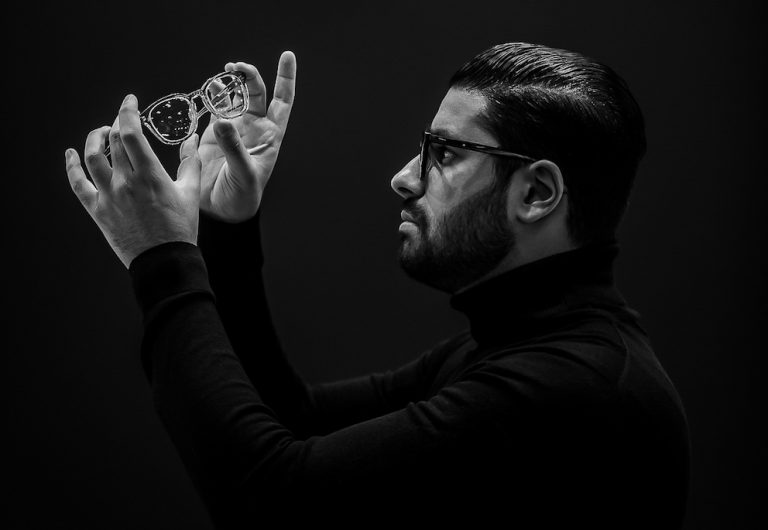
The Swiss eyewear designer cherishes film-making, working with others – and any opportunity to travel. In an interview, we asked him to share his creative design philosophy and explain how it applies to his work.

What was the path that led you to eyewear design and how do your formative experiences shape your design style?  Drawing was always a way of communication for me. I have a Persian background, it was not easy to talk German with the other kids in kindergarten. So I mostly expressed myself through small sketches. Over time this turned into a fascination for design and fashion design, everything from jewellery to clothing. Later on, I began an apprenticeship to be an optician. Then the future was clear to me ‘I will design eyewear’ I decided. How this design finally looked was largely inspired by my past, the multicultural aspect of it to be exact. Putting various, different pieces together to create something new, this will always be fascinating to me.

Today Nirvan Javan is a well-known Swiss frame brand. When you first launched, what was your focus, your approach and your goal? When we started, the approach was centered around purism. The glasses themselves stood in the forefront, while details were discarded. The glasses were freed from any kind of excess, not even a logo. Clear lines and a timelessness in design that survives the decades, that is what made the early models unique. Since then, the brand has evolved. This philosophy of purism transformed into a lifestyle, into a concept of ‘enablement’: to let others experience the world at its best.

Nirvan Javan: titanium styles in the Tokyo collection – ‘an interplay of tradition and technology

What has been the most inspirational part of your journey, and what has been the most challenging? It’s the literal journeys I take that offer me immense inspiration. Every time I come to a new destination it is an amazing moment for me. Traveling through foreign streets, while trying to be as open as possible, without any kind of preconceptions, makes unique experiences possible. You’re taking in the architecture, the culture and the way of living and let them merge with your own experiences. This year and the past year didn’t make it easy to live this openness though. The pandemic closed the world of and made it difficult in some places and even impossible in others to experience them. But in the end, it has increased our anticipation for visiting the world, when borders open again.

Can you give us an example of your most enjoyable collaboration to date? This summer we created a new collection with Kochoptik – a well-known optician in Switzerland. Our inspiration was the Arabica coffee bean!

Nirvan Javan; frames inspired by Arabica coffee beans

How do you reflect on the last 18 months (of pandemic) and what did you find in that period that has had some positive bearing on you or your company? Last year was a challenge, as well as a great opportunity. One could go deeper into oneself, get inspired and let this inspiration flow into the collections. Nevertheless, I am looking forward to the year ahead with great expectation.

Craft and design are at the very heart of your independent label. When you’re not working, what other passions do you have that relate to these artistic tendencies? Travel is one of my biggest passions. Going to distant places and experiencing different cultures will always be a great pleasure. I would also add storytelling and film. The visual creativity and coordination that goes into the creation of a film fascinates me; I hope this passion translates into our own video production for the brand.

As the new launches arrive, can you pick out for us the theme in your collections that point to the way ahead for your brand and your collections for autumn/winter. The brand counts creativity as one of its guiding principles when translating cities into frames. Capturing the pure essence of a metropolis and then turning it into a material representation of the city, with everything that makes it unique, that is creativity. No matter what new destination the brand is trying to capture in the frames, elegance will always be a defining factor. There’s nothing as elegant as walking through life with an open mind, taking in all the impressions of all the vastly different locations and forming something new out of them. So the act of experiencing new cultures is deeply rooted in my design process. Every aspect of a city and its culture are reflected not only in the shape, but also in the material of the glasses. Tokyo’s interplay of tradition and technology for example can be found in the extravagant forms and high-quality titanium frames. Nirvan Javan will show the new collections at Hall of Frames in Zurich this weekend on 12th and 13th September 2021. www.nirvanjavan.com