Arts + travel

The wall display: celebrating colour

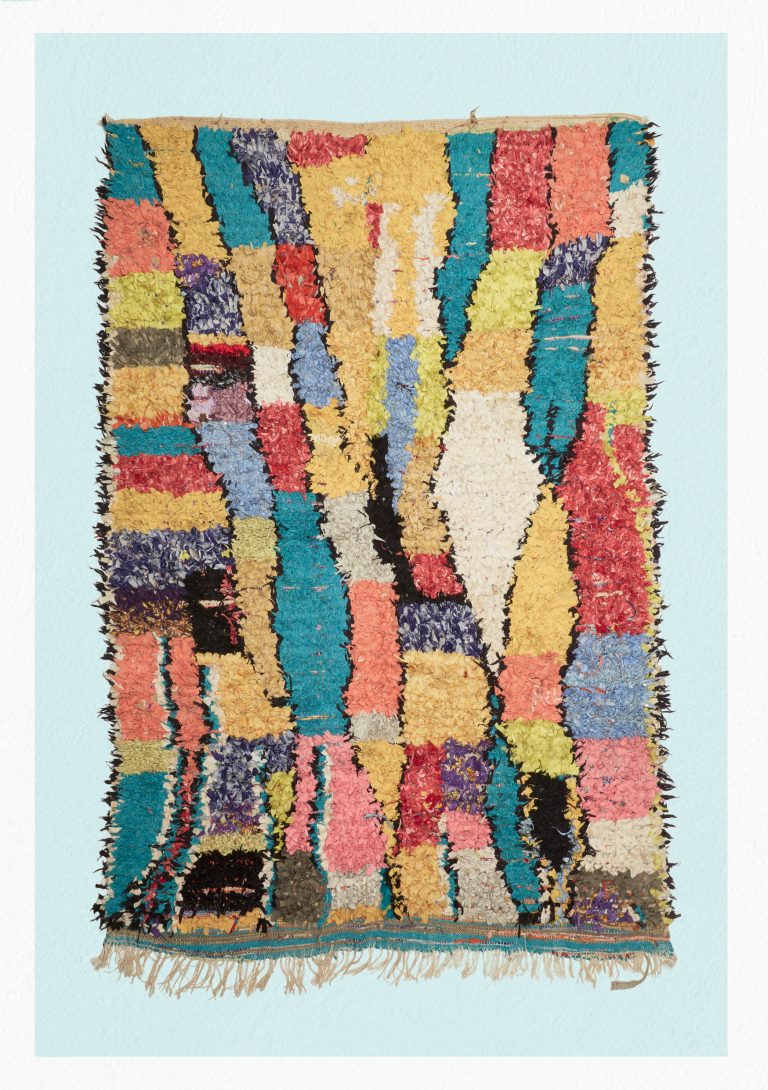
As rugs see a revival as true works of art fit for display on the wall, a new exhibition in Milan, timed for Milan Design Week, presents the Boucherouite collection of stunning Berber “Afolki” carpets.

The carpets come from different parts of the Middle Atlas in Morocco. Those created in Azilal are particularly creative, woven by hand by Berber women who expertly select the mix of recycled cotton, wool and synthetic materials. Above: Forbidden Dance – made with Boucherouite recycled yarn

Wedding Flight

The new Boucherouite collection for 2018 is the result of a careful selection of designs from different localities in the region and lengthy discussion with the female creators themselves.

“The Boucherouite is a universal women’s code. It comes from the heart and develops through the women’s hands with extraordinary creativity,” says Mohamed El Alami, the founder of Afolki. “When I describe the carpets it is as if I am talking about Maliparmi, every creation is like a small and unique story. From this affinity is born the idea of a partnership with the Salone, and it represents a perfect occasion to present our new collection.”

For more information visit www.maliparmi.com / www.afolki.com – Boutique Maliparmi, via Solferino 3, Brera, Milan – 17th to 22nd April 2018 – CN
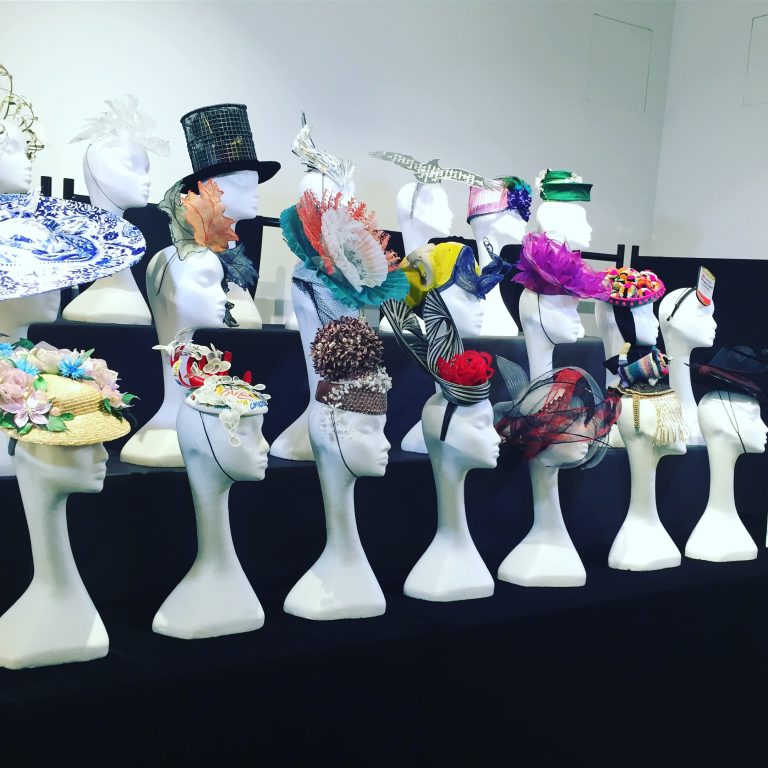
The Great Hat Exhibition 2018

In March, 130 Milliners from around the world will showcase their 200 beautiful creations inspired by a piece of history or culture, crafted with unique technique and creative expertise. The exhibition takes place at The Living Centre, near King’s Cross during London Hat Week (www.londonhatweek.com), a celebration of the art of hats and a showcase of talented designers from around the world. The name of the 2018 London Hat Week exhibition originates from the historical Great Exhibition that took place in London in 1851.

Hat by Natasha Mobey Millinery

The exhibition is managed and curated by Monique Lee, Founder of X Terrace, a fashion platform tailored to connect creatives in Europe with fast growing fashion companies worldwide. Monique’s designs have been featured on more than 200 covers of the most prestigious fashion and design magazines in the world including Vogue, Vanity Fair and L’Officiel. She has recently become one of the official milliners for Royal Ascot 2018.

Hat by Monique Lee

In anticipation of the exhibition, a press preview at PINKO flagship store highlighted 32 of the hats in a live presentation with four models. Designers participating included Wendy Scully Millinery, Dorothy Morant Millinery, Monique Lee, and Ana bella.

The Great Hat exhibition takes place from 22nd to 28th March 2018 at The Living Centre, 2 Ossulston Street, London NW1 1DF. For more details and tickets visit www.xterrace.com/hat18 CN


The Milliner: Fashion + Art

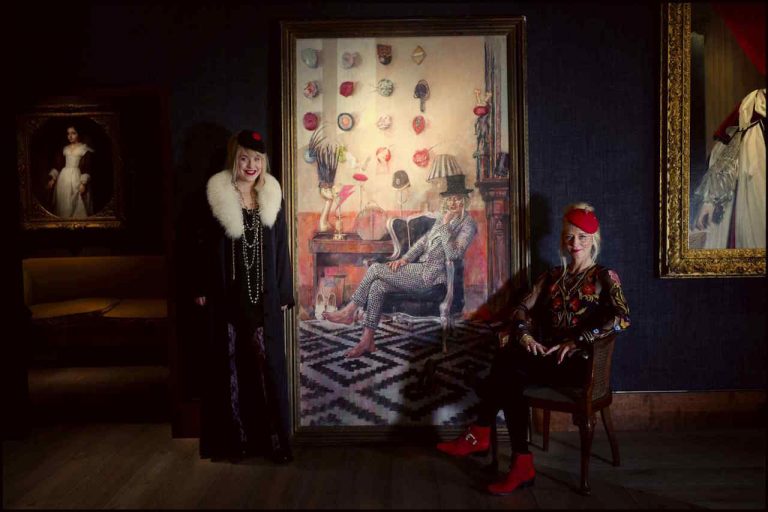
A unique exhibition is currently on display at the elegant Philip Mould Gallery on Pall Mall in London, celebrating the collaboration of hat designer Victoria Grant and portrait artist Lorna May Wadsworth. The two artists are inspired by each other: Wadsworth unveils a large-scale portrait of Grant; and Victoria has created a selection of imaginative headwear influenced by Lorna, history and historical costume. An extra special touch are the charming portrait miniatures in the Philip Mould & Co. collection that accent the beret and top hat designs by Victoria. (Top image: Lorna May Wadsworth and Victoria Grant, with the Wadsworth portrait of Victoria. Photo:Barney Cokeliss)

Victoria Grant wearing one of her stylish berets with Cedric. Photo: Barney Cokeliss

Long before photography existed, portrait miniatures were love tokens – a very personal item – painted by celebrated artists of the era. The miniatures were often worn on the body by both men and women, and used as accessories on coats, dresses and hats. The exhibition seeks to remind viewers that these highly personal and intimate objects, now generally displayed in cabinets or on walls, were often originally intended to be proudly worn. Philip Mould portrait miniature consultant Emma Rutherford, will also be examining the history of the hat jewel, and its portrayal in various historical pictures.

Top hat and veil by Victoria Grant, with portrait miniature

With a royal wedding in the offing for Prince Harry and Megan Markle in May, the great interest after what dress the bride will wear is about hats. Royal etiquette dictates that all women attending an official royal occasion must wear a head covering. Victoria Grant was one of the top milliners for the royal wedding of Prince William and Kate Middleton. Among Grant’s many clients are models, fashion luminaries, and superstars. Her hat designs range from luxurious chic to radical avant-garde for couture houses.

Beret with pearl trim by Victoria Grant, and portrait miniature in a pearl-trimmed frame

The Philip Mould Gallery represents Lorna May Wadsworth, and the award-winning portrait painter’s work runs the spectrum from politicians to priests. She painted former Prime Minister Margaret Thatcher in five private sittings at her home in 2007, plus David Blunkett during his tenure as Home Secretary, and the Archbishop of Canterbury. This unique event celebrates the enduring cross-pollination between portraiture and fashion in anticipation of London Fashion Week. The Milliner at Philip Mould Gallery continues through 18th February. www.philipmould.com JG

Opera: Passion, Power and Politics at the V&A

Four hundred years of operatic passion and European history highlight the spectacular exhibition currently on view at the Victoria & Albert Museum in London. The exhibition – in collaboration with the Royal Opera House – is a splendid, intriguing journey that explores opera on a grand scale. This is the first exhibition staged in the new spacious, subterranean Sainsbury Gallery at the V&A. Opera: Passion, Power and Politics is a musical journey to seven cities, and focuses on seven operatic premiers. It explores how the social, political, artistic and economic factors interact with great moments in opera history, to reveal a story of Europe over hundreds of years.

Draft of part of Cherubino’s Act I aria ‘Non so piu cosa son’ (K492 no. 6) from ‘The Marriage of Figaro’, 1786 (ink on paper) by Mozart, Wolfgang Amadeus (1756-91); British Library, London, UK/Bridgeman Images

Never a fan of headphones, this exhibition totally changed my perspective. The sound experience is exquisite – with world-leading performances dynamically changing as the visitor explores cities and objects. The result is an evocative and fully immersive sound performance. The seven cities and premieres in the exhibit include: Venice with Monteverdi’s L’Incoronazione de Poppea in 1642, which made its initial appearance during the Carnival season in Venice, and transitioned opera from private court entertainment to the public realm. The opera tour then continues to London and Handel’s Rinaldo in 1771, one of the first Italian language operas performed in London, as the city emerged as a global trade centre.

“Milano”, from the series “Fratelli d’Italia” (2005-2016) Matthias Schaller

Mozart’s Le nozze de Figaro premiered in Vienna in 1786, an opera that is much loved to this day. A piano on which Mozart played when visiting Prague is also on display, the first time the instrument has left Prague since the 18th century, to be shown for this exhibition. Verdi and Milan are synonymous, and the composer’s superb Nabucco premiered at La Scala in 1842. Verdi was a master of the chorus; and Va pensierfo (Chorus of the Hebrew Slaves from Nabucco) became Italy’s unofficial nathional anthem.

Manet, Edouard (1832-1883): Music in the Tuileries Gardens, 1862. London, National Gallery

During the reign of Emperor Napoleon 111, opera in Paris had immense status, and in 1861 Wagner’s Tannhâuser premiered and polarised audiences…as only Wagner can. However, Wagner’s vision for the art form proved inspirational for future writers and artists. The beautiful city of Dresden, with its history of artistic expressionism, was the setting for Richard Strauss’s premiere Salome in 1905. The opera was based on the play Salome, written in French  by Oscar Wilde. The final opera explored is Shostakovich’s Lady Macbeth of Mtsensk, that opened in St. Petersburg in 1934. It was banned under political censorship in 1936, and Shostakovich never wrote another opera.

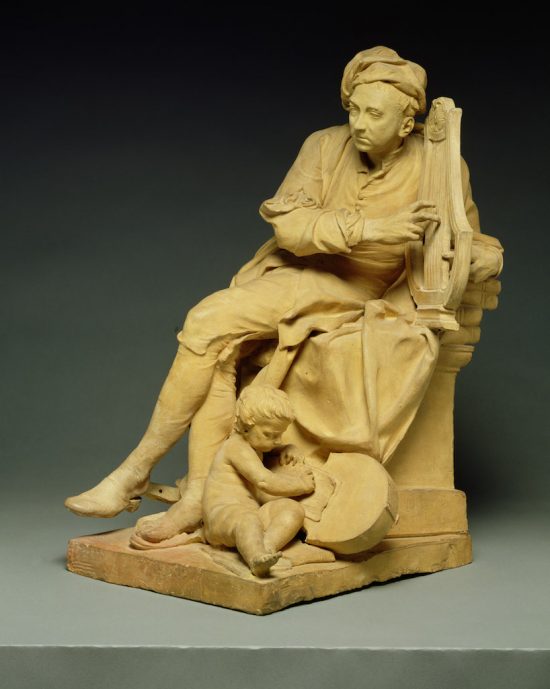
George Frederick Handel (1685-1759); (Terracotta) by Louis François Roubiliac, (1702-62); Pre-1738, The Fitzwilliam Museum, University of Cambridge,

Opera: Passion, Power and Politics introduces more than three hundred amazing objects from the V&A collection, along with creative stage sets; manuscripts; costumes; paintings; important international loans; and compelling not-to-be-missed footage of seminal opera performances. The exhibition is marvellous and mesmerising, for opera fans and the non-opera going public alike. Opera: Passion, Power and Politics in collaboration with the Royal Opera House, and sponsored by Sociétié Génerale continues until 25th February 2018. vam.ac.uk/Opera JG

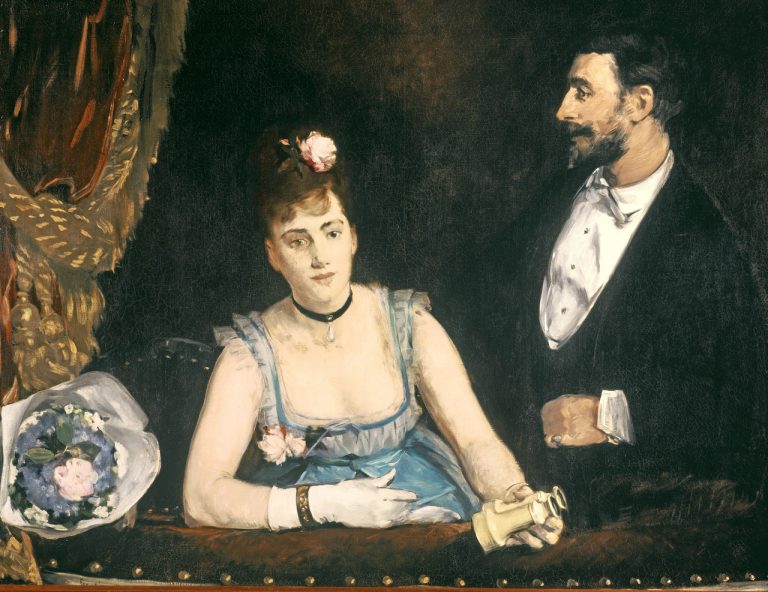
Top image: Eva Gonzalés (1849-83) oil on canvas, c. 1874 Paris Musée d’Orsay, gift of Jean Guérard, 1927 Musée d’Orsay, Paris France/Bridgeman Images


Balenciaga: Shaping Fashion V&A London

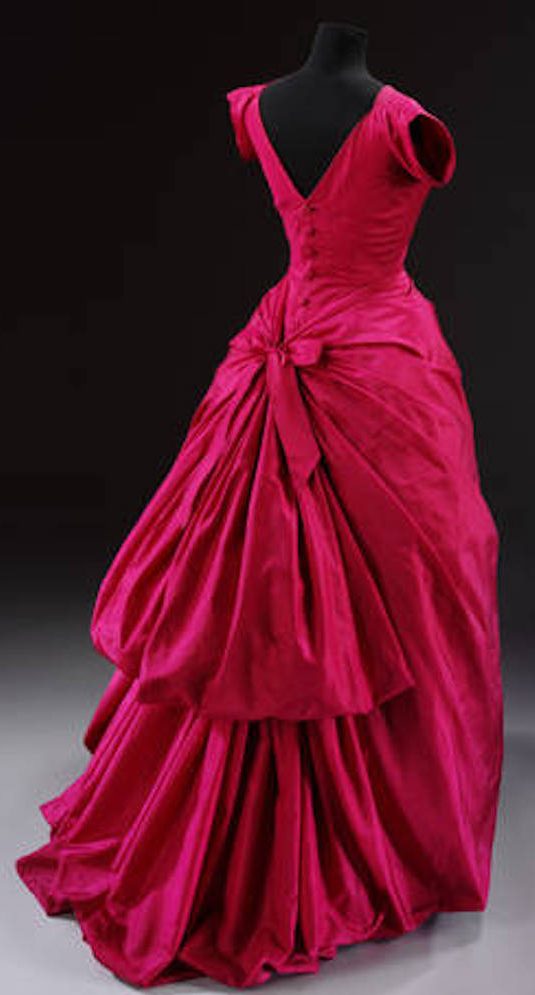
Since the renowned Spanish couturier created his first fashion collection, it was Balenciaga’s time-honoured tradition to create fine quality designs that inspired, endured and were relished by his customers.  This year, two museums have hosted exhibitions celebrating the designer – Musee Bourdelle in Paris, www.eyestylist.com/balenciaga – and currently at the Victoria & Albert Museum in London is Balenciaga: Shaping Fashion. Top image: The Balloon hem silk taffeta evening dress Cristobal Balenciaga Paris 1954 Victoria and Albert Museum London

Cristobal Balenciaga at work, 1968 Paris France Photograph by Henri Cartier-Bresson Henri Cartier-Bresson/Magnum Photos

Diana Vreeland, the iconic editor of American Vogue in the 1960’s and early 70’s proclaimed: “For twenty years, Balenciaga was the prophet of nearly every major change in silhouette.”  Christian Dior pronounced: “Haute couture is like an orchestra whose conductor is Balenciaga.”

Wild silk evening dress (detail), Cristobal Balenciaga with embroidery by Lesage, 1960-2 Paris France Victoria & Albert Museum, London

The designs are characterised by their sculptural quality, deft manipulation of textiles, and dynamic use of colours and textures. Inspiration derived from many sources: his own Spanish heritage; influences from 19th century dress; and the Japanese kimono.