Creative spirits

Jesse Stevens, Finest Seven

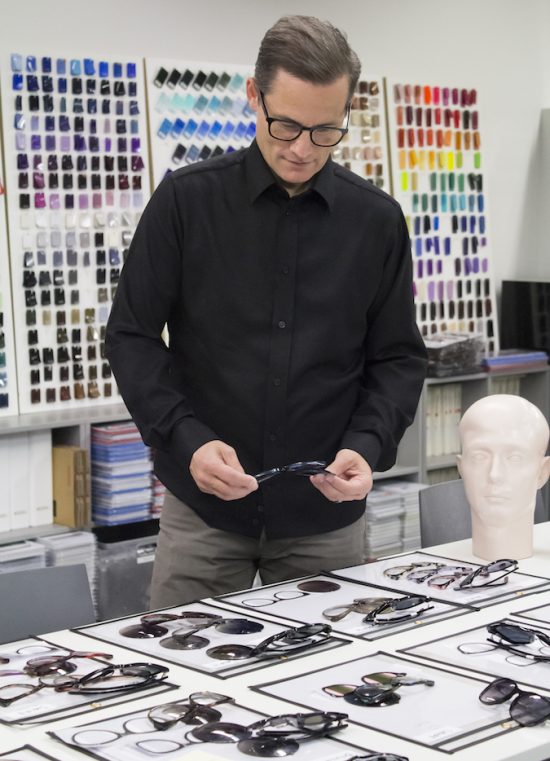
The man behind the luxury label Finest Seven has designed international eyewear collections as well as setting up his own British label in 2011 – with Ainjali Fine. Since our first interview with Jesse Stevens in July of that year, the label has become sought after for its authentic luxury style and attention to technical detail and precise handcrafting, a focus it has upheld and developed throughout the last five years.

What is your view of eyewear and how it has changed since you started working in it? I love the eyewear industry. I am constantly learning and take great pleasure in gaining knowledge from the old makers of the eyewear world – when frames were literally made by hand. I have a small workshop where I make frames by hand for friends and family. There is an increasing number of new brands coming to the eyewear market compared to when I first started over 10 years ago. The main point of change is the amount of fashion brands wanting to expand their accessories ranges to include eyewear or fashion brands wanting to do collaborations with existing eyewear houses under license.

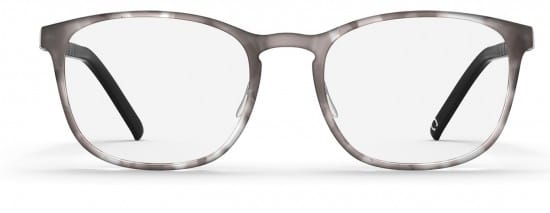
Zero 10 - Finest Seven
Zero 10 – Finest Seven

You are an innovator and design expert in eyewear….how did you get to that point? I have always had an affinity towards a simple but beautiful design aesthetic, first gaining a degree in sculpture, I then obtained a scholarship to attend a product design school in Paris. I became friends with the son of famed Spanish sculptor Miguel Berrocal. He made it sound like his dad did it for a hobby but in fact he was a highly achieved artist who had made a very successful career out of being a sculptor. I ended up working as his apprentice for two years.

I then moved back to New Zealand to finish my 2nd degree in Product Design. After working on various design projects including furniture, interiors, architectural fittings and lighting I finally found work with Cutler and Gross as a production manager and designer working under Marie Wilkinson, where I learnt my craft.

I have found that my combined skills and experiences have shaped the way I design. I see eyewear as design objects as well as sculptures in their own right. I am very interested in the idea of functional sculpture and eyewear definitely fits into this group of products.

Zer 10 in Burnt Champagne
Zero 10 in Burnt Champagne

You have worked for top level eyewear companies including Roland Mouret, Oliver Goldsmith and Kering. How has that experience enriched your work? Working with different brands means that I get to experience building and contributing to a wide range of styles and concepts. This strengthens the scope of my design work and also allows me to be flexible and robust within my design thinking and problem solving. As a consultant designer I am very happy to have a wide variety within my client base, some production work, some smaller niche brands as well as the larger commercial projects. An ideal stable of clients includes a broad mix of projects and this is when I am happiest.

What most inspires you? Are you an archive fanatic? I really enjoy referencing the past and am a keen vintage eyewear collector. I love to learn about the history of eyewear and have recently been studying the Anger family from Austria and their contribution to the eyewear industry. One of whom owned Silhouette, another owned Viennaline that went onto become Optyl, producing collections for Carrera and Serge Kirchhofer. The third developing the first automatic machinery for cutting out eyewear from acetate revolutionising the whole industry. A truly great family achievement. As a starting point I always start with a brief or a description of the desired outcome supplied by my clients. Sometimes this is very much based in historical context, other times I am able to develop a completely separate narrative that allows me to design a collection without reflecting on vintage product at all. Complex brands like Alexander McQueen require a profound knowledge of the brand and a very close working relationship with their internal team to produce something that resonates with the brands DNA.

What makes the independent eyewear niche interesting now? Independent eyewear is getting better and better – the design, the quality, the passion. A few years ago, 3D modelling was a bit of a dream, but now many top brands are using this technique. Another obvious development in niche brands has been the sheer number of them in the market. It is a buyer’s market now with a vast number of exciting small brands starting up. From the public’s point of view the market is offering a wonderful range of eyewear for every taste.

Zero 10 Graduated Blue

What is your focus now at Finest Seven? What has changed since we first interviewed you in 2011?

We still appreciate clean minimalist lines in our eyewear and are now moving towards superlight metal, in shapes that are interesting and at the same time very easy to wear. We have streamlined our packaging and been thinking a lot about the future and how we can make Finest Seven memorable in a very full market. We still enjoy working with a small family brand that is able to offer a level of personal service and care that are impossible to achieve on a larger scale. As we grow, it is important to focus on this and make sure we continue to make eyewear that we are proud of and reflect our core values.

Where can we find Finest Seven glasses? Is your distribution expanding? Up until now we have simply visited stores that we liked as we travel around the world for work and pleasure. We are only a small family team this has been fantastic but unfortunately we are not able to physically get everywhere we need to be. We have finally begun to look into using agents. If it were possible, I think we would both prefer to work out of our studio in east London and stay small, but business doesn’t work like that so we are working to grow in the best way possible. www.finestseven.com CN


Titanium by Ørgreen Optics

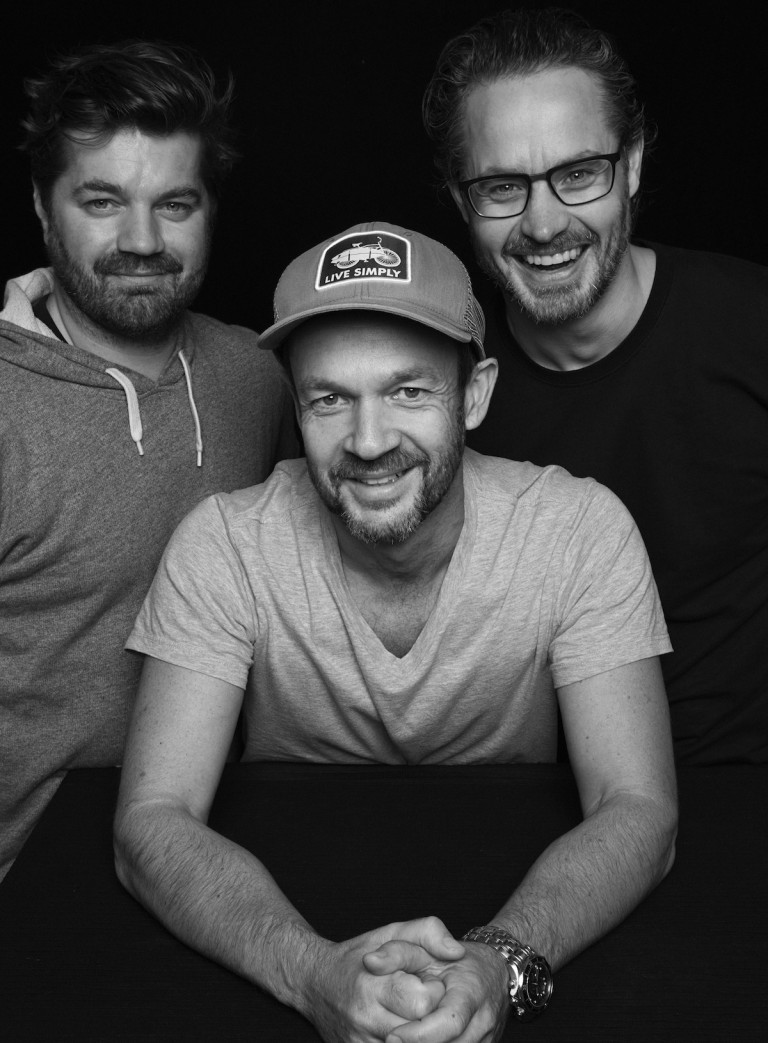
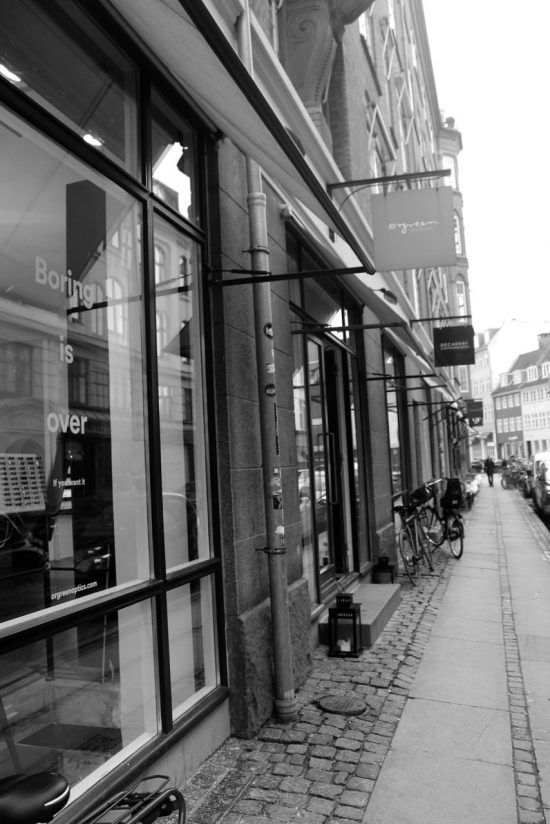
“Boring is over”  The three Danish friends who set up an eyewear brand in the late 1990s in the design capital Copenhagen continue to expand their titanium success story with the support of optical retailers worldwide. Henrik Ørgreen, CEO and Founder and Tobias Wandrup, the creative force behind the brand, met us at the busy Ørgreen store in Copenhagen earlier this year for an update on where the Danish independent eyewear business sees itself today. Photo above: Henrik Ørgreen, Tobias Wandrup and Gregers Fastrup.

“We started with sunglasses. I remember meeting Tobias in the park and planning to set up the first ever sunglass brand to come out of Scandinavia. And then we approached Gregers and there it was. Our first product came out in 1999.”

“The eyewear market has become competitive, complex and more serious. It is to our advantage that we entered the market as a new independent brand over 15 years ago – there were only probably around 5 or 10 brands then that were actually emerging. We have our established design, production and logistics, and customer services and that ensures we can just keep moving forward to produce the best titanium designs in the world….” Henrik Ørgreen

XY 680
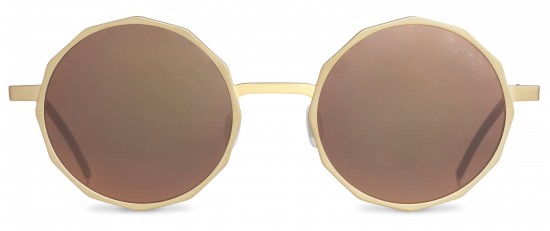
XY 680 – new multi-sided design for 2016

By 2001, the brand moved production to Japan, and with that came the interest in titanium. “At that time we were working in acetate, few people know that! We were really focused on good quality. Today, it’s the same. We have an even higher level of quality and detailing, but that has come because we are more experienced. What we also learnt today is that sometimes you do have to compromise to have the best functionality or the best quality – back then there was no compromise – our first frames were described by our Austrian factory at the time as the most complicated they had ever tried to make.”

Bettie 681
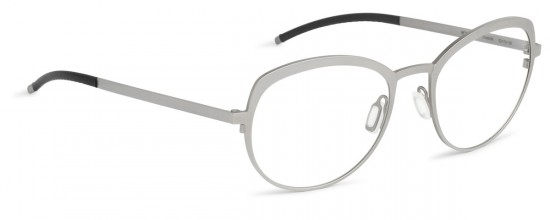
Bettie 681, new in the 2016 collection

Asked to describe the proudest moments so far, Henrik refers to an Ørgreen “classic” with open temple featuring two hinges per temple. He says the concept soon became reproduced by other companies, but the impact of being the innovator of this design ensured that they found their place on the map in terms of innovation and new ideas. “The second turning point was when we did sheet titanium in two-tone colour – where we had two different colours on the inside and outside of the frame. This was an inspired concept that came from looking at car details.  We found it was exciting to do really strong colours on the inside, making the frame wearable without being overpowering. We worked closely with our Japanese producers on this; they put in a lot of technical know-how to make this work.” Today the two-tone effects remain a part of the brand’s image.

The flagship store in Copenhagen

And the direction in 2016? “We are working with around 15 factories in Japan, each one with their own expertise. But we still have the original guy with us who worked on the innovations I’ve mentioned. We are all really proud about that.” Overall the label continues to respect its roots and its open-minded Danish mentality where simplicity of design is one of the essentials.

“Copenhagen is full of interesting people. We get inspired by people from all around the world who come here and this is important to us and a part of what we have created and continue to use as inspiration. It’s our lifestyle.”

Visit the Ørgreen flagship store at Store Regnegade 1, 1110 København K / www.orgreenoptics.com CN

neubau and the new generation

As Silhouette Eyewear launches distinctive, cutting-edge design brand neubau, Eyestylist asked Daniel Liktor, Head of Brand, to explain the origins and to give his own input about the new collections available in stores in June (optical collection) and in the Autumn 2016 (sunglasses).

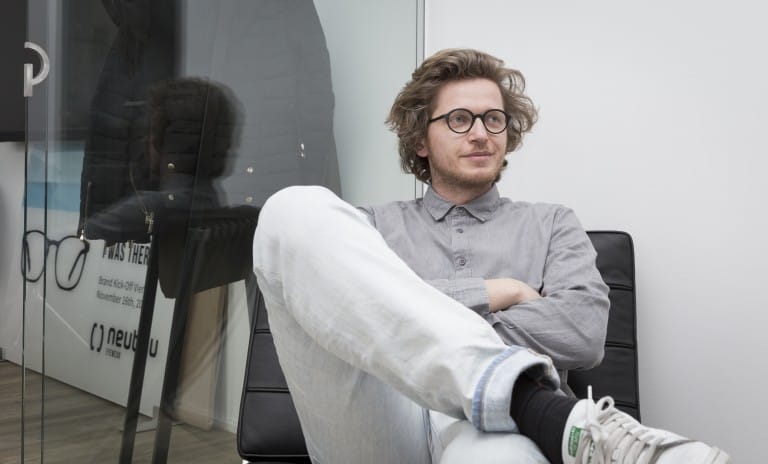
“My professional background is rooted in strong brands; Mercedes-Benz/smart, Puma and Red Bull; my positions were linked to brand, product, sales and licensing,” explains Daniel, who says his arrival at Silhouette is a special journey. “We have a clear and outspoken vision for neubau. We want to become a benchmark within the field, with an independent lifestyle eyewear brand for trend-oriented, quality-driven consumers.” Above: Daniel Liktor, Head of Brand, neubau eyewear

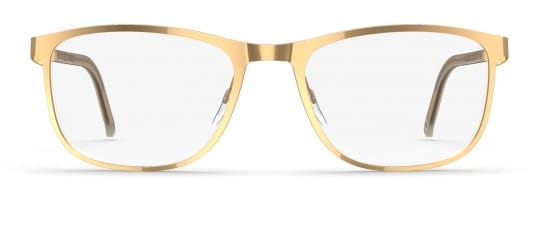
Leo in glorious gold / neubau eyewear

Since his arrival at Silhouette, Liktor has become aware of how discerning the modern urban audience is today. “For them, eyewear is more of a lifestyle accessory than a medical aid – they want to express their personality through their style, and they see eyewear as part of their selected outfit. The product quality and fit for everyday comfort is important and has to be spot on. A definite plus is a unique, genuine and interesting brand story.”

neubau frames are made from lightweight polymer, a custom stainless steel or a mix of both. Both materials produce very light designs with a high level of comfort. For the optician, they are easy to glaze, easy to adjust. The colour concept is based on a trend-inspired assortment of colours including new ones like copper.

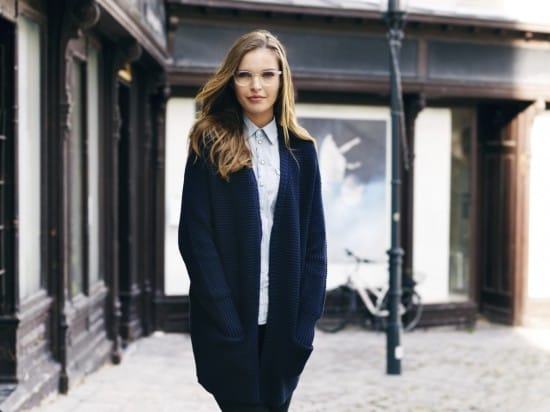
Campaign image / neubau eyewear

“The copper is a good example of what we’re offering,” explains Daniel. “It’s a buzzing trend in interior design but it’s unexplored in eyewear. We always cross-check with what other industries are doing, especially fashion, interior design and other lifestyle industries.”

Silhouette’s Austrian heritage gives a significant reference point and mark of quality. “We produce all our frames in Austria. Being part of Silhouette International, we are proud of our background. This is one of the reasons why the brand is named after a district in the Austrian capital.”

Patrick / neubau eyewear

Liktor also refers to other districts when explaining the neubau concept, and references his own love of travelling. “There are so many (places) out there! I’ve been travelling a lot in my past and these districts have always been a focus. Almost every big city has a place like Neubau with a special energy…Prenzlauer Berg and Mitte in Berlin, Brera and Tortona in Milan, Shoreditch and Hackney in London, the Meatpacking district, Manhattan and Williamsburgs/Brooklyn, NYC. This is how we got inspired.”

For more information on neubau eyewear, visit www.neubau-eyewear.com CN


Eyewear Pioneer – Annette Hoffman

With her exceptional ‘eye’ for fashion and eyewear, in nineteen seventy-five, Annette Hoffman opened her boutique in the picturesque area of Montmartre in Paris. At that time, the concept of independent eyewear labels was relatively unknown, and Mme Hoffman was one of the first to support budding designers. Forty years on, independent brands have brought innovation, beauty and amazing designs to eyewear, and Les Créateurs d’Opta continues with their presentation of international independent eyewear creators.

Caroline Abram at Createurs d'Opta 40th Anniversary celebration
Caroline Abram at Createurs d’Opta 40th Anniversary celebration

Celebrations were held recently, and the dynamic Mme Hoffman has taken a step back from the business, and Erik Sudre (both seen above) is now CEO and Opta partner. Sudre commented: “The party was very happy and full of emotion. The theo team attended, including Wim Somers; Pascal Jaulent from Face à Face; Susanne Klemm and Etienne Fredriks from Suzy Glam; and Caroline Abram among others were also with us.”

Etienne Fredriks, Susanne Klemm, Elien Weytjens, Belgium trainee at Les Créateurs d'Opta, Celia Kemedji Opta optician
Etienne Fredriks, Susanne Klemm, Elien Weytjens, Belgium trainee at Les Créateurs d’Opta, Celia Kemedji Opta optician at the anniversary celebrations

Time – and success – has certainly validated Annette Hoffman’s concept for individualist eyewear that continues to grow and flourish, and the charming boutique remains an oasis for the best in independent brands. www.opta-createurs.net JG


Golden Sophistication: Catherine von Specht

At a particularly beautiful wedding reception in the heart of Provence in France, sitting across from me was a lovely, chic woman wearing superbly crafted and luxurious refined jewellery. I commented on her necklace, and she replied: “Thank you – I designed this necklace.” Consequently, I was fortunate to meet Parisian jewellery designer Catherine von Specht (above) of Umbellina, who creates original one-of-a-kind necklaces, bracelets, earrings and rings.

18K Gold earrings with Colombian Emeralds and Diamonds in a Sapphire glass medallion by CVS

The pure simplicity, united with premium quality materials – exquisite jewels and fine gold – highlight the stunning designs. She discovered her passion for jewellery and gold, and created her first designs in Hamburg. Having lived in France, England, and Germany, plus travelling globally with her German husband, von Specht’s perspective and intuition reflects serenity and harmony in her jewellery.

18K gold, Pink Sapphire and Diamond bracelet by CVS

Perfect balance in the lines and symmetry of her creations, further enhance her elegant expressions. Certain designs have little messages engraved on the metal or medallions. The result is always unique and personal. Umbellina creations are sold in select shops in Paris, Munich, Miami and Los Angeles. Von Specht also works with perspective clients so they can select their own metal and stones, achieving the jewellery design of their dreams. www.umbellina.com JG