Creative spirits

Sustainable creator: Cristiano Ferilli

Cristiano Ferilli is a qualified ophthalmologist by day and a designer by night. If that alone doesn’t strike you as an accomplishment, Cristiano founded Ferilli Eyewear; the first eyewear brand to use cactus fibre – Sikalindi – in the manufacture of their Italian-made frames.

Cristiano, you speak of falling in love with the world of eyewear at the age of sixteen – forgive me if this is a backwards notion, but it’s perhaps quite an unusual attraction for a young boy to develop at such an age – how did this passion first ignite? When you’re a 16-year-old boy, I believe that you normally have a secret wish in life – it’s up to you to truly believe in that wish and make it come true. I think what pushed me back then was attending the Mido 2010 trade show and seeing so many sunglasses made with different kinds of materials. I said to myself then that when I was older, I would discover my own material to create my sunglasses.

Would you be able to tell us a little about your career path, did you always envision yourself working within the fashion industry? No, not at all. After getting an optician’s diploma at high school, I graduated with a degree in Orthoptic and Ophthalmologic Assistance, continuing that career path in clinics and hospitals. However, right after university I made my first sunglasses collection; I believed in it so passionately that Ferilli Eyewear has become my job today. While I’m busy with work as an orthoptist in a clinic, I’m also committed to creative projects as a designer for my brand.

Ferilli Eyewear: a sustainable collection using prickly pear fibre

How is it that your brand Ferilli goes beyond the concept of ‘just an accessory’? Prickly pear fibre creates a very particular pattern on every frame. I like to think that they are not just sunglasses, but they can be considered a fully-fledged design element that add a unique touch to a look, and that they are a distinctive feature that help define the wearer’s personality. Moreover, I care about the functionality of my sunglasses, not only about their design, and this applies also to the choice of lens.

Being the only brand of eyewear that uses Sikalindi is an amazing claim to be able to make, especially in an industry where the consumer is growing more aware of the impact of their purchases, and many brands are trying to find the newest, most innovative way to forge a sustainable future – tell us a bit more about producing frames with Sikalindi? In the region where I live – Puglia, in southern Italy – prickly pears are fast-growing plants, and sometimes there are so many of them that entire areas need to be cut down and thinned out. To obtain the fibre itself, we dehydrate the leaves of the plants through various physical processes – but without using chemical agents or pollutants. In this way we can extract the material we need, while respecting the environment and the natural cycle of the plant.

Ferilli Eyewear: the frames display the patterns of the natural fibre

I assume you subscribe to the idea that the consumer needs to  ‘buy smart’ and ‘buy less’ in order for our planet and resources to survive? Why should the consumer invest in a pair of Ferilli sunglasses, in your opinion? Our products guarantee functionality from a technical point of view and they are made with a unique, sustainable material. Our aim is to be creative and innovative producing naturally beautiful sunglasses that respect the environment.

Finally, your website says that you hope to develop some new ‘sparkling ideas’ in the future – is there anything on the horizon? I can tell you that the prickly pear fibre will be incorporated into other materials, and we are meticulously studying new models that will amaze you!

To find out more about Ferilli visit www.ferillieyewear.com. Interview by Victoria G. L. Brunton exclusively for Eyestylist.com


Accidental Icon

“I started Accidental Icon because I was having trouble finding a fashion blog or magazine that offered an urban, modern, intellectual aesthetic but also spoke to women who live what I call “interesting but ordinary lives..” 

Lyn Slater – otherwise known by her Instagram and website handle Accidental Icon – is a true modern-day Renaissance Woman. A former social worker, an academic, a blogger, stylist and an influencer with a following of over seven hundred thousand on one hand whilst being a truly authentic, feminist and all-round strong woman on the other. Slater exudes all of the brilliance and indulgence of what we know to be ‘an influencer’ in this day and age, yet sheds all the negative connotations that are thought to be indistinguishable with the online segment of the fashion industry and social media. She concerns herself only with originality, intelligence, serendipity and self-empowerment, encouraging and inviting other women like her to “share the pleasures of everyday life and living” as she does.

When and how did you first develop an interest in fashion and how has that journey taken you to this point in your career? I really have not had an interest in fashion but more in the power of clothing to express identity. If you are following trends and concerned with “what’s fashionable” at any given time, you are conforming to what others think your identity should be, and I’m not about that. So, for me clothes are like an artistic tool that allows for creative expression – something that I’ve been doing all my life, even as a child. I was a social worker and academic until I started this project in 2014 – which was the first time I had anything to do with fashion as a system – from that point I just did what I usually do; wear clothing that tells stories about who I am, remember this is all about relationships, act as if you know nothing, ask many questions and be generous.

Accidental Icon: one of fashion’s most credible and finely dressed influencers

Your personal collection of eyewear and accessories is extensive as well as diverse – what particularly, if anything, draws you to choosing a piece to wear and / or to purchase? Something that is well-constructed, it is timeless, ageless and increasingly genderless. There is an element of craft involved. However, my style changes all the time depending on the context I’m living in at the moment, what is going on in my work and personal life and how I think I want to show my creativity to the world. There are times I want big and bold and others I may want something more subtle. I also choose from the inside out and what I want to say at the moment with my style. I’ve never followed norms about anything as they are usually set by those in power to control you. So, it’s really just me being me and expressing who that ‘me’ may be at any given time in my life.

Do you have any thoughts, both positive or negative, on social media and its impact on the society and the people of today? That would be a book – In simple terms it is one of those things that is both, by that I mean it has some productive and democratic uses and some negative uses and impacts. For example, if it were not for social media someone like me would never have gotten past the “gatekeepers” of fashion. It can also do things to your brain which are not productive and erodes critical thinking and analysis. Mainly people allow social media to be in charge of them and lead the way. Social media is a tool and you need to be in charge of how often you turn to it, why you are drawn to it (inspiration or distraction), how you use it to communicate and how you want to be impacted by it.

Accidental Icon: a fun, colorful and experimental style

I have noticed you mentioning your evolving love affair with a slow-paced lifestyle – in regard to slow living, what are your thoughts on slow-fashion and leading a less environmentally impactful lifestyle? Do you have any thoughts on sustainability within one’s own life?  This public health crisis has really been a wake-up call regarding economic inequality, and I add ‘Black Lives Matter’ and the political mess my country is in into that list. Fashion Revolution Week and my quarantine started at the same time and I followed all the talks and workshops in London rather than those in New York – there is a higher level of thinking and creativity in my opinion outside the United States. I really deepened my commitment to slow fashion and sustainability during this time especially because the way it was presented in London was all about how creative and exciting the clothing could be. I am really liking the idea of intersectional environmentalism, which simply stated is caring for people, the planet and yourself in everything you might buy, eat, consume (including social media). It’s a good way forward for me as a way to incorporate sustainability into my everyday life.

What advice would you give to your younger self in embarking on a career within the industry of fashion? For me this is a difficult question to answer because of the great importance of context – when I was young the world was dramatically different than it is now, so, my younger self could not make use of the advice I would give today. For young people today “a career in fashion” is a moving target in that it is constantly being impacted by huge forces like we have seen with the pandemic, economic and environmental challenges, technology, etc. What that means is that it is constantly being re-designed – every aspect of it, technology proficiency is a must. I’d tell them to ask themselves why they wanted to be in fashion to begin with, if it is to express yourself creatively, I would say be a generalist – learn and practice skills that enhance creativity across many platforms, not just fashion – choose some applicable skills you want to get really good at and study and practice them.

To join the hundreds of thousands already finding inspiration in Lyn Slater’s esteemed, curated, individual and experimental lifestyle head to https://www.accidentalicon.com/about/ An interview by Victoria Brunton exclusively for Eyestylist.com.

Ely Yili Cao: pearly jewellery eyewear

Gemmologist and award-winning jewellery & eyewear designer Ely Yili Cao is a graduate of the prestigious RCA in London. Her latest work is entitled Lunette de Diadème.

“My collection uses luxury as a perspective and high-end jewellery as a platform,” says Ely Cao. The designer, who has taken part and won the 100% Optical / RCA Eyewear design competition (in 2020 and previously) for a work featuring delicate pearl settings, has created her latest work – Lunette de Diadème – as a means of exploring how spectacles have infiltrated our lives beyond a medical device and symbol of impairment.

Working with a mix of materials such as rhodium plated silver alloy, fresh water and Tahiti pearls with bluetooth earphones, Cao has imagined and created a new personal concept in luxury glasses, incorporating high-tech, connected to artisan jewellery-techniques, with handmade settings and a genuine appreciation of traditional construction. Her attention to detail continues into innovative functional and aesthetic features – with highlights which include beautifully conceived moveable jewellery parts, interchangeable lenses, and a hugely appealing charging case.

About: Ely Yili Cao, a designer who specialises in jewellery, eyewear and accessories, an authorized gemmologist and appraiser, earned her BA (Hon) degree in Jewellery Design, at the Central Saint Martins’ College of Art and Design, finished gemmologic study from GIA with scholarship, and recently graduated from the Royal College of Art fashion programme, specialising in accessories and eyewear.
Her design and craft skills have been selected and awarded worldwide — by organizations including The Goldsmiths’ Centre, The Goldsmiths’ Craft and Design Council in the UK, Gemological Institute of America in the US, Barcelona Art Jewellery & Objects (JOYA) in Spain; and by commercial companies including The Leatherseller’s Company, Theo Fennell and William Morris London (100% Optical / RCA competition). For more information visit @ely.yili.cao (Instagram) and www.elycao.com

Eyestylist exclusive: Michele Claseri, Roveri Eyewear

Eyestylist Exclusive – The concept of ‘the modern day gentleman’ is more prominent and notable in today’s world than ever before – in an era where everyone’s aesthetic, style and bank-balance is up for scrutiny via social media and with the invention of globally platformed reality TV shows, the word ‘gentleman’ and its connotations today strive far from their original aristocratic origins. Cue Roveri Eyewear – an independent brand that embodies the classic, reserved, vintage aspects of an original ‘gentleman’ whilst being in keeping with the consistently on-trend, bold and ambitious traits of ‘the modern day gentleman’ we admire today. Roveri uses quality materials combined with elegant, striking design to produce a line of eyewear with the finesse of the luxury cars the brand’s creator is inspired by.

The luxury automotive business is a niche sector to say the least – what first ignited your love for cars in general, or was it more of a lucrative business temptation? My passion for cars began when I was 14. In Italy, we all used to ride mopeds around town with groups of friends. When I got my first car at the age of 18, I started going to many different car shows and dreamt of more expensive, luxury cars. It’s when I moved to Turin in 2009 to attend a car design school founded by Giugiaro that I started to appreciate the art and science behind cars.

Roveri Eyewear: RV018

I’m definitely more of a design person rather than a mechanical one, and it was during those 3 years of school that really started getting interested in this new type of material called carbon fibre – widely used in racing cars manufacturing. Nowadays, we can see this material used in many different car brands for their top of the range models, but until just a few years ago, it was way too expensive and time-consuming to be used in the production of cars. After school, I was accepted at Ferrari in Maranello for a six-month internship. It was here that I started working with really expensive vehicles and cultivated a passion for cars that only a small percentage of people can afford.

Automotive car brands like Ferrari and aspects of that industry like F1 have been an inspiration and aesthetic for so many within the fashion industry – were you always interested in style and dressing well, or did that grow from its association with luxury cars? I was born in Northern Italy and I moved to California in 2015. I had always been inspired by hip-hop culture and eagerly followed the streetwear style movement – when I was in school people used to make fun of my skate shoes; no one in Italy knew what they were at the time.

I used to buy shoes and hoodies from stores across the U.S.A and have them shipped to me in Italy for many years, keeping on top of the new streetwear trends. I had never really paid attention to the classic Italian dress style since everybody used to wear the same ”fancy” clothes in the streets of Milan or Bergamo, cities famous for their fashion-conscious populations.

When I moved to California, my views on fashion were totally transformed. I now pay more attention to the Italian way of dressing; it is elegant, sophisticated and less mainstream – and it is not that common here in California. For me it’s not about the brand of the clothing or accessories I am wearing, but its more about the style I portray. On reflection – I suppose I was dressing like an American while living in Italy, and more like an Italian now that I’m in America!

Agave Beach, California: Roveri’s founder is currently living in this area

Watches are a staple in a gentleman’s wardrobe – they are symbolic of many things including style, taste and success – an accessory that has also been linked to sporting and one that has evolved alongside those sports. What made you aware that sunglasses were the next high-end gentleman’s product to fill a gap in the market? I had been following different eyewear brands, and I loved the idea that small and independent labels are beginning to dominate the high-end market of luxury eyewear. Most people think that luxury sunglasses are limited to ‘big name’ brands – without even knowing that there is another world out there for luxury eyewear. The niche luxury eyewear brands and their high-end manufacturers use premium materials such as titanium and gold; the same materials used for luxury watches. Nowadays luxury watchmakers like Audemars Piguet, Panerai, Richard Mille and others are adopting forged and machined carbon fibre for their watch cases, and I thought that this type of material could have a nice fit in the eyewear market.

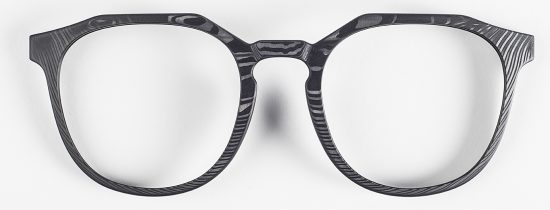
So far some brands have used carbon fibre for their frames, but the carbon used is laminated on a mould and has the same ”fabric” effect as the carbon used in cars and boats. The new way of machining the carbon from a block ( the same method used by those luxury watch brands) is a totally different way to approach this high-tech material. The machining process is more intensive, expensive, and time-consuming, but it results in an end product – be it a watch or a glasses frame – with a totally different look that replicates the pattern of Italian marble.

Roveri Eyewear is the only brand offering eyewear with this new type of carbon fibre manufacturing; we intend to keep releasing new frames with different combinations of engineered, forged and machined carbon fibre paired with other high-tech materials such as beta titanium and gold.

Roveri Eyewear: a new concept – the CLM-7

Why was the decision made for Roveri as a brand  to market solely towards not just men but ‘gentlemen’ ? Would you say there is a gap in the market to equip the gentleman of today?  Yes, I think there is a huge gap between people who just follow trends, and those who go deeper and decide to buy and wear different brands outside the mass market. This is relevant for any type of purchase; from a car to a watch, from a leather jacket to a pair of sunglasses.

At Roveri we cater to people who don’t buy a pair of sunglasses simply because they see someone they follow on social media wearing them, but because they appreciate the workmanship, the diligent and thorough process of how our sunglasses are made, and value a pair of sunglasses just like they would value a nice car or an expensive watch. (more…)

Wearable art, created in isolation – Jen Nollaig

The Dublin-based designer shares her wearable art lockdown project, ‘Me, myself & eye’

Artist/designer Jen Nollaig developed a colourful collection of intriguing works centered around upcycling old eyewear frames, during the weeks of lockdown in March/April 2020. Nollaig has built a unique niche for herself in customised artworks, and has produced pieces for clients in the UK, NYC and Ireland.
“In lockdown, I needed to anchor my mind to something that made me feel at peace,” she explained,  “so I started to do what I love most and create.  For me this offers a way to escape; this is what this new collection is inspired by, a personal journey of escapism in isolation, an attempt to capture the current sentiment of the new days and feelings that I am experiencing.” Above: One of the new works: ‘Processing’ is created with layered cocktail sticks, hand painted and finished off with painted compressed polystyrene balls from an old bean bag.
‘Eyesolation’ – 1 by Jen Nollaig – worn by the artist

The works in the new series include ‘Eyesolation’ –  produced out of a deconstructed diamond belt Nollaig found in a charity shop and customised with ‘googley eyes’ fromher children’s craft box.

Jen Nollaig wearing ‘Adjustments have been made’

For ‘Adjustments have been made’ – the artist says she broke apart old eyewear frames to use as the base and layered crayons and colouring pencils on top.

Previous works by Nollaig with an Xmas ‘glitter’ and ‘bauble’ theme earned her the headline ‘Ireland’s most Christmassy woman’ (Irish Times in 2019). A custom design she created for a client in New York (@happyhappyphoenix) for the Afropunk Brooklyn festival brought the designer attention in WWD and Teen Vogue. Photographs by Jen Nollaig featuring the artist. Follow Jen Nollaig and hew new works on Instagram @jen_nollaig.