City guides

Jeanne Lanvin

Paris Retrospective for Legendary French Designer

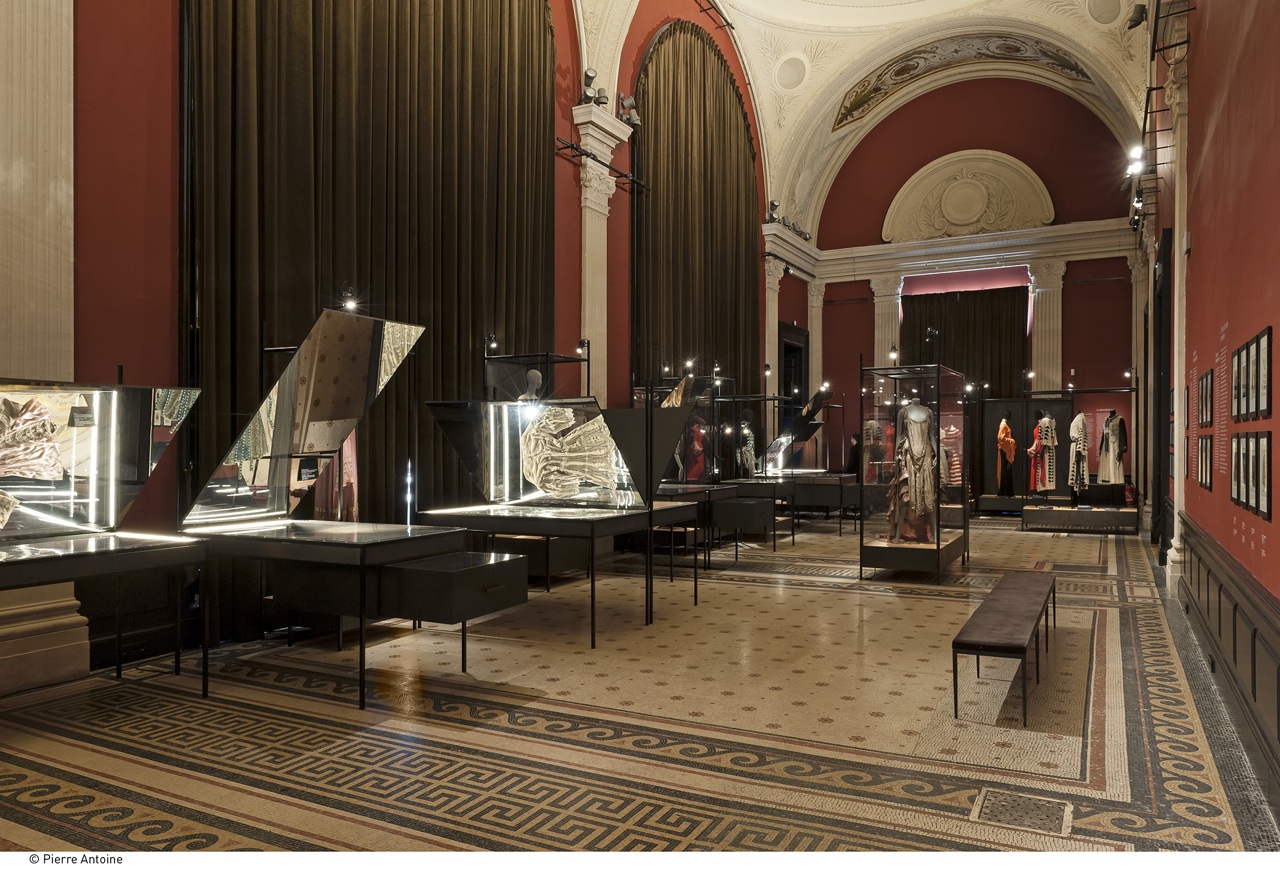
1st April 2015 A special chapter in French fashion history is highlighted with the intuitive creations of Jeanne Lanvin, now on display in the Palais Galliera. Curated in close collaboration with Alber Elbaz, artistic director of Maison Lanvin, the exhibition honours the oldest French fashion house still in business.  In 1889, the twenty-two year old designer Jeanne Lanvin opened her first shop in Paris, and launched her long career that demonstrated her artistry in materials, embroidery, topstitches, twists, spirols, and cut-outs – all the virtuosity of the couturière’s craft. For the period, Jeanne Lanvin was very entrepreneurial, opening shops in Deauville, Cannes, Biarritz, and Le Touquet, as well as abroad in Barcelona and Buenos-Aires.
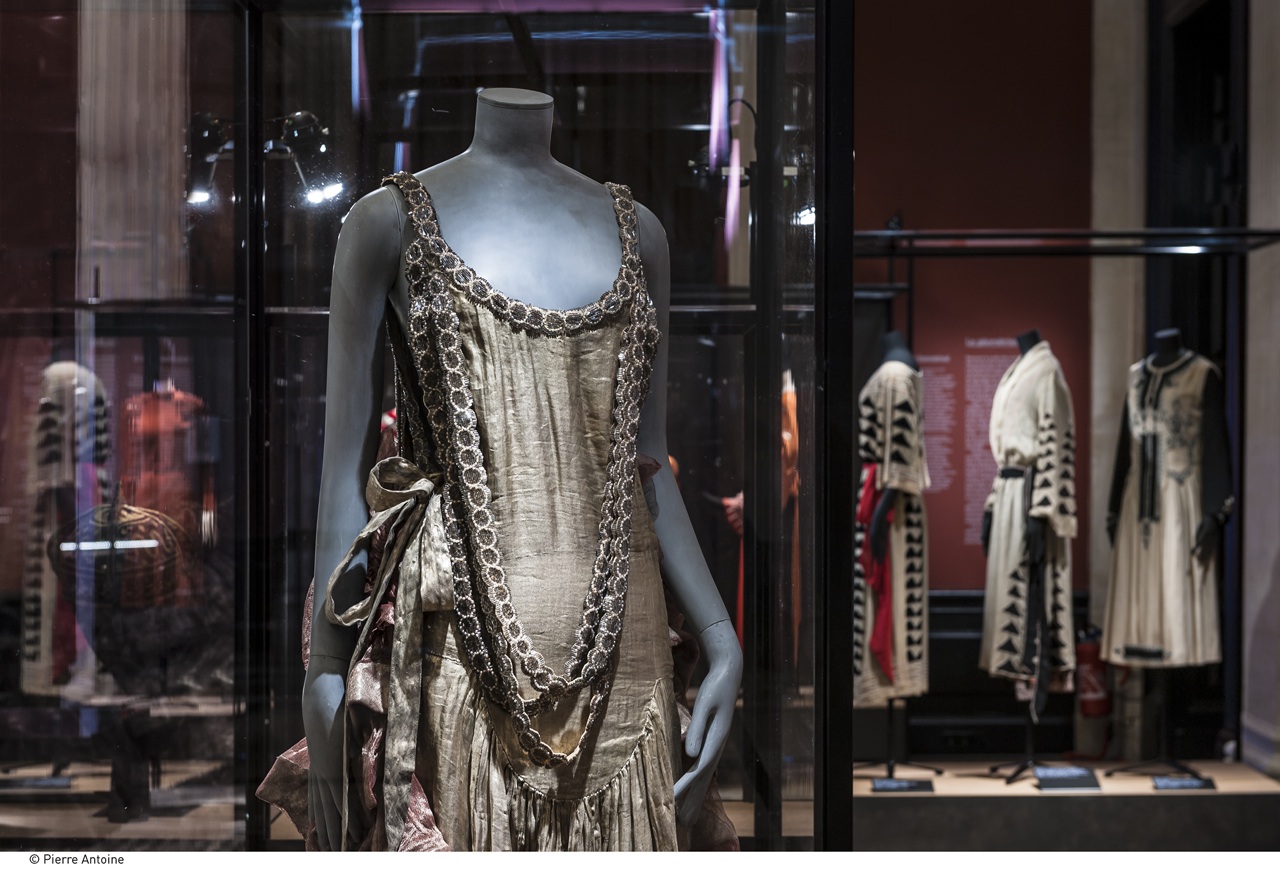
Jeanne Lanvin - Streamlline Silhouette with Lavish Embellishments
Jeanne Lanvin – Streamlline Silhouette with Lavish Embellishments

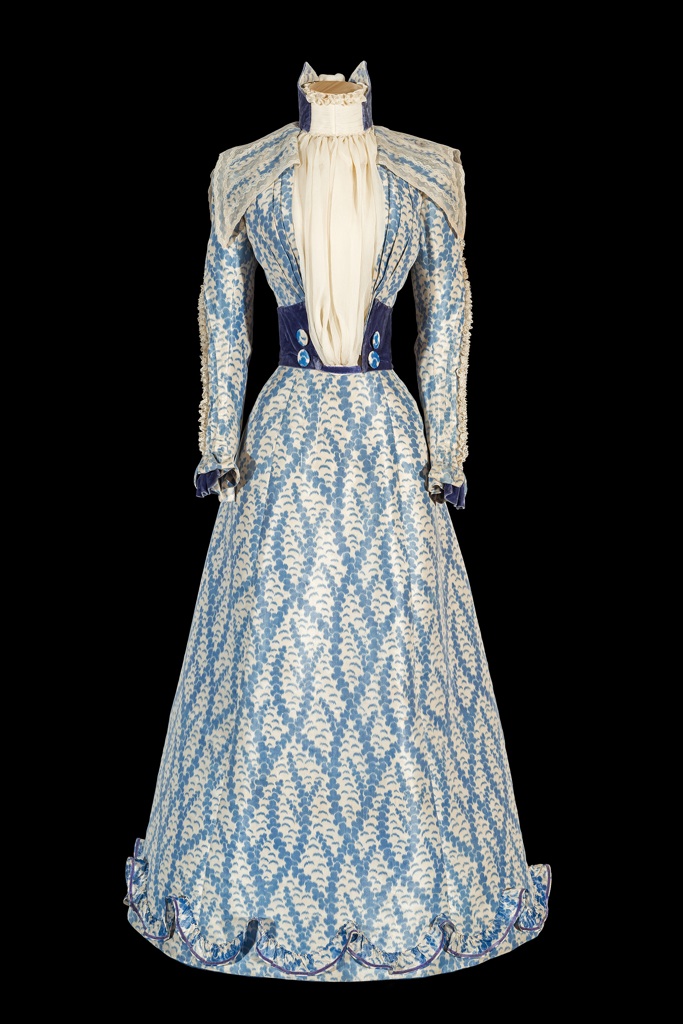
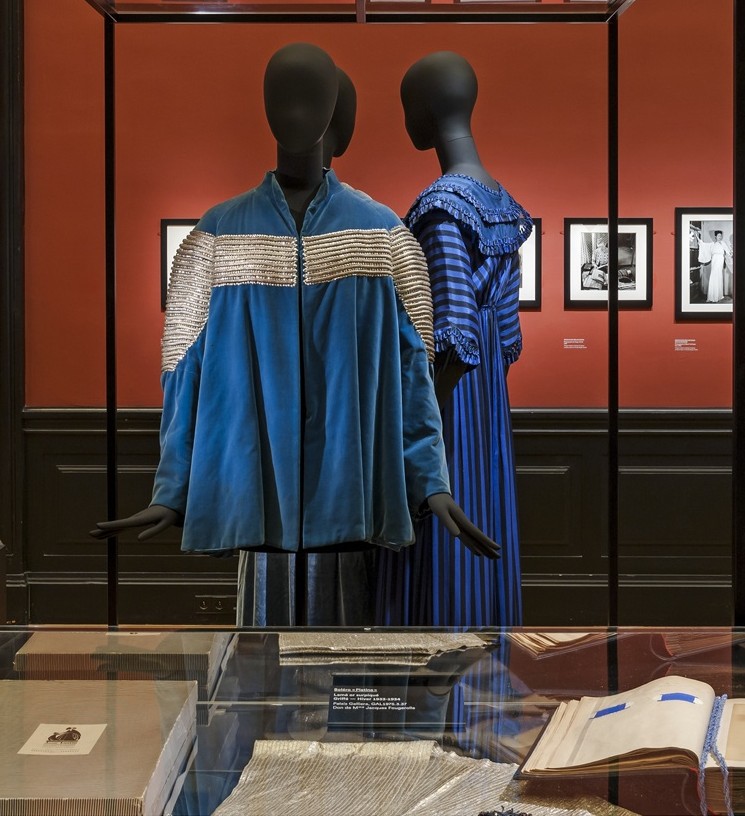
Her voracious curiosity inspired her to create unusual fabrics, patterns and exclusive colours. Her favourite colour – blue – was inspired by the intense blue in frescoes by Fra Angelico, and marvelous shades of blue were always magnificently presented in her collections (top photo). Her lifelong muse was her daughter Marguerite, who was born in 1897. Mme Lanvin’s dresses flattered the female form, and often she mixed fabrics  – silk crêpe with silk tulle, or silk velvet with silvered metal sequin embroidery – with stunning results. She loved embroidery and beads, and used generous amounts in her designs.
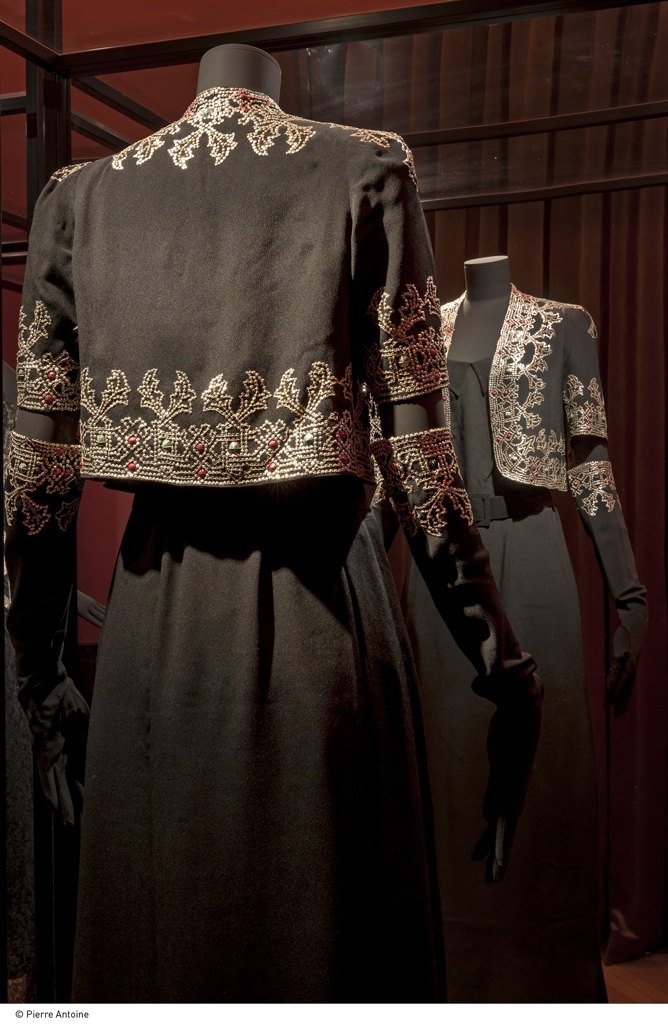
 

Jeanne Lanvin's extensive library of art books inspired details and decoration in her designs
Jeanne Lanvin’s extensive library of art books inspired details and decoration in her designs

When Jeanne Lanvin introduced her perfume Arpège – from the musical term arpeggio –  the name was a tribute to the pianistic skills of her daughter, and for Marguerite’s 30th birthday, Jeanne dedicated her legendary perfume to her beloved daughter.


 

Jeanne Lanvin Exhibition at Palais Galliera Paris

Jeanne Lanvin is the first Paris exhibition devoted to this discreet, visionary designer, and features more than one-hundred models from the amazing collections of the Palais Galliera and the Lanvin Heritage. Alber Elbaz said: “I think we have managed to create an exhibition around the dream of fashion. What I am hoping for is to hear people say ‘I love Jeanne Lanvin'”. Through 23 August 2015. www.palaisgalliera.paris.fr JG

Photos: Pierre Antoine All Rights Reserved
Alexander McQueen: Savage Beauty

Retrospective of  Visionary Fashion Designer

1st March 2015 The Victoria & Albert Museum in London is presenting an extraordinary show of one of the most innovative designers of his generation – Lee Alexander McQueen. Originated by the Costume Institute at the Metropolitan Museum of Art in New York, the V&A presentation will feature 30 additional garments, including some rare early pieces, lent by private individuals and collectors. McQueen courted controversy – his extravagant catwalk presentations, for which he was renowned, combined storytelling, music, film and theatrical performance.


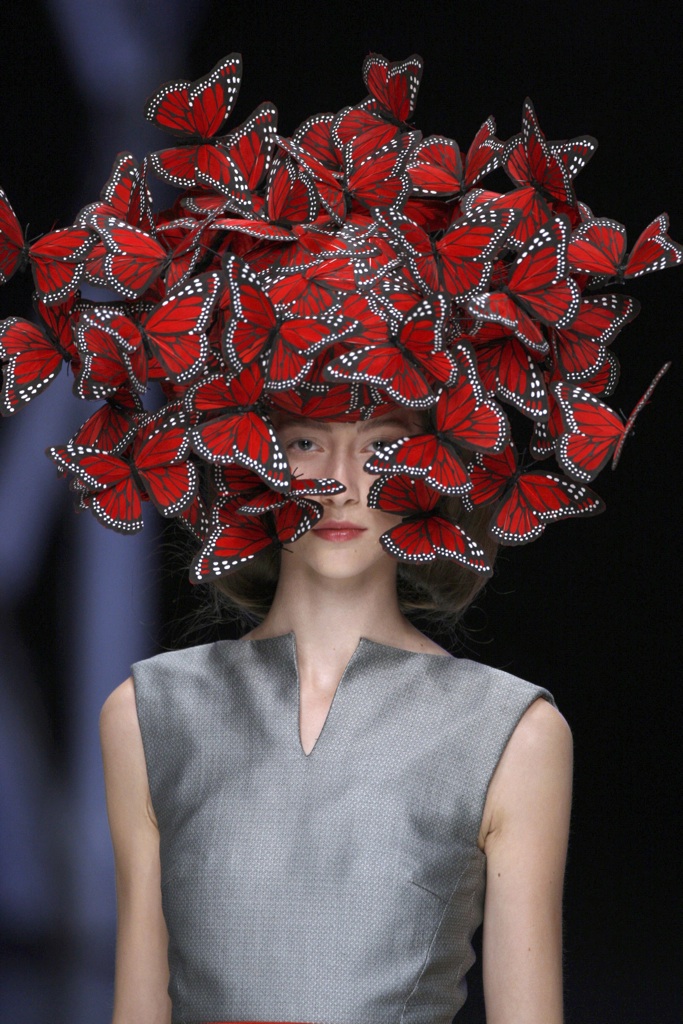
Butterfly headdress of hand-painted turkey feathers by Philip Treacy  for Alexander McQueen
Butterfly headdress of hand-painted turkey feathers by Philip Treacy for Alexander McQueen

The thematic presentation includes the Cabinet of Curiosities, which showcases designs produced by McQueen in collaboration with fellow creatives such as milliner Philip Treacy. In total, the exhibition will showcase more than 200 ensembles and accessories, the largest number of individual pieces designed by McQueen and collaborators ever seen together.


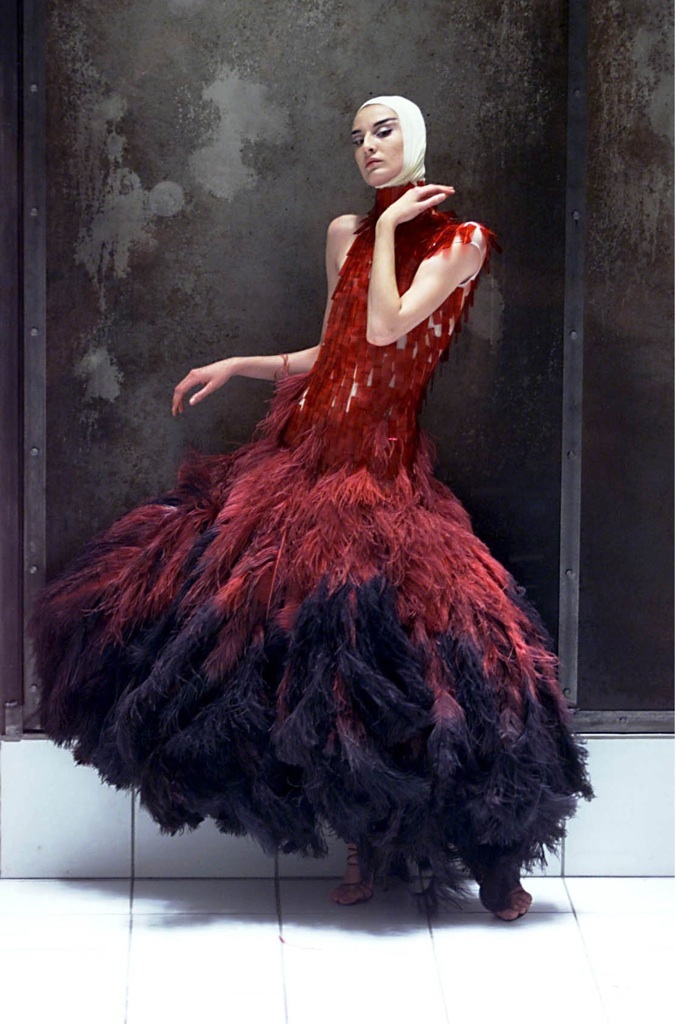
Dress of dyed ostrich feathers and hand-painted microscopic slides by Alexander McQueen

McQueen always inspired – he combined a profound grasp of tailoring and eclectic range of influences with a relentless pursuit to challenge the boundaries of art and fashion, blending the latest technology with traditional craftsmanship. He was influenced by his Scottish heritage and the colonial past, plus his fascination with the animal world inspired him throughout his career.  Alexander McQueen: Savage Beauty is a landmark exhibition not to be missed! Opens 14 March until 02 August 2015. www.vam.ac.uk JG

Image credits: Top photo Tulle and lace dress with veil and antlers by Alexander McQueen Widows of Culloden A/W 2006 Model: Raquel Zimmermann, Viva London  Image: firstVIEW Butterfly Headress: La Dame Bleue S/S 2008 Model: Alana Zimmer copyright: Anthea Simms Dress of dyed ostrich feathers Voss S/S 2001 Model: Erin O’Connor Image:REX

Enlightenment: Carte Blanche à Christian Lacroix

1st February 2015 The Musée Cognacq-Jay in Paris is absolutely a little gem. Founded in 1928 by the founder of the La Samaritaine Department Store (sadly, now closed) Ernest Cognacq assembled an amazing collection of emblematic eighteenth-century art works. They are on display in a beautifully renovated sixteenth-century townhouse in the Marais. M. Cognacq chose items that would be representative of “the artistic décor of French life”… and include a stunning collection of portrait miniatures, superb paintings, busts, Meissen porcelains and furniture.


Lacroix fantasy at Musée Cognacq Jay Paris
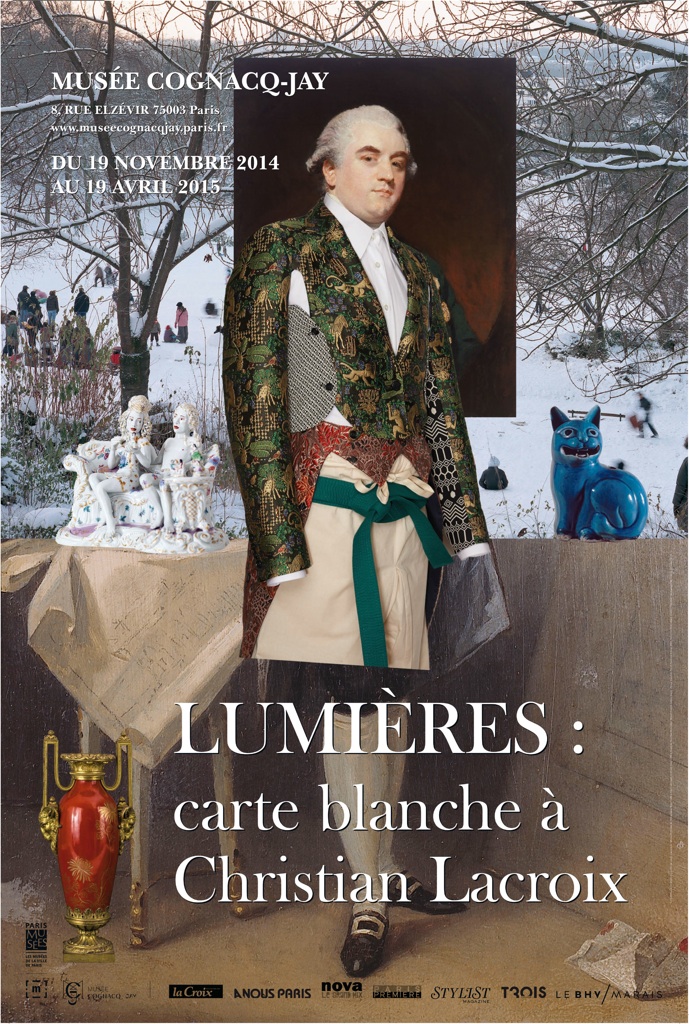
Lacroix fantasy at Musée Cognacq Jay Paris Dessins Christian Lacroix Copyright: Monsieur Christian Lacroix

To celebrate the re-opening of the Musée Cognacq-Jay, Christian Lacroix, the peripatetic fashion and interior designer,  was offered a “carte blanche”  – a dual challenge of re-imagining the “guiding narrative” of the exhibition spaces, while exploring a concept which has shaped his own approach to his art – the fascination exerted by the eighteenth century. Lacroix has curated contributions from over forty contemporary artists, invited to reflect upon ten key themes identified in Ernest Cognacq’s collections. Some of the themes include: 18th century taste; Show, balls and sociability; Paris, capital of the Enlightenment; Fables, stories and novels; and Europe’s artistic economy. Lacroix’s selections have been assembled with a view to enhancing our understanding of the Age of Enlightenment, and its continued relevance in our own era.


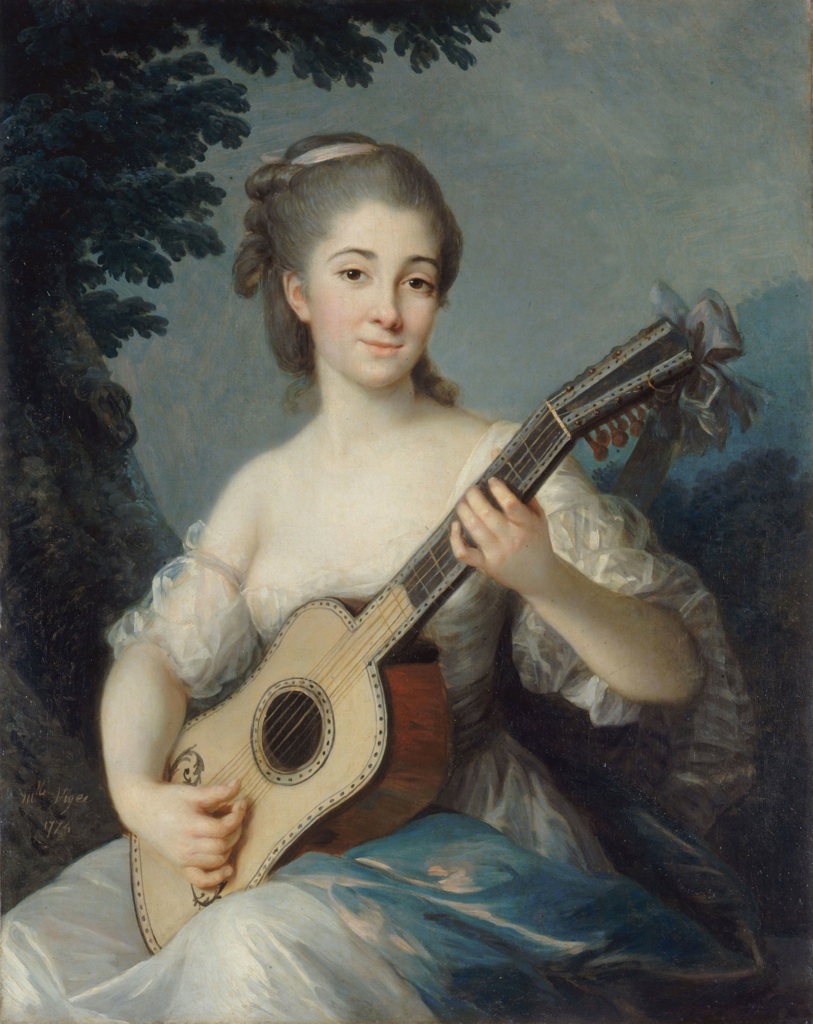
Marie-Louise Elisabeth Vigée-Lebrun (1755-1842) Portrait de Marie-Louise Adelaide-Jacquette de Robien,Vicomtesse de Mirabeau 1774
Marie-Louise Elisabeth Vigée-Lebrun (1755-1842) Portrait de Marie-Louise Adelaide-Jacquette de Robien, Vicomtesse de Mirabeau 1774

Enlightenment: Carte Blanche à Christian Lacrox is an innovative exhibition, enhanced with Lacroix’s inimitable flair. The exhibition continues through 19th April 2015.

www.cognacq-jay.paris.fr JG

Photo credits: Vigée Lebrun: Musée Cognacq-Jay /Roger-Viollet

All photos: Agence Roger Viollet “Press Photo”


Death Becomes Her: A Century of Mourning Attire

Victorian & Edwardian Mourning Attire at Anna Wintour Costume Center New York City

1st January 2015 “She was beginning to find that everyone had an air of remoteness; she seemed to see people and life through the confusing blur of the long crape veil in which it was a widow’s duty to shroud her affliction.”  Edith Wharton, “New Year’s Day,” in Old New York (New York; D. Appleton, 1924

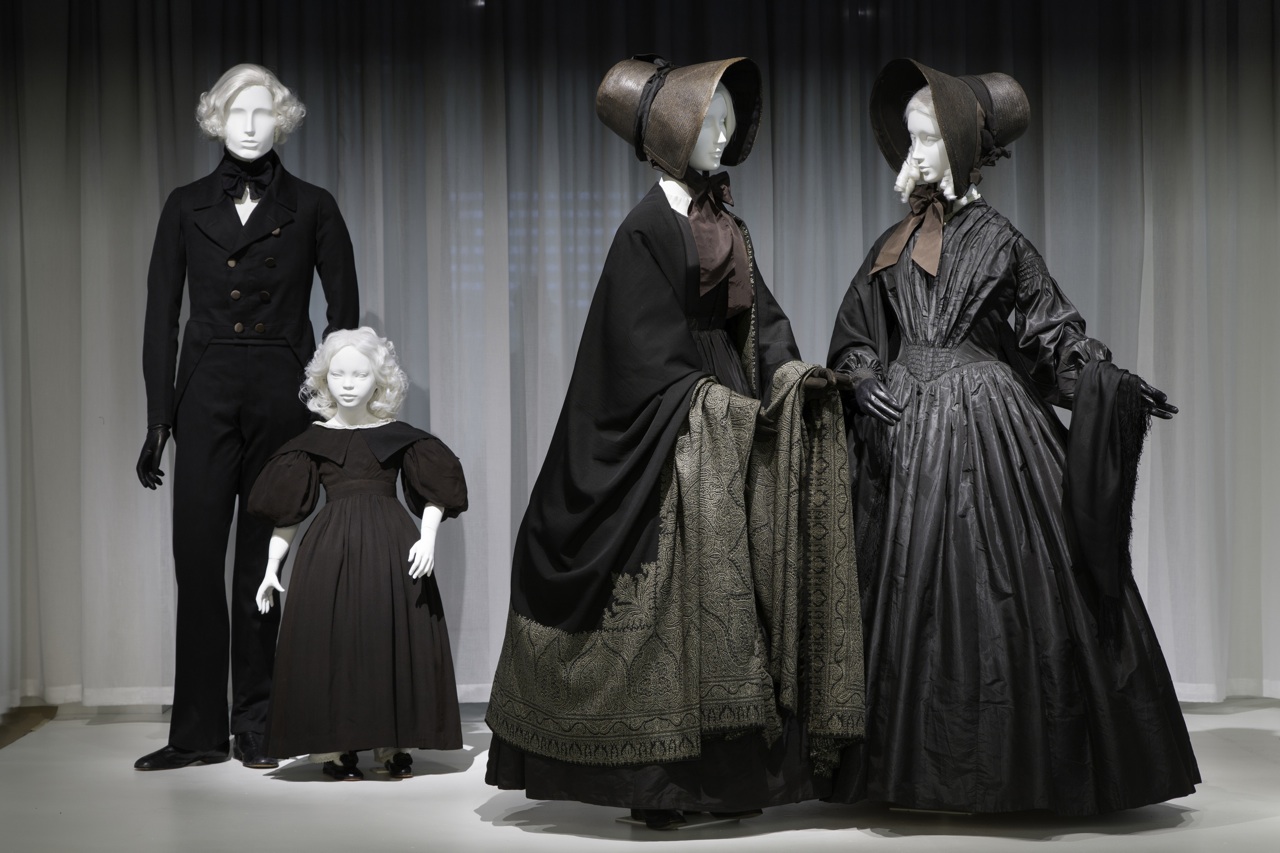
Mourning after the death of a loved one was an intricate part of social mores in the 19th Century. Throughout this period, the duty of wearing mourning fell primarily on women, whose sartorial choices were seen as a reflection of the family’s collective grief, as well as their social status, economic standing, and level of respectability. A woman in full mourning dress became the emblematic icon of bereavement in Europe and America. Mourning dress served as a visual symbol of grief and respect for the deceased.


Children were often put into mourning as well, participating in their family’s memorialization of the deceased.

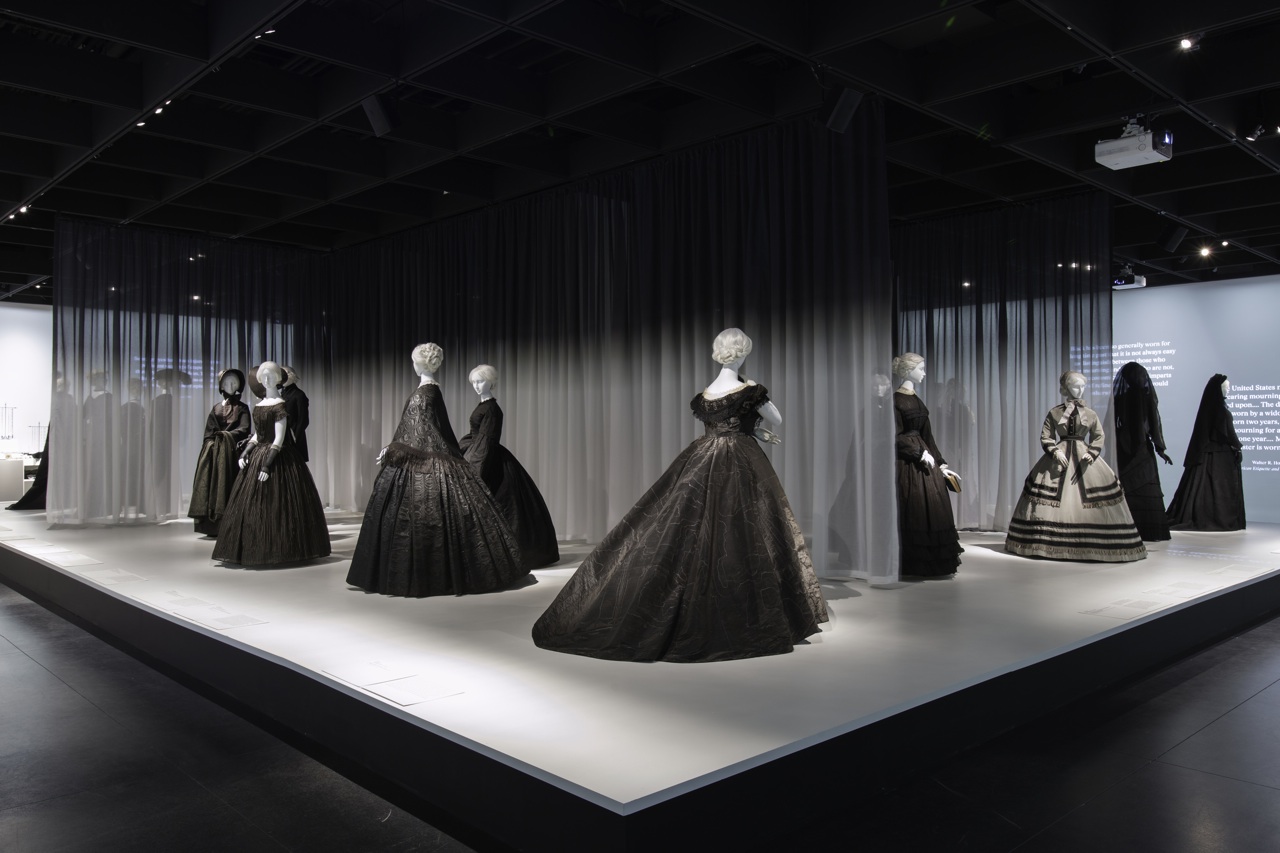
The Metropolitan Museum of Art in New York traces the mores and fashions of this period in Death Becomes Her: A Century of Mourning Attire. The mourning period could be up to a year; however, after being widowed in 1861, Queen Victoria limited her public appearances, and dressed in shades of mourning for the remaining forty years of her life, presenting an image of chast widowhood, in her “widow’s weeds.” The thematic exhibition is organised chronologically and features mourning dress from 1815 to 1915, primarily from The Costume Institute’s collection.


Mourning and Fashion coexist - Elegant Harmonization -
Mourning and Fashion coexist – Elegant Harmonization –

Formal rituals of bereavement aided in memorializing the dead, and mourning attire was subject to increasingly complex codes of etiquette and fashion. For Queen Victoria, in her forty years of widowhood, her mourning never lightened. When King Edward, Victoria’s son died in 1910, The Palace issued messages that wedding celebrations should take place as scheduled. The weddings did take place, but most guests still wore black. Even in sadness and grief, fashion played an influential role. Death Becomes Her: A Century of Mourning Attire continues at the Metropolitan Museum of Art through 1st February 2015. www.metmuseum.org JG

All images: Gallery View Anna Wintour Costume Center, Lizzie and Jonathan Tisch Gallery Copyright: The Metropolitan Museum of Art


Lace, Silk and Ermine

Highlights from the Wardrobe of Elisabeth of Austria

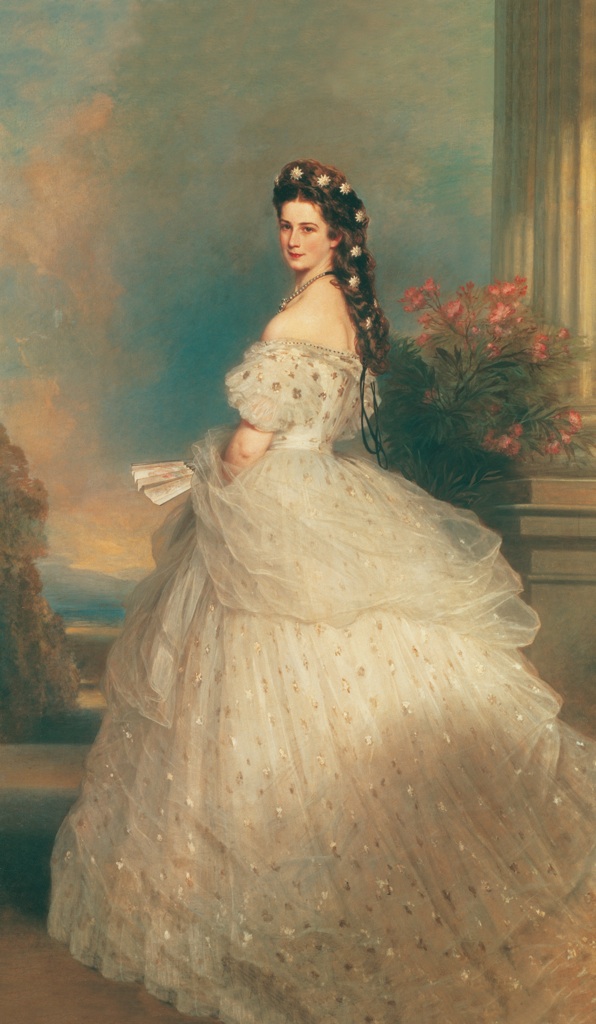
1st December 2014 She was a European style legend in nineteenth-century Europe, with her imperial wardrobe, and cascades of long flowing hair, often studded with diamonds. Elisabeth of Austria was one of the most beautiful women of the day, and a mysterious, complex personality, who found the rigors of court life in Vienna restricting and suffocating. She was a woman ahead of her time – she believed in rigorous self-control and exercise.

Blue Dress worn by Elisabeth Empress of Austria


To celebrate the tenth anniversary of The Sisi Museum in Vienna (The Empress was known as Sisi) – Soie, Dentelle et Hermine (Silk,Lace and Ermine) showcases personal items from the Empresses’ wardrobe, as she set the fashion trends of her era. The items shown are very rarely displayed for conservation purposes.


Sisi enjoyed wearing gowns that silhouetted her ultra-slim figure


When visiting The Sisi Museum, it is also possible to see parasols, fans, gloves,The Empresses’ travelling medicine chest, and jewellery. On the ground floor of the museum, visitors can view in awe the elegant, luxurious Imperial Silver Collection, plus a magnificent golden dinner service that belonged to Napoleon.


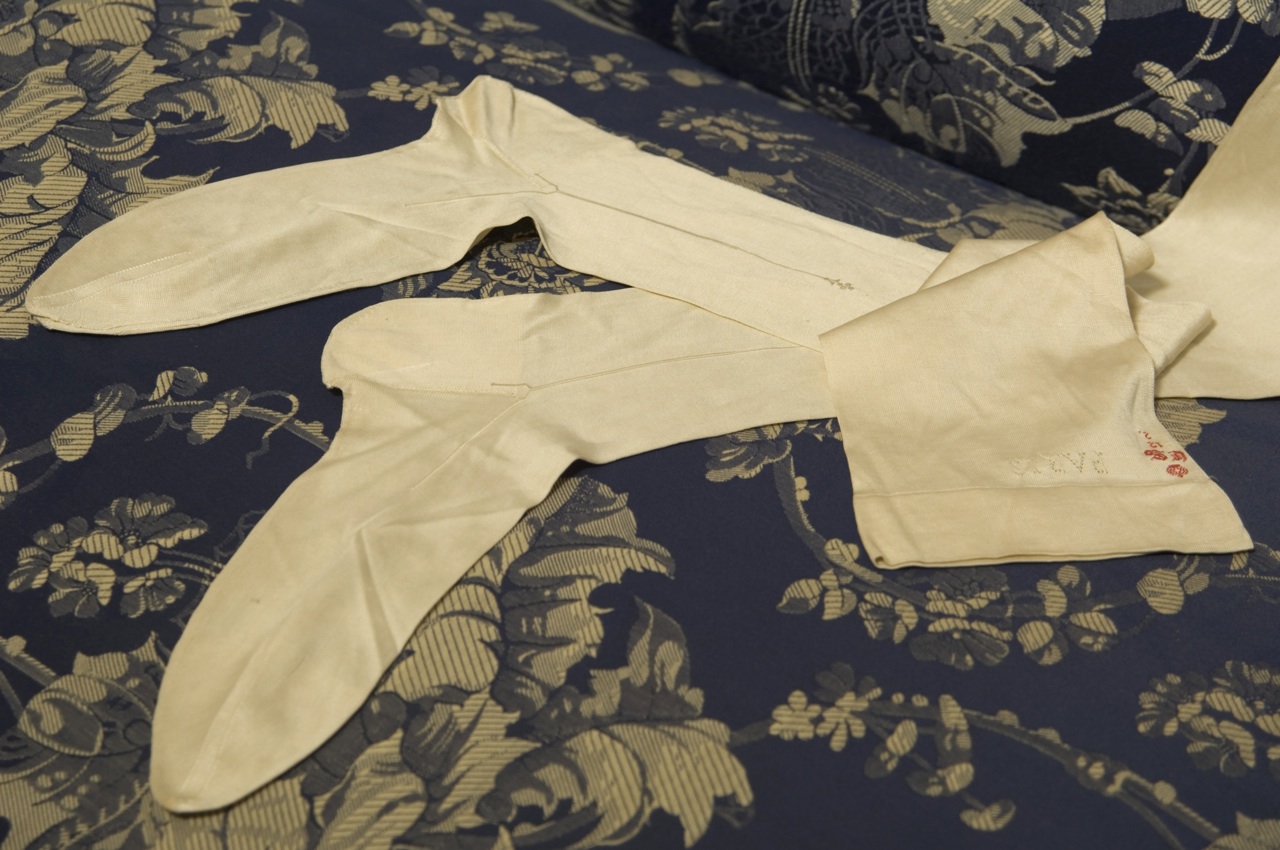
Monogrammed Silk Stockings worn by Elisabeth Empress of Austria

Silk, Lace and Ermine is a fascinating glimpse into the private wardrobe of one of the most legendary figures of that time. To this day, Elisabeth of Austria continues to fascinate and charm with her individualism and refusal to conform. Exhibition continues until 1st February 2015. www.hofburg-wien.at JG

Photos: Top: Portrait of Elisabeth Empress of Austria by Franz Xaver Winterhalter Dresses: Alexander E. Koller Stockings: Edgar Knaak Copyright: Schloss Schöenbrunn Kultur-und Betriebs. Ges.m.b.H.