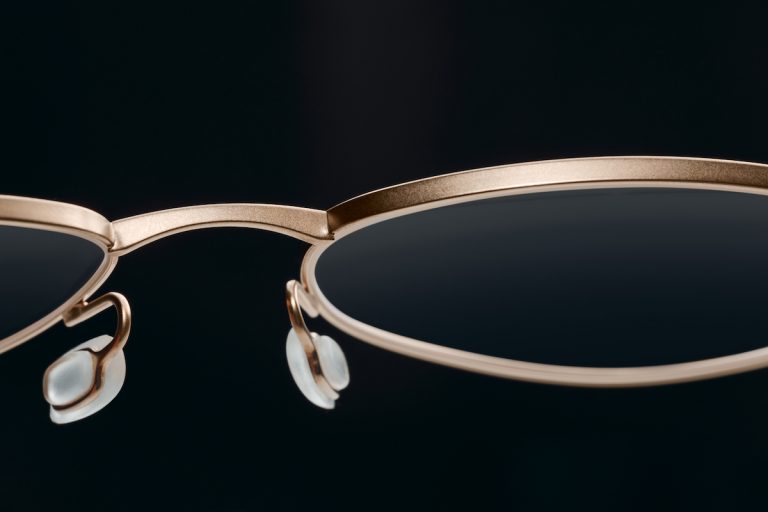
Grand Danois collection pushes the envelope for luxury combinations
Refined, exclusive, and characterised by the finest luxury materials in innovative combinations: the launch of Grand Danois signals an exciting step for the Danish company, where iconic styles from the brand’s IMAGINARY LINES collection are freshly interpreted in luxurious precious metals. The metals, which include gold, ruthenium and palladium, are corrosion-resistant metals that have historically been used in jewellery, currency, and investment. With an emphasis on minimalist and fashion-forward design, the styles are extremely thin and modern, with a precious finish and impressive lightness. Above: The Grand Danois collection was launched in Spring 2022. The titanium styles are plated in gold, ruthenium and palladium – they represent the company’s thinnest titanium styles to date
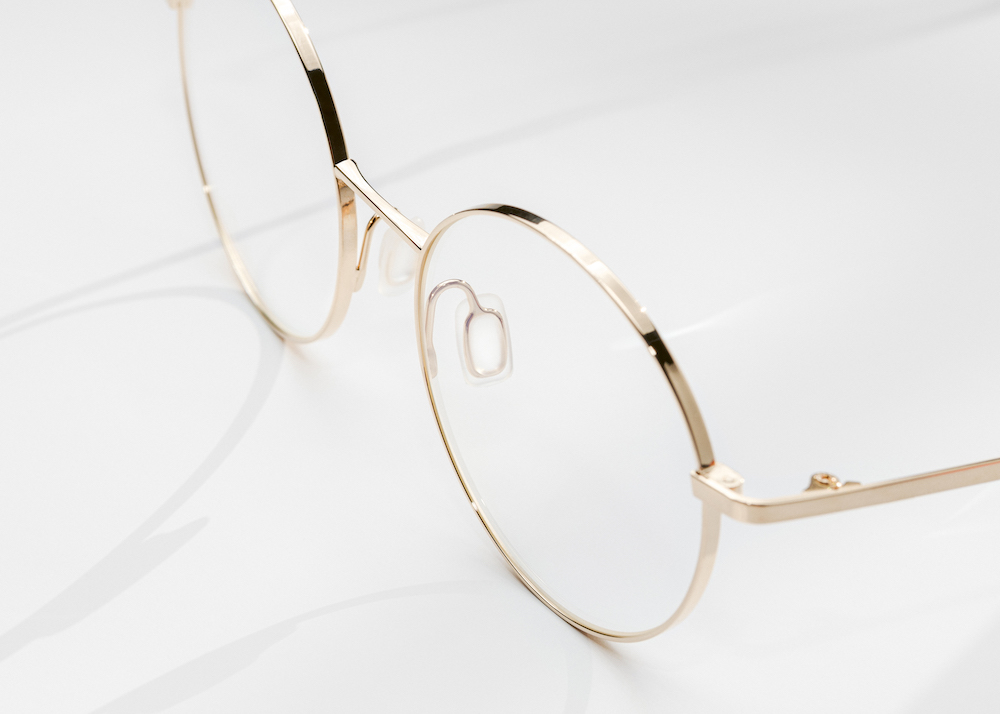
During production, each frame receives three layers of plating, starting with a layer of 24-carat gold, followed by a gold alloy plating (rose gold as well as traditional), palladium, or ruthenium. The result is an extremely high-quality frame, with a total precious metal plating thickness of 3 microns.

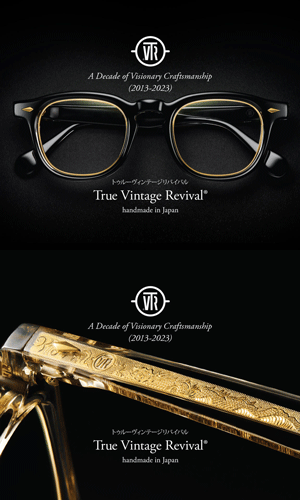

















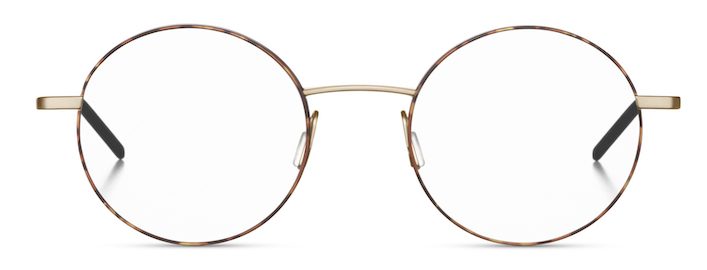
Each exclusive frame in this line is offered in three different precious-plated shiny and mat colours. The women’s styles come in rose gold, luna gold (a more traditional gold colour), and penta grey (realized in the precious metal ruthenium), while men’s styles come in penta grey, palladium (appearing as a radiant silver), and a fusion of gold or penta grey with an exclusive tortoise pattern on the eye rim. The latter, realized by intricate foil transfer technology, is referred to by Orgreen as “a small revolution in the field of precious metal plating”, where one by one, patterned foil is wrapped by hand onto the eye rim of each frame – see model Equator above, with the precious patterned foil).
Find out more about this luxury collection at Ørgreen Optics: https://orgreenoptics.com/collection/grand-danois/?_sf_s=superbank

10 questions – Daniel Brunson: Hicks Brunson Eyewear, Tulsa, Oklahoma
In a new conversation series with personalities in optics, we talked to Daniel Brunson, the owner of Hicks Brunson Eyewear in Tulsa – whose taste for great glasses and luxury brands we’ve come to enjoy @hicksbrunson and @daniel.g.brunson on Instagram. The store is located at 2020 Utica Square, Tulsa, Oklahoma 74114. Above: Daniel wears Orion by Masunaga x Kenzo Takada
1/What’s your USP at Hicks Brunson? We carry a wide selection of independent eyewear that skews towards the high-end luxury segment, and we take opticianry seriously. We take as much time as needed to style and fit our clients, and we get to know them on a personal level so we can understand their unique needs.
2/From where has your taste for luxury eyewear grown and evolved? I brought Tom Davies eyewear into my store in 2007, and at that point I realized the importance and the value of working with independent designers. I met Tom in person a few years later at Vision Expo West in 2009, and I realized he was someone I wanted to continue to partner with. I eventually carried his luxury horn and sterling silver frames. I even carried two sunglasses he once made that had salmon skin on the frame fronts. He and I reminisced about the salmon skin frames at Vision Expo East this year, and we both agreed that we don’t think anyone else has probably ever used salmon skin on a frame. I eventually went on to carry luxury brands like Leisure Society known for 18K and 24k gold plating. My most recent luxury brand acquisition was bringing in T Henri this year at Vision Expo East. I am very excited about working with Tyler and his beautiful line all inspired by the world’s rarest performance vehicles.
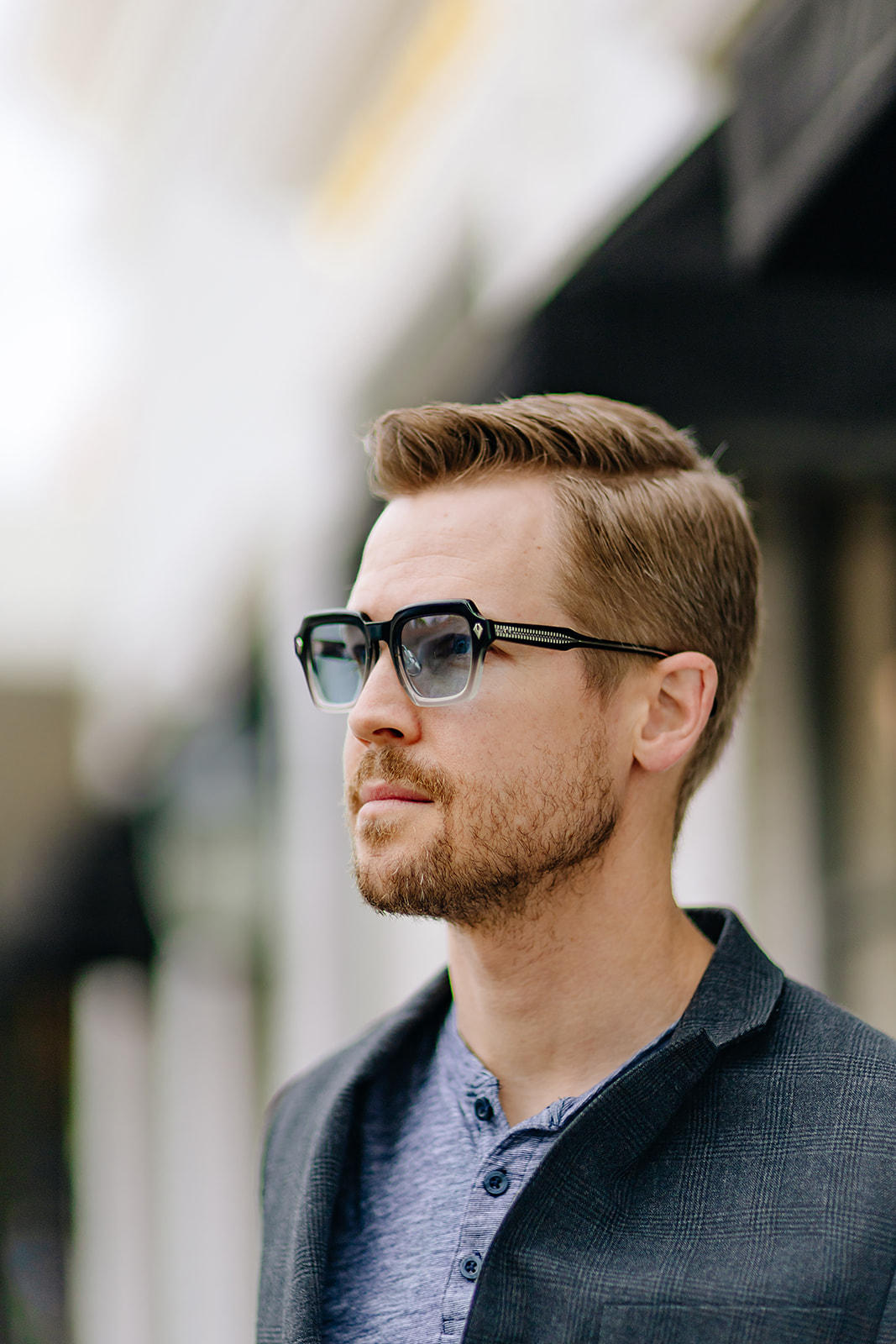
4/ Do you have a go-to frame for special events and parties? That would my signature special event look, which is a frame by Masunaga. It is the model 000 in classic black. I love this frame for the bold and thick silhouette, the seven-barrel titanium hinge, and the fact that it has been made since the 1960s which makes it iconic in my mind. I have recently updated the lenses to the new Transitions XTRActive Polarized technology.
5/ What’s you best tip on finding a classic frame that REALLY suits the wearer (it’s not always easy finding THE ONE in a short space of time….) You have to ask questions to find out what they like and do not like about their current glasses. Once you have a general idea of the direction to head in, then you starting trying things on. I usually like to see two to four shapes on their face, and look at bridge fit to determine the best size, shape, and fit. This gets easier with practice. After enough fittings you come to recognize face shapes that look best in certain frame shapes, and you absolutely have to know your inventory.
6/ Color of 2022 (for you personally this year)? How do you choose just one? I feel my best in black, especially when it’s a heavy statement frame like my Masunaga 000.
7/ Favorite frame silhouette and why? I love the navigator shape, whether as sunglasses or an optical. It’s so classic, and not as commonly worn as the aviator.
8/ Most interesting fact about your store and its historic origins “since 1952″? Our founder Hicks G. Brunson, who was my great grandfather, was running an American Optical store in downtown Tulsa in the years before he founded Hicks Brunson Eyewear. AO was going through a period of selling off many of their optical dispensaries and he bought the store he was managing and changed the name to Hicks Brunson. So in that way we are connected to the quite old and iconic American Optical brand.

9/ Next foreign trip, holiday or optical event for work and why? I’m sure by the time this feature has published it will have already happened, but shortly I am headed to Orlando, Florida for Transitions Academy. This will be my seventh time attending and it is easily one of my favorite optical events. I think it may be one of the industry’s best kept secrets. I have seen fantastic speakers there. The kind of speakers who give TED Talks. I have also connected with some of my best industry friends from whom I have been fortunate to learn much over the years.
10/ What’s next in the world of Hicks Brunson Eyewear? I’m really excited about the new luxury brand T Henri that I picked up this year at Vision Expo East. The metal is all pure Japanese titanium from Sabae, and it is 18k gold plated. Each frame is part of a limited-edition production, which means they only make from 40 to 99 pieces at most in any one colorway. Each frame is engraved with the production number, and comes with a certificate corresponding to that number. They are all really beautiful, and as I said before, Tyler Henri designed the frames by taking inspiration from the world’s rarest performance vehicles. The label has been doing really well with our clients, and we are excited to be one of the exclusive retailers to carry it.
For further details about Hicks Brunson Eyewear, visit www.HicksBrunson.com
This feature is an Eyestylist Exclusive. All rights reserved.
Hideo Kojima X Jean-François Rey collaborative collection 2022
New icons in dazzling collaboration edition
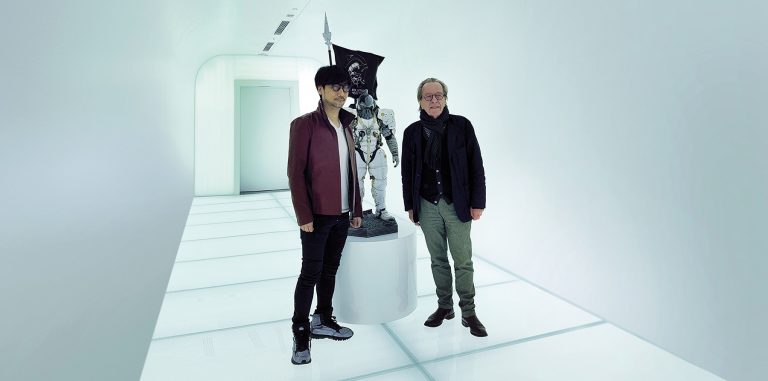
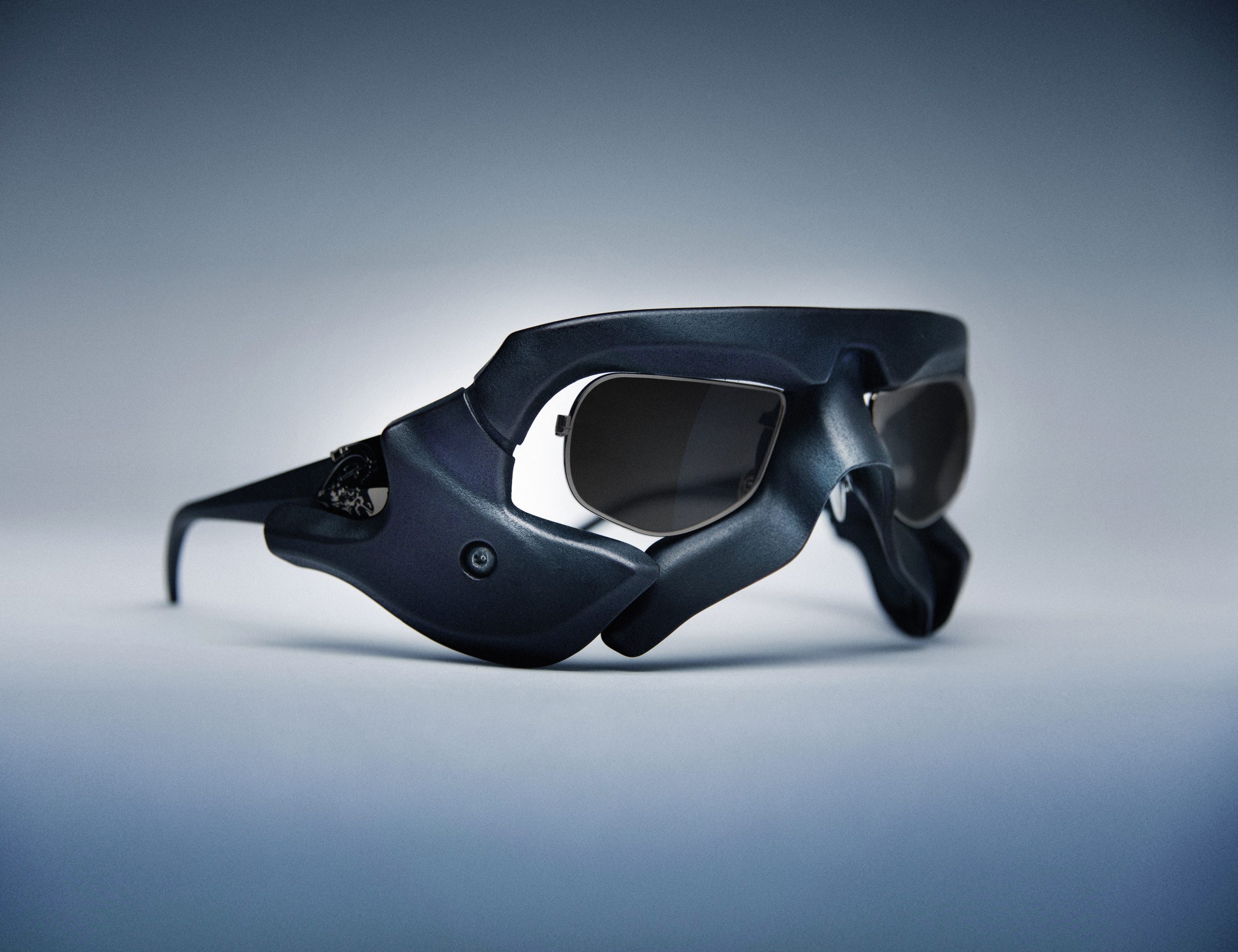
The renewal of the collaboration between Jean-François Rey and the famous Japanese video game designer Hideo Kojima is presented through dramatic design work, futuristic in style inspired by the video game, Death Stranding (Kojima Productions). The innovative spirit of Jean-François Rey and his experienced design team and the creative world of Kojima fuse without limitation in this collection which comprises 4 new models including 2 optical frames equipped with original sunglasses clips (HKxJF01 and HKxJF02), a shell sunglasses model (HKxJF03), and a 3D collector’s mask named Ludens Mask.
Ludens Mask has been referred to as the masterpiece of the collection, and is worn by Sam Porter Bridges (played by Norman Reedus) in the opening scene of Death Stranding. The futuristic mask design was modeled by JF REY Studio and is SLS 3D printed. This iconic piece is presented in a numbered luxury box marked with the emblem of the production house of Hideo Kojima, Ludens Mask is a Collector’s Edition. Above: Eyewear Designer Jean-François Rey with the Japanese video game designer, Hideo Kojima – photographed in Tokyo. Below: Ludens Mask


The HKxJF01 model is a handmade unisex metal and acetate frame with an original sun clip design. Articulated on a ball joint, the clip opens and remains attached to the temples of the frame via a magnet and chrome-plated section. If its design is inspired by the futuristic world of video games, its style is nonetheless modern and totally current, marked by a bold retro influence. The original shape of the glasses gives the model its unique character and slightly offbeat look.

The HK x JF02 acetate model is distinguished by its personal design, where artistic references of the video game were the basis for the design. Fitting snugly on the front of the frame, the upper section of the sun clip highlights the shape of the browline. Colours are striking for this style and include a black/crystal graphic effect, and a mottled print with shades of blue or an “army” camo (pictured above).
About Hideo Kojima – Hideo Kojima is a Japanese video game creator known for his Metal Gear Solid series. He is also the author of Death Stranding, a visionary video game created by his own production company. An avid design enthusiast, he has long been a fan of J.F.REY eyewear. Innovative and creative, his artistic universe has inspired the French design brand to create this unique capsule collection with his vision and his imaginative visual world. https://www.jfrey.fr/kojima-jfrey Visit the online store at https://kojima-jfrey.fr

Paradigm Eyewear for Summer
1970s influences in a fashion-forward line made from ISCC-certified recycled Eastman Acetate Renew & Eastman Tritan Renew materials
Come summer, bigger and bolder glasses will be on our minds. The 1970s looks bring a dash of fun statement style with a preference for large squareish eye shapes, angular designs, and retro-chic graduated colours…all this in a modern collection at the eyewear label Paradigm, which mixes up the old and new with fresh optimism and a spirited and youthful energy.
The eyewear collection at Paradigm is produced, for the first time, in ISCC-certified recycled acetate, a material that is beautiful and fashionable with a high aesthetic value and multiple nuances of colour and colour mixes. According to the producers of Paradigm, Kenmark Eyewear, by using ISCC-certified recycled materials, their company is reducing the amount of newly produced plastics in their collections, while also meeting a growing demand for sustainable fashion – and meeting verifiable standards. Above: the Paradigm collection reinterprets the freedom of bold vintage design – models Ross and Bianca

On the materials, the company says: “We’re proud to offer frames made using 100% sustainable acetate flake comprised of 40% recycled plastic and 60% biobased content from renewable resources.* Our sun lenses are environmentally friendly too, made with 50% recycled plastic and 50% virgin tritan material.* Even our frame cases are made of recycled materials! If you ask us, sustainability has never looked this good.”
* Calculated using the mass balance approach

With so many companies making claims over sustainable achievements, without providing proof of provenance of materials, or meeting any particular verifiable sustainable criteria, the ISCC-certification is an assurance of the particular contents of Eastman Acetate Renew and Eastman Tritan Renew – as well as the modes of production that are sustainable in themselves.
About Eastman Acetate Renew: Eastman Acetate Renew is made with certified recycled material and bio-based materials sourced from renewable resources, diverting plastic waste from landfills and incinerators while reducing consumption of fossil feedstocks and lowering greenhouse gas emissions. Eastman Acetate Renew contributes to circularity: Renew materials are made via Eastman’s molecular recycling technologies using waste plastic that would otherwise end up in landfills. These advanced recycling technologies complement traditional recycling approaches and expand the types and amounts of plastics that can be recycled, this gives materials an extended useful life. The innovation that brings recycled materials into Acetate Renew contributes to replacing fossil-based resources in the production process.
To find out more about Paradigm at Kenmark Eyewear, and this new sustainable collection of sunglasses and eyewear: click on the link at https://www.kenmarkeyewear.com/Eyewear/PARADIGM
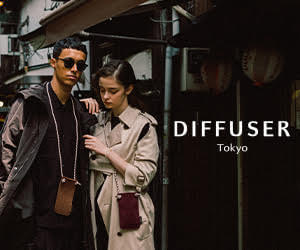
Diffuser Tokyo: Masaki Hirose on handmade accessories
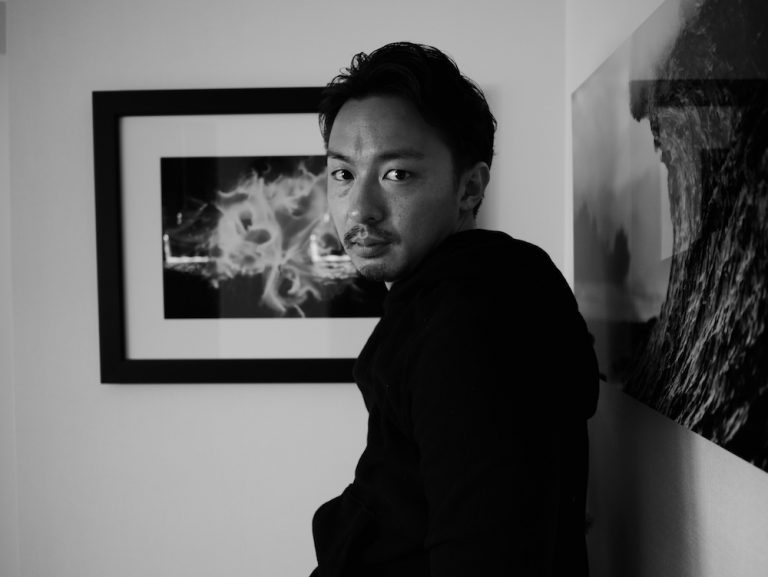
Repopulating the world of optics with fashion-forward accessories designed with a fresh and desirable edge in mind is at the core of founder Masaki Hirose’s approach – but that does not mean his products are limited by gender, they’re limitless. Eyestylist caught up with the Japanese accessories innovator.
“I started working at DITA Eyewear in 2006, and my own brand Diffuser Tokyo was created six years later in 2012,” says Masaki Hirose, the Japanese founder of Diffuser Tokyo, an innovator in accessories who has changed the face of what these products once were. “At that time, many people around me were working with Japanese clothing brands, and I think I learned a lot from them. When I was in charge of domestic sales, I was in constant communication with many people across the eyewear industry. They were looking for something the current market didn’t provide: fashionable eyewear accessories. I researched the accessories market and discovered many high-end eyewear stores didn’t carry eyewear accessories: they were unavailable.”


Masaki discovered that the number of stores looking for new designs and fashionable eyewear cases in the Japanese market was increasing rapidly, but there were only cheap and ordinary accessories which were mostly manufactured in China.
So he embarked on a journey to make on-trend, stylish eyewear accessories for the stores himself. “I had no design experience, nor any knowledge of how to procure raw materials. There are some suppliers out there who do not welcome inexperienced people, and I had a hard time finding the right ones to work with at first. Many refused to sell materials to us. Now I feel blessed that Diffuser has gained so much support from the eyewear industry and consumers, making it the popular brand it is today.”

Masaki started out with an interest in optics and fashion retail, which helped. “I was interested in both so to speak. Both have philosophies rooted in fashion per se, so I found both industries interesting even if the way of thinking and perception of each one is actually completely different. Of course, as I mentioned, there were not many options in the field of optics when I started this brand; I couldn’t find eyewear accessories that men like me were enthusiastic about or wanted to wear. I therefore focused on design concepts and materials used in other types of products…my products were based on the idea that the customer who purchases it will feel some kind of excitement and joy…”

Realising the limitless potential of something more stylish and design-focused, the range became extensive and more orientated towards gender-fluid design. “We are not aiming to segregate our products according to gender. When we start our design process, we start with the choice of the materials before moving into texture, shape and other aspects of sourcing to create a style suited to anyone. At the present time we have many female customers; some of them tend to lean towards our more masculine products and we’ve welcomed this from the start.
The brand has also differentiated itself by collaborating with small artisan studios and creators in Japan. They work with leather specialists outside Tokyo. “Many of the leather artisans had reached a turning point when I started this brand, so I started working with them. Some of them had never made eyewear accessories before. Our cord factory, for example, takes on new challenges every day in order to respond to my requests. We believe that this initiative can improve their sustainability and in turn ours, and lead them to acquire new technologies and opportunities.”
Masaki adds that he also sells a product that can easily be repaired. “Effective and valuable usage and reduction of waste is a kind of Japanese value in the present day. We provide the customer with after-sales service repair and technical advice, and we’ve seen from the few repairs we’ve made so far that customers want to continue using our products even if they were purchased a long time ago. Like taking care of a favourite leather shoe, this is another way to reduce waste and remain eco-friendly.” An exclusive feature by Victoria G. Brunton and Clodagh Norton – Eyestylist.com
To find out more about DIFFUSER TOKYO visit https://diffuser-tokyo.com/en/